
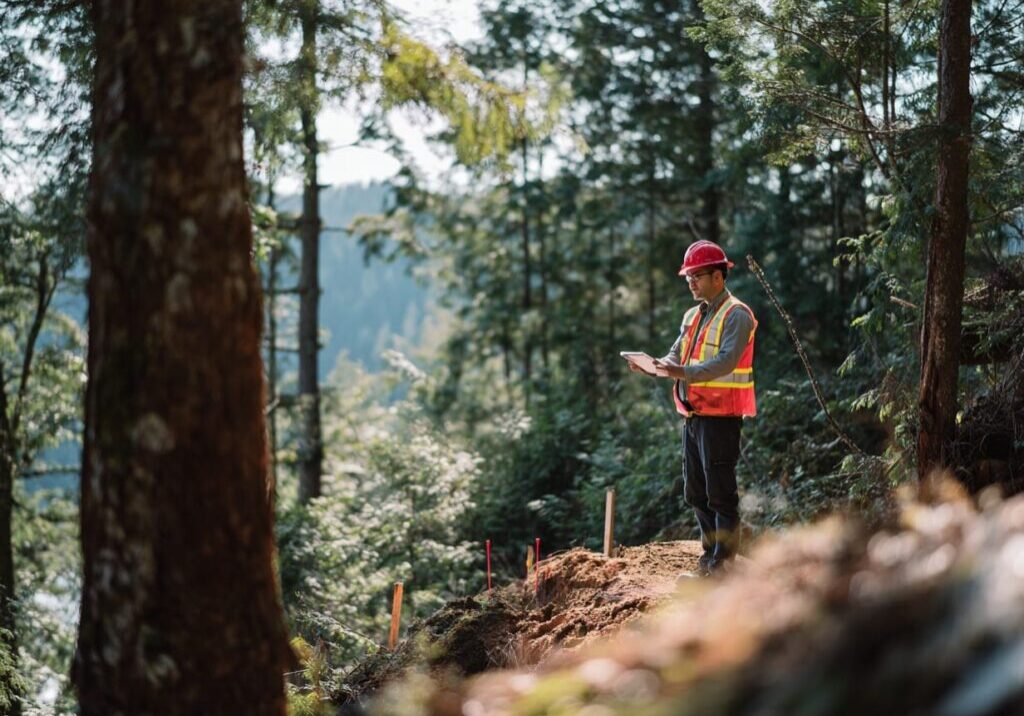
Short answer: often, yes. If your lot has steep slopes, unknown or soft soils, historic fill, is close to water, or sits in a Development Permit Area, the City may require a geotechnical report before issuing your building permit. The report identifies hazards, recommends mitigation, and confirms the land can be used safely for a dwelling. The City relies on this report and may reference it on title.
If you want a builder that handles this from the first site walk to occupancy, reach to our team in Nanaimo. We line up the right professionals, coordinate fieldwork, and fold the recommendations into your design, budget, and schedule. Because we plan the steps early, you avoid rework and inspection delays later.
What A Geotechnical Report Is (And Why The City Cares)
A geotechnical report is a stamped assessment by a qualified engineer or geoscientist that evaluates site conditions, confirms whether the land is safe for the intended residential use, and provides construction recommendations. The City uses this report to make decisions about your development and may register a covenant to inform future buyers of risks and required remediation.
In plain terms, it’s how you prove the site can handle the home you want to build. That proof keeps you compliant and protects your investment.
Expect subsurface investigation (test pits or borings), stability analysis for slopes, groundwater observations, bearing capacities, settlement expectations, excavation support, foundation recommendations, drainage strategies, and any construction monitoring the engineer requires. Regional guidance sets out typical contents for submissions tied to development or building permits, which local authorities follow.
Strong reports give clear, buildable details. That clarity shortens plan review and reduces field questions.
When You Need A Geotechnical Report In Nanaimo
Steep Slopes And Development Permit Areas
If your lot lies in a Steep Slope Development Permit Area (DPA), a geotechnical assessment is commonly required before the City will proceed with the building permit. The City’s steep slope guidelines point you to geotechnical preparation standards, mapping, and design expectations.
Bottom line: where grades are sharp, design responds to the slope – and the geotech sets safe limits for cut, fill, and siting.
Fill, Soft/Unknown Soils, Near Water, Or Known Hazards
If there’s a reasonable chance of instability, erosion, differential settlement, or other hazards, the building official can require geotechnical assurance to confirm safe use for a dwelling. Nanaimo’s geotechnical page makes that purpose explicit and explains how the City relies on the report.
If you’re building outside city limits, the Regional District of Nanaimo (RDN) publishes its own geotechnical requirements used during application reviews. Expect similar triggers and minimum content.
Deep Excavations And Partial Permits
Where you plan deep digs, shoring, or staged/partial permits, municipalities often require geotechnical documentation as a precondition. Nearby City of Courtenay guidance on partial building permits lists a geotechnical report and excavation/shoring design among the prerequisites. It’s a useful regional example of what to expect.
What’s Inside The Report And How It Changes Your Design
Definition for quick reference:
Geotechnical report– a stamped assessment confirming whether your lot can be used safely for a home and what measures are required to build safely.
Foundations, Retaining, And Drainage
Your geotechnical recommendations drive footing depth, bearing strategies, slab preparation, and whether you need over‑excavation or engineered fill. They also shape retaining wall design, backfill, and drainage so water moves away from the structure. When these details appear on the drawings, permit review is faster and site crews build to known conditions rather than guesses.
On sloped sites, geotechnical input can steer the house location, wall heights, and cut/fill limits. The right early call saves concrete, time, and headaches.
Construction Staging And Monitoring
The report may specify maximum temporary cut slopes, wet‑weather restrictions, inspection hold points, and the construction monitoring letters you’ll need for occupancy. Nanaimo’s guidelines include standard reliance language for development permits, subdivisions, and building permits, making it clear that the City will rely on the report in its decisions.
Monitoring is not red tape. It’s how you verify the work matches the design so you pass inspections the first time.
The Process: From Feasibility To Occupancy
Steps You Can Expect
- Feasibility and screening. We review slope mapping, DPA status, and known constraints.
- Engage a geotechnical professional. Scope aligns with your design and municipal triggers.
- Fieldwork. Test pits or borings, groundwater observations, and sampling.
- Draft findings and recommendations. Engineer proposes foundations, slopes, drainage, and any monitoring needs.
- Submit with your permit. We include the report and reliance language the City requests.
- Construction monitoring. The engineer inspects critical stages and issues letters as required.
- Occupancy documentation. Final letters confirm the work meets the report.
Cities rely on these documents at permit and completion, so clean sequencing matters.
Reports confirm minimum safety; they don’t guarantee performance if the details are built poorly. Success comes from aligning the design, the report, and on‑site workmanship. We handle that integration so the report becomes a roadmap, not a bottleneck.
Timelines, Cost Signals, And How To Avoid Delays
Lead Times And Scheduling Realities
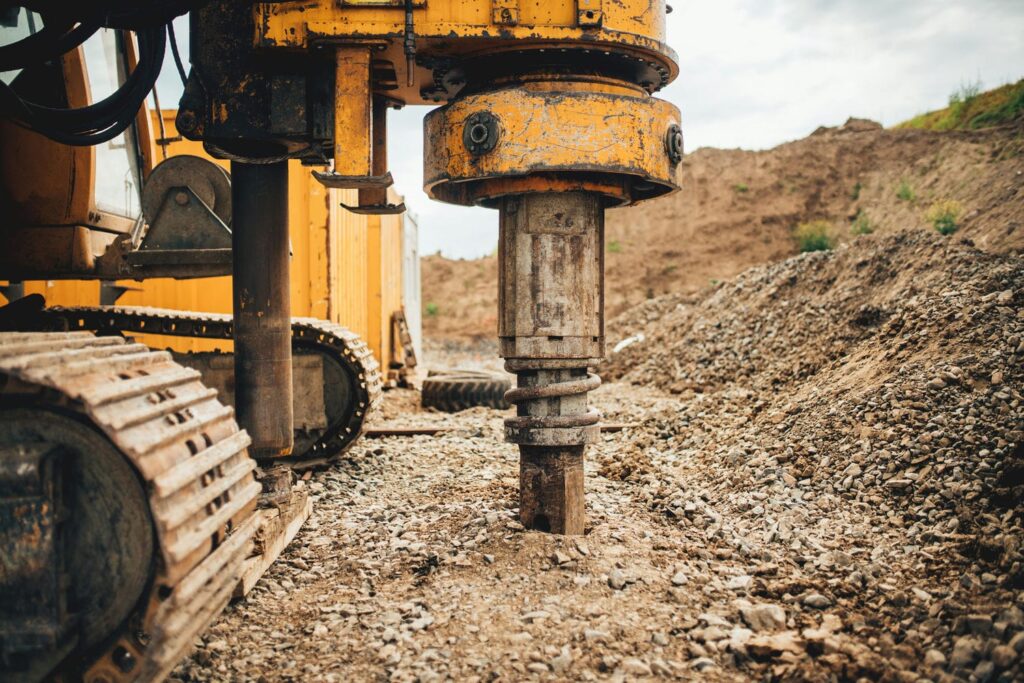
Drilling rig availability, utility locates, and weather can affect timing. Start geotech early in design so findings inform the drawings instead of forcing revisions during plan check. Comox Valley RD’s permit guidance, for example, emphasizes completing prerequisites before applying to keep reviews moving.
Cost Drivers
Scope – number of test locations, slope complexity, groundwater, and construction monitoring – drives consulting cost. Access matters too. A well‑planned program limits surprises and protects your fixed price.
Documentation Discipline
Authorities process complete applications first. Follow the City’s application and guideline documents and include the reliance language your engineer provides. That administrative hygiene saves weeks.
Local Requirements And Who To Contact
City Of Nanaimo
Nanaimo’s Geotechnical Reports page spells out the purpose of the report, the City’s reliance on it for development decisions, and the possibility of a title covenant to alert future purchasers to risk and remediation. The City also publishes Guidelines for the Completion of Geotechnical Reports with the exact reliance language to include for permits and DPs.
Regional District Of Nanaimo (If Building Outside The City)
The RDN’s Geotechnical Report Requirements detail minimum contents for land development submissions – useful if your project is in the electoral areas. The principles mirror city requirements: qualified professionals, clear recommendations, and construction inspection and letters where applicable.
Courtenay / Comox Valley Examples (For Context)
Courtenay’s partial building permit bulletin lists a geotechnical report and excavation/shoring design as prerequisites when excavating ahead of a full permit. It’s a good regional benchmark for deep or staged work on central Vancouver Island.
Quick‑Reference Table
| Site Condition | Likely Requirement | Who Triggers It | Notes |
| Steep slope / DPA | Geotechnical report with slope stability analysis | Planning / Building (City of Nanaimo) | Commonly required before the Building Permit; aligns with steep slope guidelines. |
| Fill, soft, or unknown soils | Report to confirm bearing and design foundations | Building Official | Supports foundation, slab, and drainage details. |
| Near water or erosion‑prone areas | Geotech with drainage and erosion control measures | Building Official | May include construction monitoring letters. |
| Deep excavation / shoring | Geotech report plus excavation/shoring design | Building Official | See Courtenay partial permit example. |
How Southpaw Homes Coordinates Geotechnical Work

Fixed‑Price Planning With Geotech Assumptions Up Front
We flag likely triggers during feasibility, then scope the investigation to answer the right questions. That approach protects your fixed price and avoids mid‑design surprises.
Builder‑Led Sequencing And Pre‑Inspection Checklists
We schedule fieldwork, integrate recommendations, and map inspection hold points into the build schedule. Our team pre‑checks stages so municipal inspections are a formality, not a fire drill.
Client Portal Transparency
You get 24/7 access to daily logs, photos, and documents, including geotechnical letters and City sign‑offs. Clear records help with warranty and resale.
Credentials That Protect You
If you’re weighing a lot with slopes or soft soils, talk to us before you draw. We’ll screen the site, coordinate the geotech, and fold the recommendations into a fixed‑price contract and a clear build schedule. As a BC Housing Licensed Residential Builder with 2‑5‑10 warranty and full WorkSafeBC coverage, we keep your project compliant and moving. Explore our process and book a consultation through our custom home services page.
FAQs
How Do I Know If My Lot Needs A Geotechnical Report?
Look for red flags: steep slopes or DPA mapping, fill or soft soils, proximity to water, or known hazards. The City requires geotechnical assurance to confirm safe residential use where risk exists.
Who Can Prepare The Report?
A professional engineer or geoscientist experienced in geotechnical engineering and registered in B.C. RDN guidance reflects common regional requirements for qualifications and report content.
Does The Report Replace Structural Engineering?
No. Geotechnical and structural roles are complementary. The geotech designs for soil and slope; the structural team designs the building elements to those conditions.
Will It Delay My Permit?
Not if you start early and submit a complete package. Municipalities prioritize complete applications and publish report expectations in advance.
Will The City Put Anything On Title?
Sometimes. Nanaimo notes the City may place a covenant on title that references the geotechnical report and required mitigation to inform future purchasers.
Do Additions Or Renovations Ever Need Geotech?
Yes. If you’re excavating, adding storeys, or working near slopes or water, the building official can require geotechnical assurance. Check early to avoid redesign.
Can I Start With An Excavation/Partial Permit?
In some cases, but expect geotechnical documentation for deep digs. Courtenay’s partial permit bulletin lists a geotechnical report and shoring design as prerequisites.
What Happens If Conditions Differ From The Report?
Your geotechnical professional may update recommendations after seeing conditions during excavation. We coordinate those changes before inspections to keep the build on track.