

Coastal home construction on Vancouver Island starts with one priority: manage water first. The most durable homes are not built around one “perfect” siding, roof, or window product. They are designed as a full system that can handle wind-driven rain, wet winters, salt air, shaded exposure, interior humidity, and ongoing maintenance. That is why we treat design-build custom homes as one integrated system, with envelope details, materials, drainage, and ventilation planned together from the start.
What Makes A Coastal Home Durable
A durable coastal home needs to shed water, drain water, dry out, resist corrosion, and stay easy to inspect and maintain. Vancouver Island’s wet coastal settings put repeated moisture loads on the exterior, so durability depends on the whole assembly, not just the visible finish.
The basics are straightforward: use wall systems that manage wind-driven rain, detail windows and penetrations carefully, choose materials for the real exposure, and keep water moving away from the home. BC Housing’s rainscreen wall guidance finds these assemblies effective at managing exterior moisture loads from wind-driven rain in coastal British Columbia, with proper detailing at interfaces and penetrations critical to their success.
A durable coastal home usually includes:
- A drained and ventilated wall assembly.
- Careful flashing at windows, doors, decks, vents, and roof-wall transitions.
- Exterior materials selected for wet exposure, not only appearance.
- Compatible fasteners, connectors, guards, and exterior hardware.
- Roof overhangs, gutters, and downspouts planned as performance details.
- Airtight construction balanced with proper mechanical ventilation.
- Grading and drainage that move water away from the structure.
- Maintenance access planned before construction starts.
What Coastal Durability Means On Vancouver Island
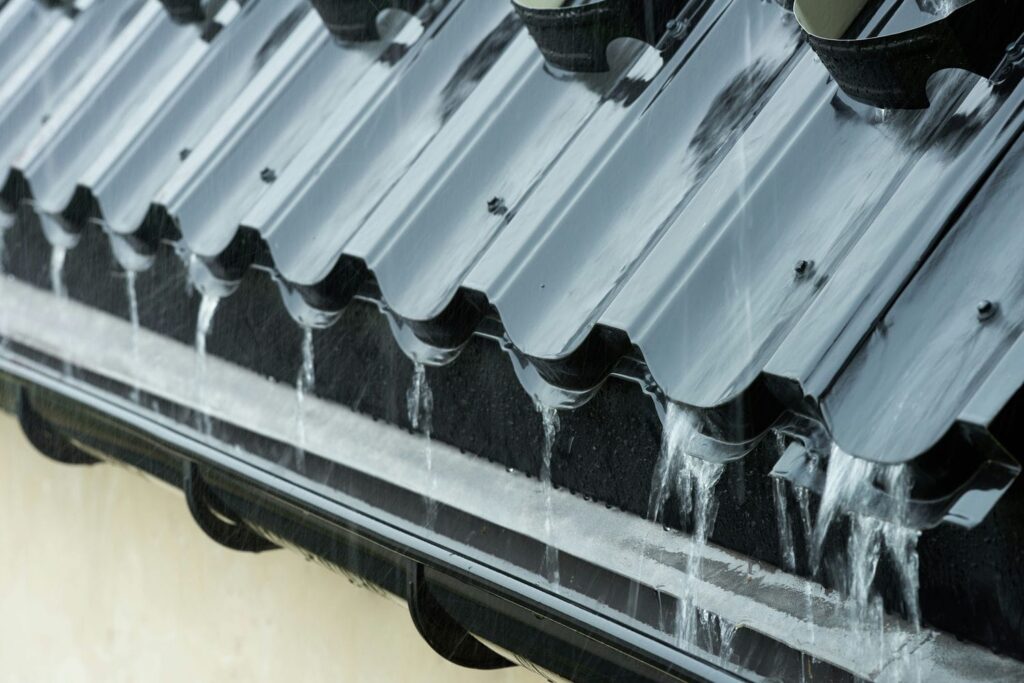
Coastal durability means designing a home to manage exterior moisture, interior humidity, salt exposure, wind, and maintenance access so the building envelope can shed water, drain water, dry properly, and remain serviceable over time.
That definition matters because many homeowners think durability is mostly a materials question. Materials matter, but a strong exterior product can still fail when flashing is weak, drainage is poor, ventilation is undersized, or landscaping traps moisture against the wall.
It Is A Moisture Strategy, Not A Style
A durable coastal home does not need to look like a beach house. It needs to perform like a home built for long wet seasons, wind, shaded areas, and damp site conditions. That means the design should control where water lands, how it drains, and how the home dries after wetting.
In practice, coastal durability is a moisture strategy. The home should direct water off the roof, keep bulk water out of the wall, allow incidental water to escape, and avoid trapping moisture in sensitive materials.
That approach is more reliable than relying on one expensive exterior product. The best results come when design, sequencing, installation, and maintenance all support the same moisture-control goal.
The Three Moisture Sources To Plan For
There are three main moisture sources to plan for: exterior water, interior moisture, and site water. Exterior water includes wind-driven rain, roof runoff, splashback, fog, and salt exposure. Interior moisture comes from cooking, showers, laundry, occupants, and mechanical systems. Site water includes stormwater, groundwater, poor grading, and water moving across hard surfaces.
Thinking in three categories helps you avoid narrow solutions. For example, fibre-cement siding may help with exterior durability, but it will not fix a poorly detailed window, an unventilated bathroom, or a grading plan that pushes water toward the foundation.
A coastal home works best when these moisture sources are handled together. The envelope, ventilation, and site drainage plan should support each other, not compete.
Why Design, Construction, And Maintenance All Matter
Durability starts in design, but it depends on construction quality and owner care after move-in. A good wall assembly can be weakened by rushed flashing. A strong roof design can be undermined by neglected gutters. A well-built exterior can still suffer when landscaping holds wet soil or plants against the cladding.
This is why “low maintenance” should not be confused with “no maintenance.” Vancouver Island homes still need seasonal checks, cleaning, and small repairs. The goal is to design the home so those tasks are simple, visible, and manageable.
A durable coastal home is practical as much as it is technical. It gives water a path, gives assemblies a chance to dry, and gives the homeowner a clear way to maintain the building over time.
The Building Envelope Is Your First Defence
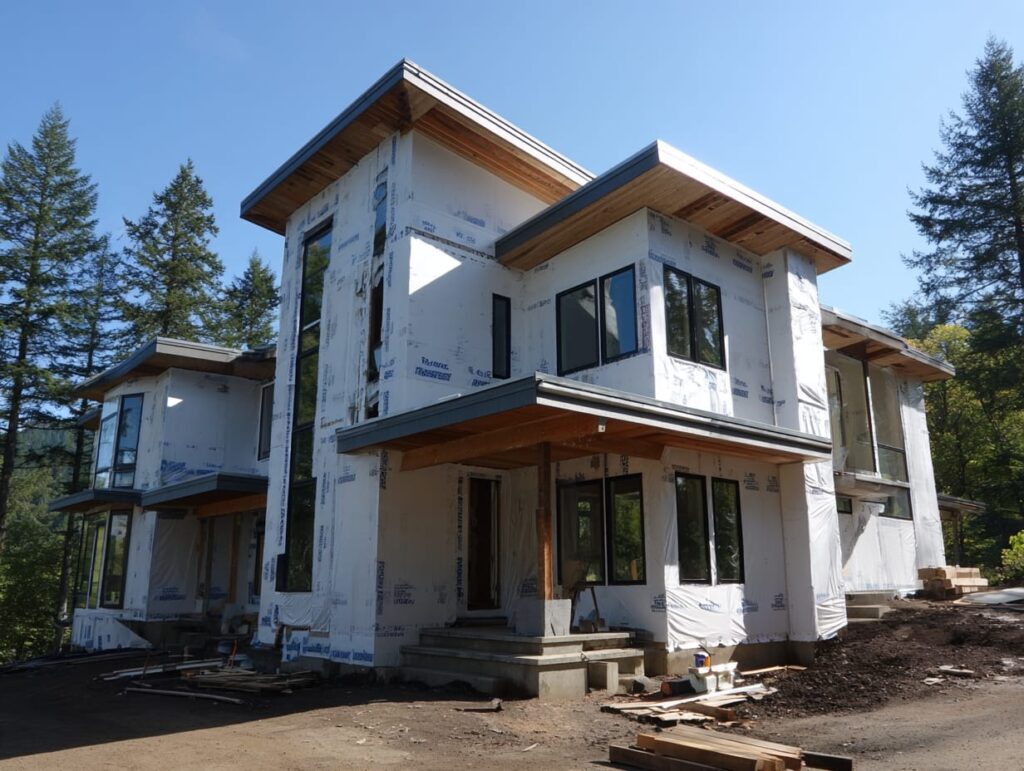
The building envelope is the first line of protection between coastal weather and the structure inside the home. It includes the roof, walls, windows, doors, flashings, membranes, insulation, air barrier, and ventilation strategy.
On Vancouver Island, the envelope should not be treated as a collection of separate parts. Water finds weak transitions. That means durability depends on how the pieces connect.
Rainscreen And Drained Wall Cavities
A rainscreen wall creates a space behind the cladding so water that gets past the outer finish can drain down and dry out. The cladding is not expected to stop every drop of water; the wall is designed to manage some water safely.
That matters in coastal British Columbia because wetting can be frequent and wind can drive rain into joints, corners, and transitions. Rainscreen assemblies are more tolerant of moisture infiltration than barrier walls because they improve drainage and increase drying potential.
A drained wall cavity is not a shortcut. It still needs correct detailing, venting, flashing, and compatible materials. The cavity helps, but the execution decides how well the system performs.
Flashing, Penetrations, And Transitions
Many moisture problems happen at transitions, not in the middle of a wall. Window heads, door sills, deck ledgers, hose bibs, vents, light fixtures, brackets, and roof-wall intersections all create opportunities for water to enter.
That is why flashing should never be treated as a minor detail. On a coastal home, the question is not only what siding is being used. It is also how each opening sheds water, and where that water goes.
Window And Door Details
Windows and doors deserve special attention because they interrupt the wall assembly. They face bulk water, wind pressure, air leakage, and condensation risk. A strong product matters, but installation matters just as much.
Good coastal detailing often includes sill pans, head flashing, shingled membranes, and clean transitions into the air and water control layers. These details help direct water outward rather than letting it collect behind the cladding or under the frame.
The goal is redundancy. One layer should not carry the entire job. The product, flashing, membrane, and wall cavity should work together so small amounts of incidental water do not become long-term damage.
Building Code And Durability Planning
Durability decisions still need to align with the current BC Building Code and local permit expectations. The BC Building Code 2024 came into effect on March 8, 2024, applies to projects with building permits submitted after that date, and includes B.C.-specific changes that reflect geography, climate, local government needs, industry practices, and provincial priorities.
For homeowners, the practical point is simple. Durability planning is not separate from compliance. Wall, roof, ventilation, insulation, and moisture-control decisions all need to fit the permitted design.
Understanding how the BC Building Code applies to custom homes on Vancouver Island gives the wider context for these durability decisions.
Materials That Hold Up Better Near The Coast
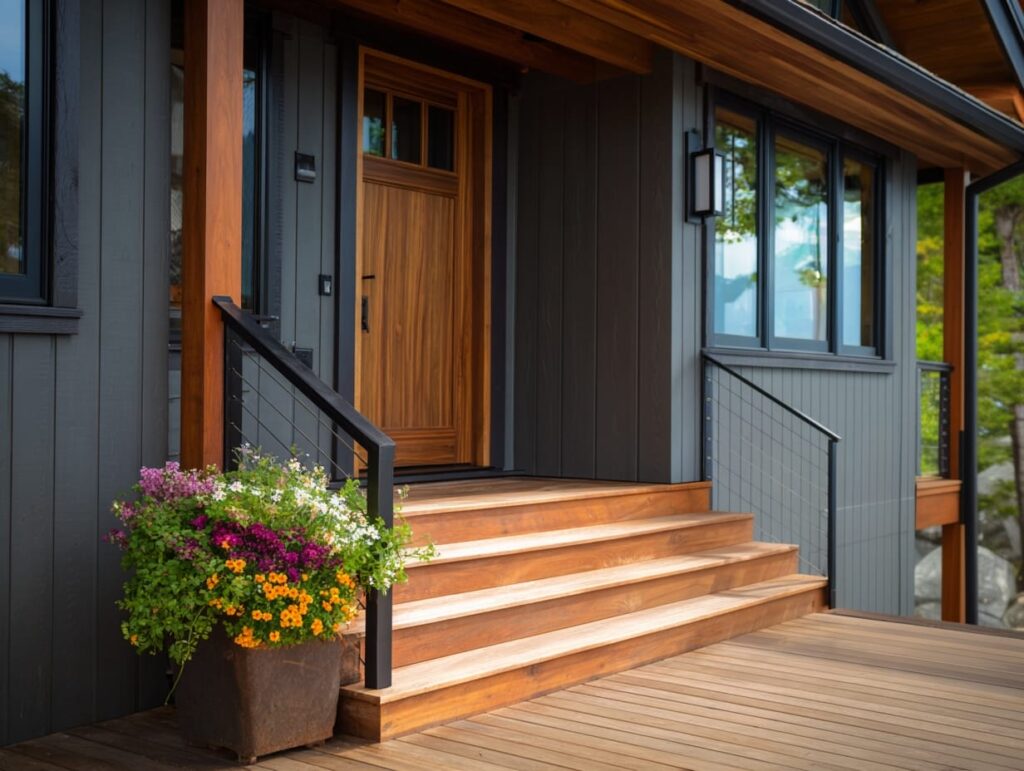
Materials matter, but there is no single best exterior material for every Vancouver Island home. The right choice depends on exposure, roof protection, design complexity, maintenance appetite, budget, and installation quality.
A sheltered lot in town and an ocean-exposed bluff do not need the same exterior strategy. The goal is to match materials to the conditions they will actually face.
Siding And Trim
Siding should be selected for exposure, not only colour, texture, or trend. Durable manufactured claddings, properly detailed metal systems, masonry elements, and well-maintained wood can all have a place, depending on the design and site.
The key is to pair the product with the right wall assembly and finish schedule. A durable cladding still needs proper drainage, spacing, flashing, clearances, and maintenance. A high-quality product used in the wrong exposure or installed with weak detailing can still create problems.
Trim deserves the same care. It often sits at edges, joints, and transitions where water collects. In coastal conditions, trim material, coatings, back-priming where appropriate, and fastener selection all matter.
Fasteners, Connectors, And Exterior Hardware
Fasteners, connectors, and hardware are easy to overlook because they are small. On a coastal home, they can make a big difference. Salt air, wet exposure, and dissimilar metals can accelerate corrosion on screws, nails, brackets, hinges, guards, exposed connectors, and railing components.
The conversation should include compatibility. The fastener should suit the material it penetrates and the exposure it faces. Hardware should be chosen with the same care as visible exterior finishes.
Good exterior selections are not only about what looks clean on move-in day. They are about what still works and looks acceptable after years of moisture, cleaning, and seasonal exposure.
Roofs, Gutters, And Metal Details
A durable roof design keeps water moving predictably. Roof slope, valleys, overhangs, gutters, downspouts, metal flashings, and clean discharge points all affect how much water reaches the walls and foundation.
Roof overhangs and other projections can reduce driving rain against sensitive cladding interfaces and details, with larger overhangs offering more protection than small or absent ones.
Gutters and downspouts should be designed for real maintenance. Leaf load, moss, nearby trees, and safe access for cleaning matter. A roof that sheds water well but dumps it near the foundation is not a complete durability solution.
Decks, Railings, And Guards
Decks, railings, and guards take direct weather. They also create risky attachment points where water can enter the building if the detail is weak. Deck ledgers, membranes, posts, guard penetrations, and flashing transitions all deserve early attention.
Covered outdoor spaces can reduce exposure while improving daily livability. They protect entries, reduce wetting at doors, and create more usable space during the wet season.
The best deck details are easy to inspect. Hidden connections and trapped water are a poor match for coastal conditions.
Moisture From The Inside: Ventilation, Air Sealing, And Step Code

Coastal durability is not only about keeping rain out. It is also about managing the moisture created inside the home. Bathrooms, kitchens, laundry, showers, plants, occupants, and crawlspaces can all raise humidity.
Modern homes are also more airtight than older homes. That helps with comfort and energy efficiency, but it means ventilation must be planned, not assumed.
Airtight Homes Need Planned Ventilation
While an airtight building enclosure helps with energy efficiency and thermal comfort, it places higher demands on mechanical ventilation, and deficient systems can affect both performance and comfort.
For a new custom home, that means airtightness and ventilation should be coordinated early. The house should not rely on random leaks for fresh air or moisture control.
This is especially important during Vancouver Island’s damp months. When interior humidity is not managed, condensation risk can increase at windows, cold surfaces, and poorly ventilated areas.
Bathrooms, Kitchens, Laundry, And Crawlspaces
Bathrooms, kitchens, laundry rooms, and mechanical areas create regular moisture loads. Exhaust fans, make-up air, duct routing, equipment selection, and controls all affect how well that moisture leaves the home.
Crawlspaces and lower levels deserve attention too. They can be cooler, more humid, and more affected by site conditions. A coastal durability plan should consider how air moves through these spaces and how moisture is controlled.
These are not just comfort decisions. They affect finishes, indoor air quality, condensation risk, and long-term durability.
Energy Efficiency And Durability Should Work Together
Energy efficiency and durability should support each other. Better insulation, tighter air sealing, and efficient mechanical systems can improve comfort and performance, but they need a moisture-safe design.
Step Code goals should not be treated as a separate checklist from envelope design. The same planning that helps a home perform well energetically should also help it manage moisture responsibly.
Understanding how the Energy Step Code applies to new custom homes helps clarify how efficiency targets and envelope design come together.
Site Drainage, Grading, And Stormwater Around The Home
A durable wall assembly still struggles when the site sends water toward the house. Coastal durability starts outside the building envelope, with grading, drainage routes, downspout discharge, hardscape slopes, and stormwater planning.
The goal is simple: move water away before it becomes a wall, foundation, or crawlspace problem.
Move Water Away Before It Reaches The Envelope
Site grading, swales, downspouts, perimeter drains, splashback control, and hardscape slopes all influence long-term durability. Water should be directed away from the house, not toward the foundation or into planting beds pressed against cladding.
The City of Nanaimo’s stormwater management policy requires site grading plans for new developments to show pre- and post-grading drainage patterns, and to ensure drainage from one lot does not negatively affect neighbouring lots or other parts of the drainage basin.
For homeowners, this is a reminder that drainage is not a cosmetic landscaping issue. It is part of how the home performs.
Sloped Lots, Bedrock, And Hard Surfaces
Many Vancouver Island lots include slopes, shallow bedrock, tight access, or hard surfaces that change how water behaves. Water can move quickly downhill, travel along rock surfaces, or collect where grading and hardscape create low points.
These conditions do not make a lot unbuildable. They simply need to be understood before the home is designed. Drainage decisions become harder and more expensive when they are added after the foundation, driveway, and landscape plan are already locked in.
The right question is not only where the house goes. It is also where the water goes before, during, and after a storm.
Stormwater And Drainage Planning
Stormwater and drainage planning should be part of lot evaluation and early design. It affects grading, utility routes, downspouts, driveway slopes, hardscape, landscape beds, and sometimes retaining walls.
A clear site servicing checklist makes it easier to surface stormwater and drainage planning questions before committing to a design direction.
The earlier drainage is solved, the more freedom you usually keep in the design. The later it is solved, the more likely it becomes a constraint.
Design Details That Lower The Maintenance Burden
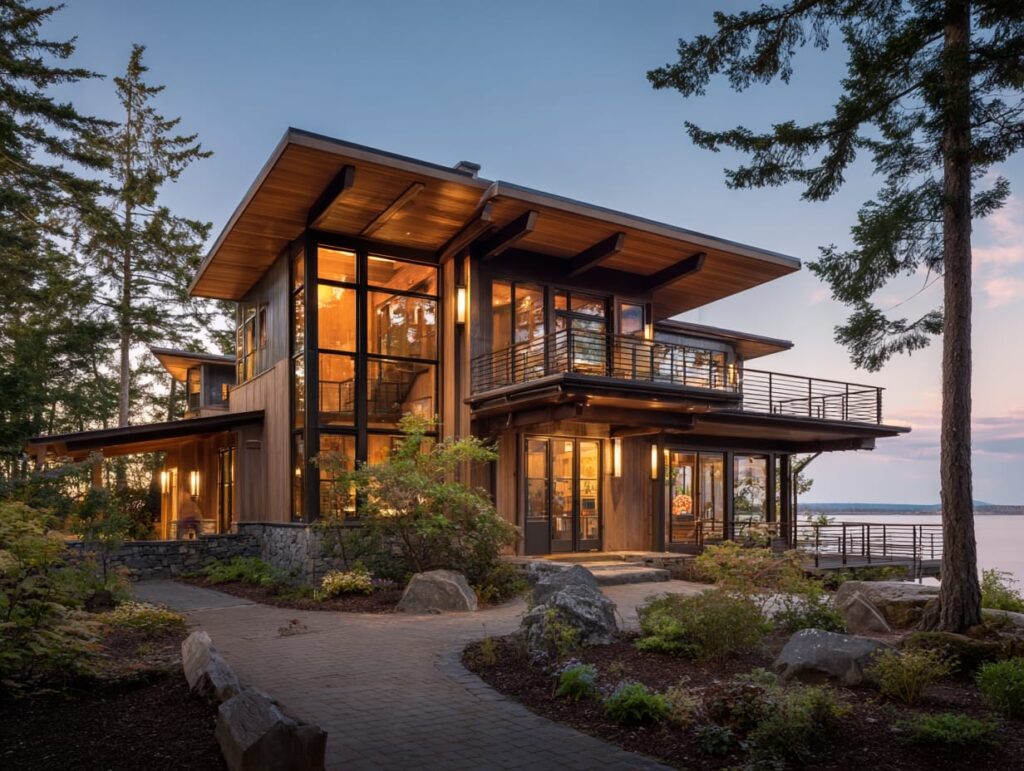
Durability is not only about resisting damage. It is also about reducing the amount of difficult maintenance a homeowner inherits after move-in.
Good design makes maintenance visible, reachable, and routine. Poor design hides water traps, blocks access, and turns small upkeep into costly work.
Roof Overhangs And Protected Entries
Roof overhangs, covered entries, and protected outdoor spaces reduce direct wetting on doors, wall surfaces, windows, and high-use areas. They also improve daily comfort during wet weather, which matters on Vancouver Island.
Roof overhangs and similar projections work as both a design feature and a performance feature, reducing direct wetting at the wall.
A covered entry can reduce wear at thresholds, protect hardware, and make daily life easier. Small design choices can reduce long-term exposure in meaningful ways.
Simpler Forms, Fewer Traps For Water
Complex architecture can be beautiful, but it creates more roof-wall intersections, valleys, inside corners, parapet-like conditions, and flashing transitions. Each one needs careful detailing.
Simple forms are not automatically better, and complex forms are not automatically risky. The difference is whether the design team understands where water will collect, where it will drain, and how each transition will be built.
On coastal sites, complexity should be intentional. Every extra transition should earn its place and be detailed properly.
Access For Cleaning And Repairs
A durable home should be serviceable. Homeowners should be able to clean gutters, inspect exterior joints, maintain coatings, wash salt residue where needed, and reach drainage features safely.
This is often missed during design because access is not exciting. However, it becomes very real after move-in when gutters are clogged, a sealant joint needs attention, or moss builds up on a shaded roof edge.
Designing for access does not mean making the home plain. It means making the home livable and maintainable.
Maintenance Plan For A Coastal Custom Home
Maintenance should not be an afterthought. In coastal conditions, small exterior issues can become larger problems when water, salt, shade, moss, and wind keep working on the same details.
A maintenance plan helps owners protect the home after move-in and gives the builder a clear way to explain what ongoing care looks like.
Why Maintenance Starts With Design
Maintenance begins during design because the design decides what can be reached, cleaned, inspected, and repaired. Gutters tucked behind awkward rooflines, cladding hidden behind dense plantings, or decks with hard-to-see water traps all make upkeep harder.
A good builder thinks about maintenance before the home is finished. That includes drainage access, exterior clearances, roof shapes, deck details, and how the homeowner will care for finishes over time.
The best maintenance plan is the one the owner can actually follow. Practical access matters as much as product selection.
Coastal Maintenance Schedule At A Glance
Use this schedule as a starting point for homeowner planning. The final approach should match the home’s materials, exposure, tree cover, and warranty guidance.
| Maintenance Area | What To Check | Timing To Think About | Why It Matters |
| Gutters And Downspouts | Debris, leaks, overflow, discharge points | Seasonal | Keeps water off walls and away from foundations |
| Cladding And Trim | Cracks, open joints, damage, coating wear | Seasonal / Annual | Stops small defects from becoming water entry points |
| Caulking And Sealants | Failed joints around penetrations and trim | Annual | Protects vulnerable transitions |
| Decks And Railings | Fasteners, guard posts, membranes, drainage | Annual | High-exposure areas fail faster when ignored |
| Landscaping | Soil height, plant contact, airflow | Seasonal | Prevents moisture being held against the home |
| Interior Humidity | Fans, laundry exhaust, condensation, humidity levels | Ongoing | Reduces moisture risk from the inside |
This schedule is a practical reminder that coastal homes need regular attention; it does not replace warranty documents or product manuals.
Maintenance And Warranty Are Related, But Not The Same
Warranty and maintenance are connected, but they are not the same thing. A warranty can protect specific categories of risk, while maintenance protects the home’s long-term performance through regular care.
Coastal homeowners should understand their responsibilities before handover. Gutters, exterior finishes, sealants, drainage, and ventilation all need homeowner attention over time.
Understanding the 2-5-10 home warranty in BC helps clarify what coverage to expect after handover and how it differs from ongoing maintenance.
Coastal Durability Checklist Before You Build
A coastal durability plan should be made before construction, not after the exterior finishes are selected. The earlier the core decisions are made, the easier it is to coordinate the envelope, site, and mechanical systems.
Use the checklist below before permit drawings and specifications are finalized.
Ten Decisions To Make Early
These ten checks help keep the project focused on practical durability, not just product selection.
- Confirm the lot’s exposure: oceanfront, bluff, forested, shaded, sheltered, or wind-exposed.
- Choose a wall assembly that can drain and dry.
- Detail windows, doors, decks, vents, and roof-wall transitions early.
- Select cladding and trim based on exposure and maintenance appetite.
- Match fasteners, connectors, railings, and hardware to coastal conditions.
- Plan roof overhangs, gutters, and downspout discharge.
- Coordinate grading, drainage, and stormwater before construction.
- Balance airtightness with mechanical ventilation.
- Design maintenance access into the home.
- Clarify warranty, maintenance, and homeowner care expectations before handover.
The strongest coastal homes are built from coordinated decisions. When these ten items are handled early, the finished home has a better chance of staying dry, serviceable, and attractive over time.
What To Decide Early Versus Later
Some durability decisions must be made early. These include roof form, wall assembly, window installation details, deck connections, drainage strategy, air barrier location, ventilation approach, and material compatibility.
Other decisions can wait longer, such as final exterior colours, some profiles, hardware style, and maintenance schedule details. Waiting on colour is fine. Waiting on flashing strategy is not.
This is why coastal durability belongs in design, not late-stage selections. Once the drawings and site work are locked in, changing water-management details becomes more expensive and harder to coordinate.
What Coastal Durability Does Not Mean
Durability is often misunderstood. It does not mean a home will never need attention, and it does not mean the most expensive material is always the right material.
It means the home is designed and built to manage real conditions with fewer avoidable weak points.
It Does Not Mean Zero Maintenance
Every coastal home needs upkeep. Salt, rain, shade, moss, wind, UV exposure, and seasonal debris all affect exterior materials over time.
The goal is not to escape maintenance. The goal is to make maintenance reasonable and predictable. That starts with accessible gutters, visible exterior joints, durable coatings, and landscaping that does not trap moisture against the house.
A no-maintenance promise is not realistic. A lower-risk, easier-to-maintain home is.
It Does Not Mean Choosing The Most Expensive Material Every Time
Cost is not the same as durability. A well-detailed, well-installed, appropriate product often performs better than an expensive product used in the wrong exposure or installed without proper drainage.
For example, a premium cladding choice will not solve poor flashing or blocked airflow. A costly railing system may still corrode if the wrong fasteners or dissimilar metals are used in exposed areas.
Durable design is pragmatic. It matches the product, the assembly, the exposure, and the maintenance plan.
It Does Not Replace Warranty Or Code Compliance
Durability planning supports code compliance and warranty expectations, but it does not replace either. Code sets baseline requirements. Warranty covers specific categories and timeframes. Maintenance protects the home day to day and season to season.
The BC Building Code regulates new construction, alterations, repairs, and demolitions, and users are responsible for compliance with specific code requirements.
A strong custom home process treats all three seriously: code, warranty, and long-term durability.
Common Coastal Durability Mistakes To Avoid
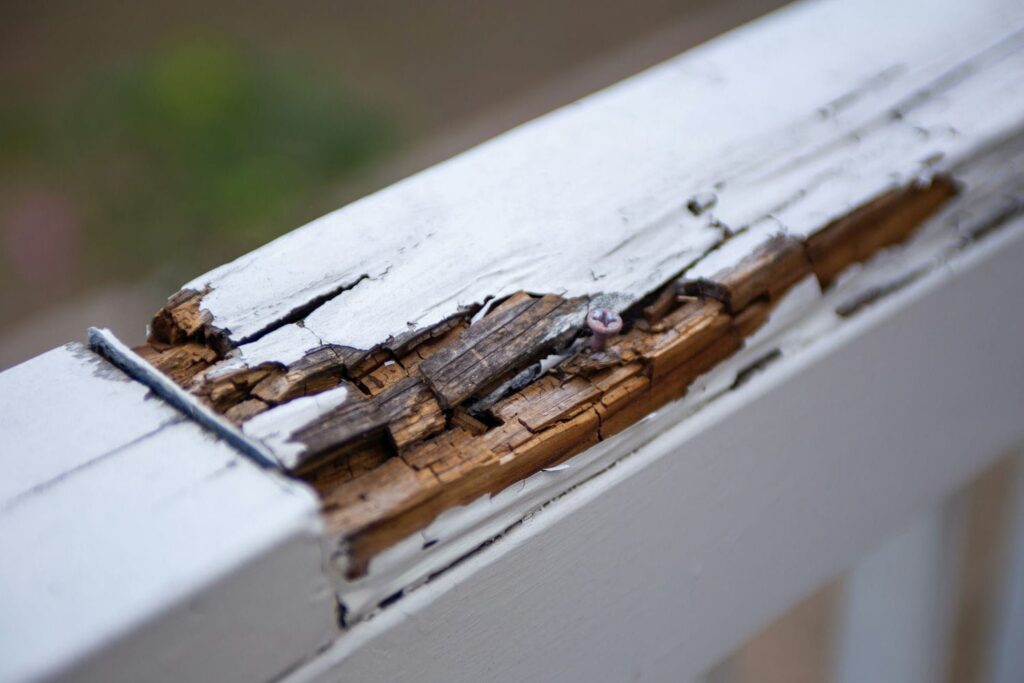
Most coastal durability mistakes are predictable. They happen when design, materials, and site planning are treated as separate decisions instead of one connected system.
Common issues to avoid:
- Choosing exterior materials by appearance only.
- Treating flashing as a minor detail.
- Forgetting that vents, hose bibs, lights, and brackets all penetrate the envelope.
- Designing complex exterior forms without a maintenance plan.
- Letting landscaping block airflow or trap moisture against walls.
- Ignoring salt exposure on fasteners, railings, and hardware.
- Assuming airtight construction can perform well without planned ventilation.
- Leaving gutters, downspouts, and grading as afterthoughts.
The fix is not to make every home simple or overbuilt. The fix is to make every decision fit the exposure, the design, and the maintenance reality.
Coastal durability is a planning discipline. When it is handled early, it becomes part of the home. When it is handled late, it becomes a list of compromises.
How We Help You Build A Durable Coastal Home On Vancouver Island
Coastal durability comes from coordination. The envelope, material selections, flashing, roof design, drainage, ventilation, and maintenance access all need to work together before construction starts.
Southpaw Homes helps with that through a design-build process that keeps field reality connected to design intent. We support durable custom homes with a fixed-price contract model, a detailed build schedule, and a client portal with daily logs and progress photos, so you can see what is happening behind the finished surfaces. As a BC Housing Licensed Residential Builder with Pacific Home Warranty coverage, we help clients plan homes that are practical, attractive, and suited to Central Vancouver Island’s coastal conditions. To start planning your build, connect with a custom home builder in Nanaimo.
Frequently Asked Questions
What Is Coastal Home Construction On Vancouver Island?
Coastal home construction means designing and building for wet weather, wind-driven rain, salt exposure, interior humidity, and ongoing maintenance, with the goal of helping the home shed water, drain water, dry properly, and stay serviceable over time. On Vancouver Island, that usually means paying close attention to the building envelope, roof design, flashing, cladding, fasteners, drainage, and ventilation from the start.
Do Coastal Homes Need Different Materials?
Often, yes. Exterior materials, fasteners, flashings, railings, coatings, and trim should be selected for the site’s exposure rather than appearance alone, since a sheltered inland lot and an exposed coastal bluff can need very different material and maintenance strategies.
Is A Rainscreen Important For Vancouver Island Homes?
Yes. A rainscreen or drained wall cavity is an important durability strategy in wet coastal conditions because it improves drainage and increases drying potential. The key is proper detailing: windows, doors, vents, roof-wall transitions, and penetrations still need careful flashing and sequencing.
How Does Airtight Construction Affect Moisture?
Airtight construction improves comfort and energy performance, but it also means interior moisture needs a planned ventilation strategy because airtight enclosures place higher demands on mechanical systems. Bathrooms, kitchens, laundry areas, and crawlspaces should be considered early in design.
Does Salt Air Affect A Custom Home?
Salt air can accelerate corrosion on exposed metals, especially fasteners, railings, brackets, hinges, exposed connectors, and exterior hardware, so material compatibility and corrosion-resistant products should be part of the design discussion. The closer and more exposed the site is to marine conditions, the more important these selections become.
How Often Should I Maintain A Coastal Home Exterior?
It depends on exposure, materials, trees, shade, roof form, and salt exposure, but a reasonable starting point is seasonal checks for gutters and drainage, annual checks for cladding and sealants, and regular cleaning where salt, moss, or debris build up. The final schedule should follow product guidance, warranty documents, and the actual conditions around the home.
What Should I Ask My Builder Before Building Near The Coast?
Ask how they plan to manage wind-driven rain, wall drainage, flashing, ventilation, fastener compatibility, site grading, and maintenance access, and how those decisions will be documented during construction. The best answer is not a single product recommendation but a clear process for coordinating design, materials, field execution, and long-term maintenance.