
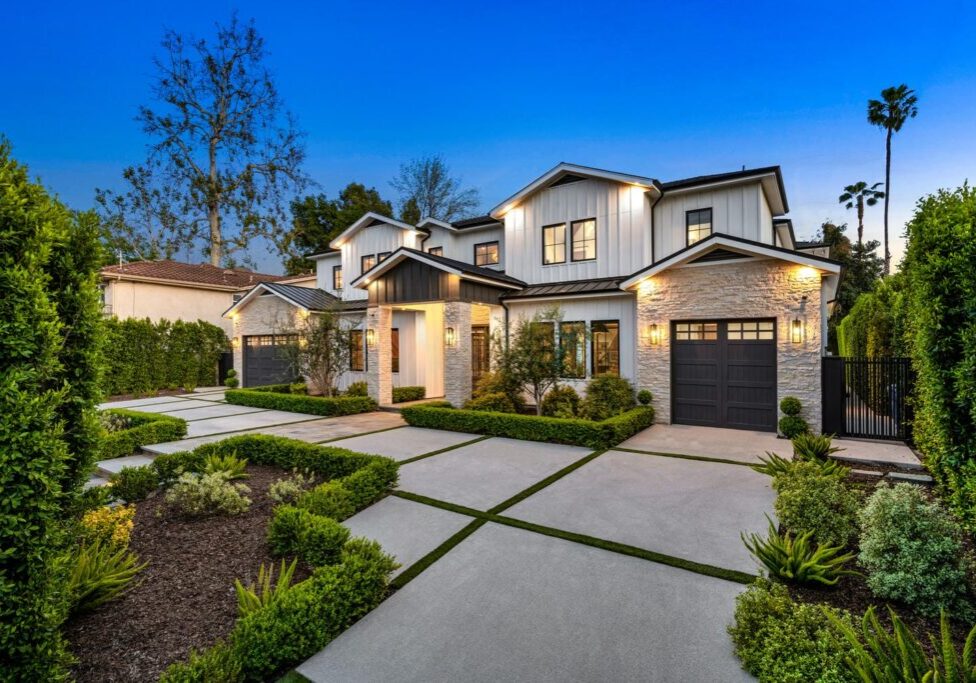
The best aging-in-place features for a Nanaimo custom home are the ones that protect future mobility, safety, comfort, and independence without making the home feel institutional. Step-free access, main-floor living, wider clearances, safer bathrooms, good lighting, and future rough-ins are easiest to coordinate before the floor plan, framing, plumbing, and electrical work are set. That is why design-build custom homes are a strong fit for long-term planning: the design and construction details can be aligned from the start.
Canada.ca defines aging in place as having the health and social supports and services needed to live safely and independently in your home or community for as long as you wish and are able. The home design decisions that protect that goal are easiest to make when the floor plan, framing, plumbing, and electrical work are still flexible.
What Aging-In-Place Design Really Means
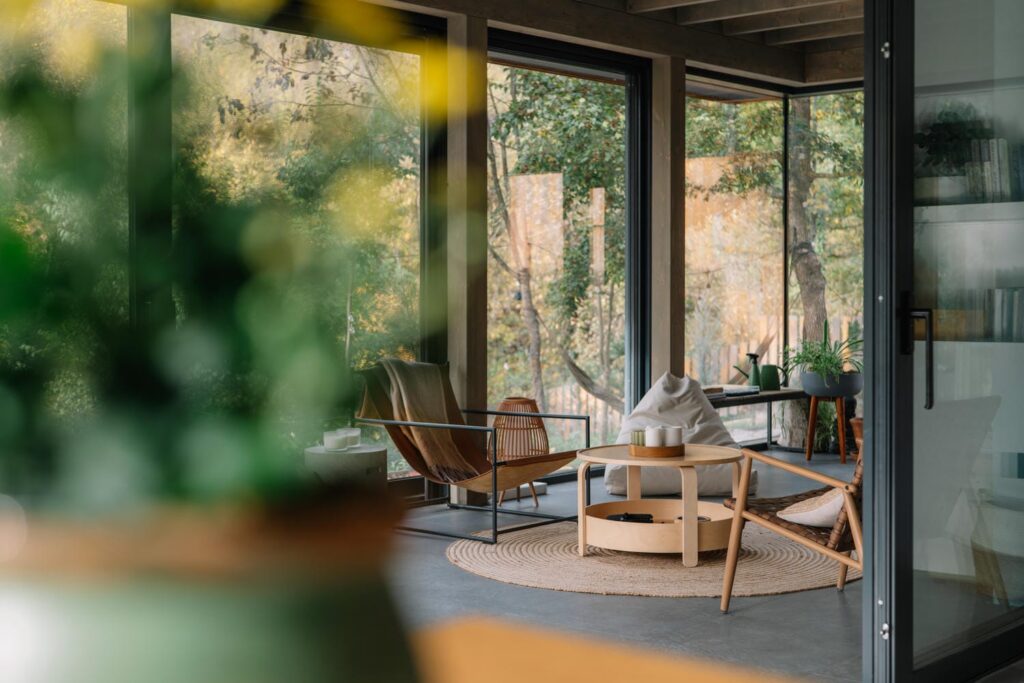
Aging-in-place design is about flexibility. It gives you options before you need them, so your home can support daily routines, recovery after an injury, visiting family, multi-generational living, and future care without forcing a major renovation.
The best features are often quiet. A wider doorway, a covered entry, a better-lit hallway, or a bathroom with blocking behind the walls may not announce itself, but it can make the home easier to use for years.
It Is About Flexibility, Not A Hospital Feel
Aging-in-place design does not mean sterile finishes, awkward ramps, or a home that feels like a care facility. When planned early, these features can feel like thoughtful design: a clean step-free entry, a spacious shower, wider halls, better lighting, and a main-floor flex room that works today as an office.
The design should support dignity and everyday comfort. A safer bathroom can still feel like a spa. A main-floor bedroom can still feel like a guest suite. A step-free entry can be shaped through grading and porch design so it looks intentional.
The strongest approach is to make the home easier for everyone. Children, guests, injured adults, caregivers, and older family members all benefit from clear circulation, good lighting, and fewer barriers.
Aging In Place Starts Before You Need It
Canada.ca encourages early planning for aging in place and notes that planning helps people respond to future changes in health, mobility, social connections, and unexpected events such as illness or disability. That translates directly into custom-home planning because the best time to plan access is while walls are open, plumbing routes are flexible, and the floor plan is still being shaped.
Early planning also gives you more control. A rough-in behind a bathroom wall is simple during framing and expensive after tile is installed. A step-free garage entry is easier to coordinate when the slab, grading, drainage, and threshold details are designed together.
You may not need every feature now. However, planning for future options helps you avoid the most disruptive changes later.
Accessible-Ready, Adaptable, And Fully Accessible Are Different
Accessible-ready means the home is built so accessibility features can be added later with less disruption. Adaptable means the home can adjust as needs change. Fully accessible means the home is built now around specific mobility, reach, transfer, or care needs.
Under the Province of BC’s accessibility requirements in the BC Building Code, adaptable dwellings are recognized as a way to help people stay in their homes through illness or injury, support seniors aging in place, expand accessible housing options, and reduce future retrofitting costs. Provincial adaptable dwelling requirements apply to specific building types and configurations, so a detached custom home still needs project-specific code review.
For a Nanaimo custom home, many aging-in-place features are voluntary design choices rather than minimum-code requirements. That is why your design brief matters. Code sets the floor, while your lifestyle sets the goal.
Start With The Lot, Entry, And Daily Access
Aging-in-place planning starts before the floor plan. The lot, driveway, parking area, grade, and path to the door can either support long-term living or make the home harder to use from day one.
A beautiful interior cannot fully solve a steep driveway, awkward parking, or a long exterior stair run. Site access is part of the accessibility plan.
Choose A Lot That Supports Long-Term Living
A lot that works for aging in place should support safe daily access. Look at the slope from parking to entry, whether a step-free route is realistic, how groceries will move into the house, and whether the driveway grade will feel manageable in wet weather.
This is also where location matters. Community can affect a person’s ability to live independently, including access to supports, services, shopping, health care providers, and transportation. When you are still choosing a custom home lot in Nanaimo, slope, access, drainage, and daily livability are worth assessing before you buy.
The right lot does not need to be perfectly flat. It needs to work with your long-term plan. A slightly more expensive lot with better access can sometimes protect the budget better than a cheaper lot that forces retaining, ramps, or awkward circulation.
Plan At Least One Step-Free Entrance
One step-free entrance can make daily life easier for strollers, luggage, groceries, temporary injuries, walkers, and wheelchairs. It can be at the front door, through the garage, or from a side entry, depending on the lot and grade.
The best step-free entry does not look like a later ramp. It is built into the architecture through grading, porch design, garage slab planning, door threshold detailing, and drainage. That is why it should be discussed early.
Water management matters here. A step-free threshold still needs protection from pooling and wind-driven rain, especially during Nanaimo’s wet months.
Weather Protection Matters In Nanaimo
Aging-in-place design should account for weather. Covered entries, good lighting, non-slip surfaces, handrail-friendly routes, and protected parking-to-door paths reduce slip risk and make daily routines easier.
This is especially important when carrying groceries, using a cane, helping a guest, or moving between the garage and the home during rain. Comfort and safety often come from the same details.
A covered entry also protects the door assembly and threshold. That makes it a durability choice as well as an accessibility choice.
Main-Floor Living: The Core Aging-In-Place Decision
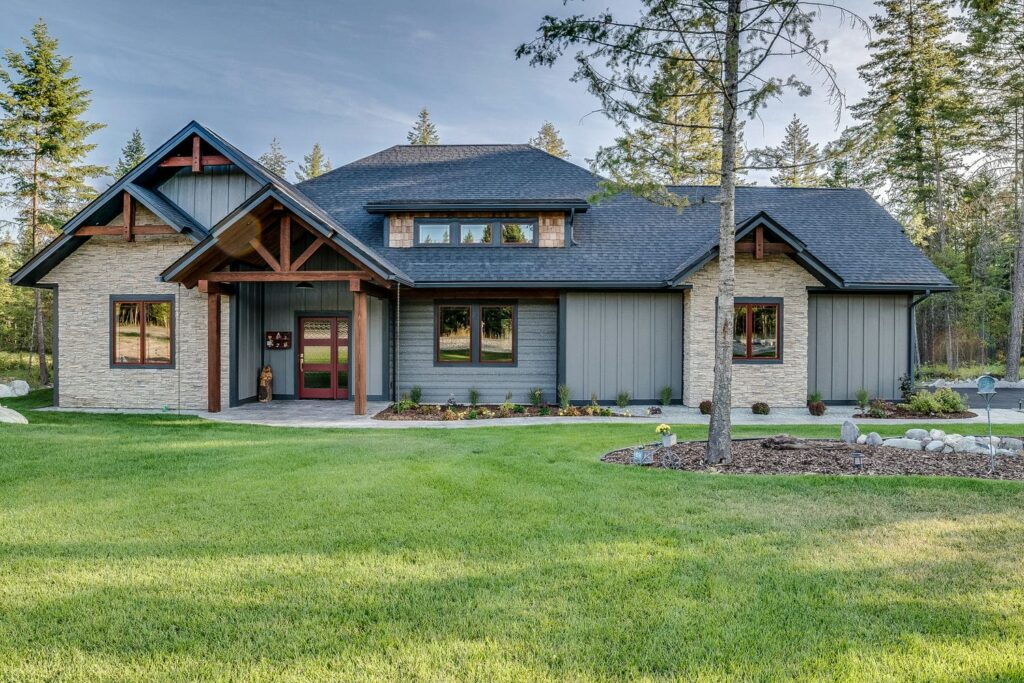
Main-floor living is one of the strongest long-term design moves you can make. It gives the home a full daily-living zone that does not depend on stairs.
For many homeowners, this does not mean giving up a second storey. It means making sure the main floor can support sleeping, bathing, cooking, laundry, and basic storage if stairs become difficult later.
Include A Main-Floor Bedroom Or Flexible Room
A main-floor bedroom or flexible room gives the home options. It can start as an office, den, guest room, media room, or hobby space, then become a future primary bedroom, recovery room, or caregiver-support space.
Plan the room with future use in mind. That means enough floor area for real furniture, privacy from the main living zone, nearby bathroom access, and a closet option if the room may become a bedroom.
This is easier to solve during the first design pass than after the home is built. A room that is too small, too exposed, or too far from a bathroom may look flexible on a plan but fail in real use.
Add A Full Bathroom On The Main Floor
A main-floor powder room is helpful, but it does not support aging in place the way a full bathroom does. If the plan allows, include a shower on the main floor, even if it is compact.
A main-floor full bathroom supports recovery after surgery, guests with mobility limitations, and future main-floor living. It also reduces the need to renovate later when the timing may be stressful.
If a full bathroom cannot be built now, consider whether plumbing routes and space can be planned for future conversion. New construction gives you that chance before finished walls and flooring make changes harder.
Keep Laundry And Daily Storage Reachable
Laundry on the same level as the main living area reduces stair use and makes daily routines simpler. The same thinking applies to pantry storage, linen storage, cleaning supplies, recycling, and seasonal essentials.
The goal is not to make every storage area large. It is to place daily-use storage where it can be reached without bending, climbing, or carrying heavy items across the house.
Good storage planning also reduces clutter, which reduces trip hazards. That makes it a quiet but important part of aging-in-place design.
Circulation, Doorways, And Clear Space
Circulation is one of the easiest things to improve during design and one of the most frustrating things to fix later. Door widths, hallways, turning space, and flooring transitions shape how easy the home feels to move through every day.
Aging-in-place circulation should focus on the routes people use most: entry to kitchen, kitchen to bedroom, bedroom to bathroom, laundry, and garage access.
Wider Doorways And Halls Help More Than You Think
Wider doorways and clearer halls help with walkers, wheelchairs, furniture moving, temporary injuries, caregiving, and everyday comfort. They reduce pinch points and make the home feel less constrained.
Accessibility Standards Canada’s accessible-ready housing standard identifies clear doorways and paths of travel for mobility devices as practical features that help homes adapt over time.
You do not need to oversize every space. Focus on the main routes and the rooms where people need help moving, turning, or transferring.
Turning Space Is Most Important In The Right Rooms
Clear turning space matters most in entries, kitchens, bathrooms, bedrooms, and laundry areas. These are the rooms where people carry items, change direction, open doors, transfer, and sometimes need another person nearby for support.
A tight hallway may be annoying. A tight bathroom can become a real barrier. The design should give the right rooms enough clearance to work in more than one life stage.
This is also where furniture planning matters. A room can meet a general size goal but still feel cramped if the bed, vanity, island, or washer location blocks the route.
Flooring Transitions Should Be Smooth And Low-Risk
Flooring transitions should be smooth, visible, and low-risk. Raised thresholds, loose rugs, glossy tile, and uneven floor changes can become trip hazards, especially around entries, bathrooms, kitchens, and hallways.
Material selection should balance durability, cleanability, comfort, and slip resistance. A beautiful floor that is slippery when wet is not a good long-term choice for entries or bathrooms.
Thresholds deserve attention too. Door systems, showers, patios, and garage entries should be planned so water control and accessibility work together.
Bathrooms Built For Safety, Comfort, And Future Support
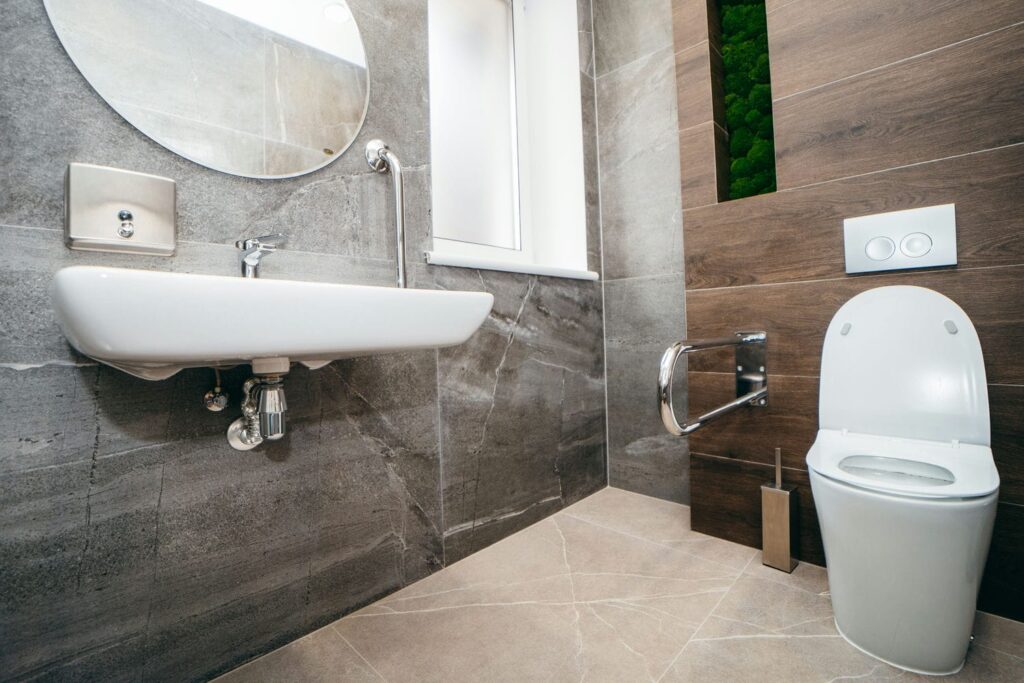
Bathrooms are one of the most important aging-in-place rooms because they combine water, privacy, hard surfaces, transfers, and limited space. A bathroom can look high-end and still be hard to use if the layout is tight or the shower threshold is awkward.
The best bathroom designs protect safety without sacrificing comfort. That requires early coordination of framing, waterproofing, plumbing, lighting, storage, and clear space.
Curbless Or Low-Threshold Showers
A curbless or low-threshold shower is one of the most valuable aging-in-place features. It reduces the need to step over a curb and can make the shower easier to use after an injury, with mobility aids, or with caregiver support.
Curbless showers need careful planning. They affect floor framing, waterproofing, drain location, slope, tile selection, and bathroom layout. They are not just a style choice.
A low-threshold shower can be a practical middle ground when a full curbless design is not the right fit. The right choice depends on the room, budget, floor system, and long-term goals.
Blocking For Future Grab Bars And Seats
Wall blocking behind tile or drywall is one of the smartest rough-ins to add during construction. It gives future grab bars, shower seats, and transfer aids a proper support point without opening finished walls later.
Accessibility Standards Canada lists reinforced walls for future lifts or grab bars as an accessible-ready housing feature, alongside clear paths and reachable controls. Together those features make the case for planning future adaptability before barriers appear.
Blocking does not force you to install grab bars now. It simply keeps the option open. That is the strength of accessible-ready design.
Toilet, Vanity, And Shower Layout
The fixture layout should allow clear approach, future support, and comfortable daily use. A toilet boxed tightly into a corner may be fine today but difficult later. A vanity with no usable storage or poor lighting can also become frustrating over time.
Think about where someone would stand, sit, turn, or help. The layout should leave space beside key fixtures where practical and avoid making the shower entry or toilet area feel trapped.
Reachable storage, lever-style faucets, layered lighting, and medicine storage that does not require stretching or bending can all improve comfort without changing the look of the room.
Kitchens That Stay Comfortable As Needs Change
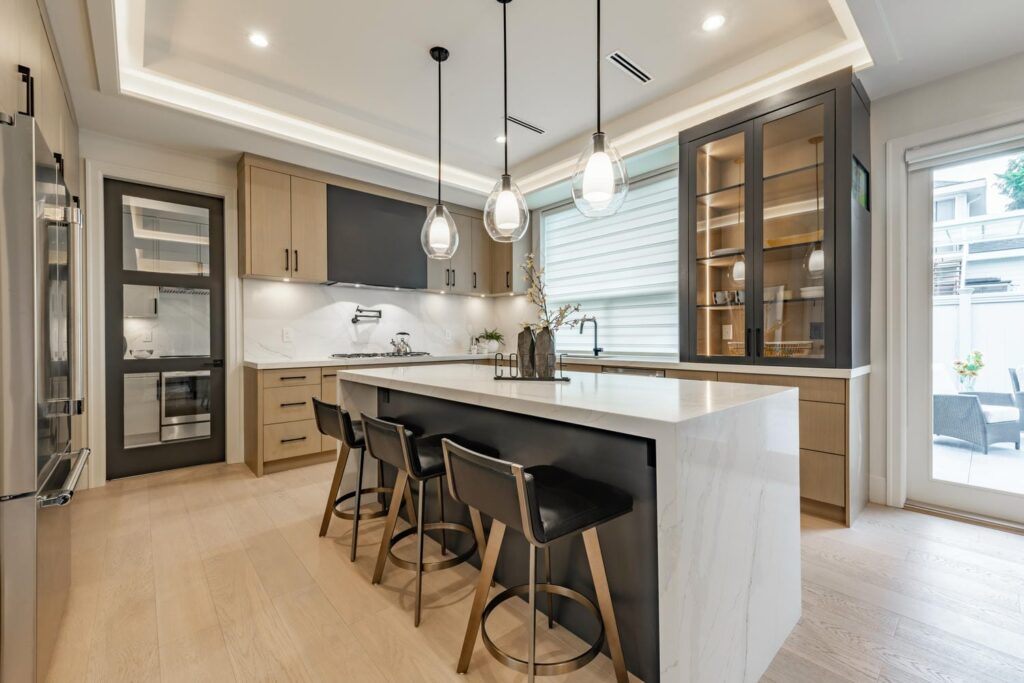
Aging-in-place kitchens should be easy to move through, easy to light, and easy to use without excessive bending or stretching. The goal is not just open space. It is useful space.
A good kitchen can still look refined and custom while supporting long-term comfort.
Work Zones, Not Just Open Space
A good kitchen layout reduces unnecessary steps while keeping circulation clear. The sink, cooktop, fridge, dishwasher, pantry, and prep zones should work together so daily tasks feel natural.
Open space matters, but it is not the only answer. A kitchen can be open and still awkward if the fridge is far from prep space, the dishwasher blocks a key path, or the island creates tight turning points.
Plan the work zones around real routines. Where do groceries land? Where does coffee happen? Where do heavy pots move? These details matter more over time.
Reachable Storage And Controls
Reachable storage can make a kitchen more useful at every age. Drawers often work better than deep lower cabinets. Pull-out shelves, appliance garages, accessible pantry zones, and thoughtful wall oven placement can reduce bending and lifting.
Accessibility Standards Canada identifies reachable or easily modified controls, such as thermostats, as practical features for adaptable homes. In kitchen planning, that same principle applies to controls, storage, switches, and appliances that should be easy to see and reach.
Do not assume upper cabinets are the only storage solution. A mix of drawers, lower pull-outs, open landing zones, and reachable pantry storage can make the kitchen easier to use.
Lighting, Contrast, And Slip Resistance
Good lighting helps with cooking, reading labels, cleaning, and spotting hazards. Layered lighting, including task lighting at counters and softer ambient lighting, can make the kitchen safer and more comfortable.
Contrast can help too. Clear edges at counters, visible handles, and switches that do not disappear into the wall can support changing vision without making the room feel clinical.
Kitchen flooring should balance comfort, cleanability, and slip resistance. A wet or glossy floor in a busy kitchen can create avoidable risk.
Stairs, Elevators, And Future Mobility Options
Stairs are not automatically a problem. Many homeowners want a second storey, a view level, or a basement. The aging-in-place question is whether the home has a plan if stairs become difficult later.
That plan might be main-floor living, a chair lift, stacked closets for a future elevator, or a single-level layout from the start.
Design Stairs For Safety From Day One
Stairs should be comfortable, well-lit, and easy to grip. Consistent risers, visible tread edges, solid handrails, and lighting at the top and bottom make stairs safer for everyone.
A good stair design also considers what happens when carrying laundry, helping a child, or recovering from an injury. These are not only senior-focused details.
Even when future mobility support is planned, safe stairs still matter today. The home should work well in its current form and remain adaptable later.
Plan For A Future Chair Lift Or Elevator
A future chair lift, elevator, or stacked-closet pathway is much easier to plan during design than after the home is framed. These features need space, structure, power, and clear routes.
Not every home needs an elevator now. Some homeowners prefer to rough in a future option so the house can adapt if needed. Others choose a single-level plan or main-floor living zone instead.
This decision should be tied to budget, lot conditions, lifestyle, and how strongly you want the home to support long-term mobility between levels.
When A Single-Level Plan May Be Smarter
For some homeowners, a single-level or main-level-living plan is the cleanest long-term choice. It reduces reliance on stairs and keeps daily routines simpler.
However, single-level homes often need a larger footprint. That means lot size, setbacks, driveway design, and grading have to support the layout.
This is why aging-in-place design should begin with both the lot and the lifestyle. A single-level home on the wrong lot may not be easier to live in than a well-planned two-level home with strong main-floor living.
Comfort, Air Quality, And Energy Performance
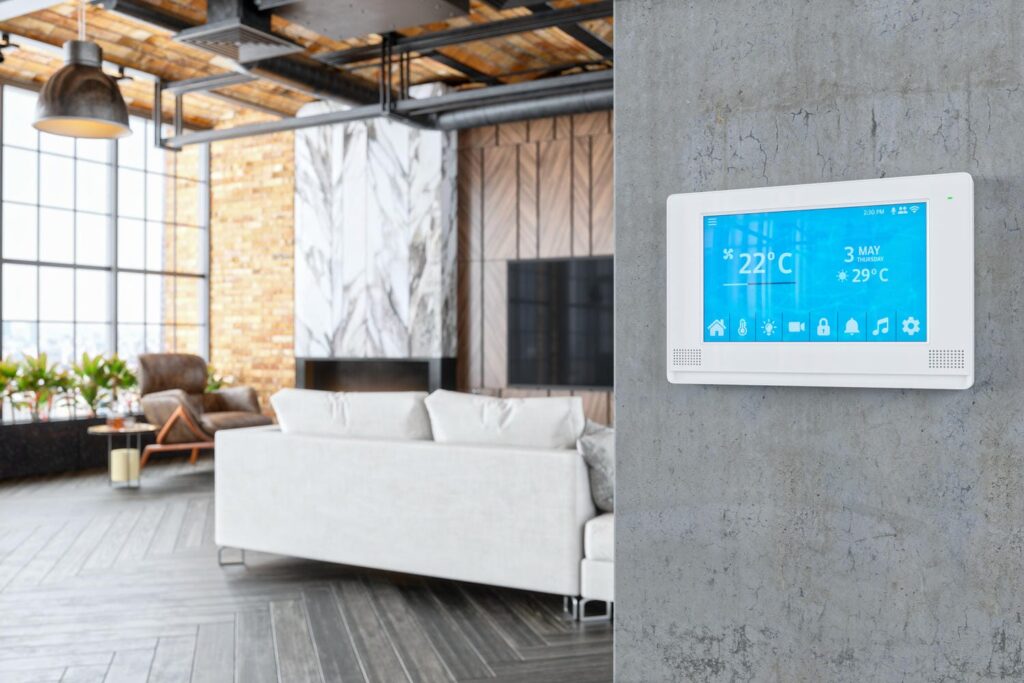
Aging in place is not only about mobility. Comfort, air quality, sound, temperature stability, and easy-to-use controls all affect how well a home supports daily living.
In Nanaimo, damp shoulder seasons, wet winters, and warmer summer periods make comfort planning part of long-term livability.
Thermal Comfort Matters More Over Time
Temperature swings can make a home harder to live in. Good insulation, window planning, shading, heating, cooling, and air distribution all support a steadier indoor environment.
Thermal comfort becomes more important when people spend more time at home or become more sensitive to cold, heat, or drafts. A future-ready home should feel stable, not just efficient on paper.
Room-by-room comfort matters too. Bedrooms, bathrooms, and main living areas should not rely on perfect weather or constant manual adjustment to feel comfortable.
Ventilation And Indoor Air Quality
Efficient, airtight homes still need planned ventilation. Bathroom exhaust, kitchen exhaust, laundry ventilation, whole-home ventilation, and moisture control all support comfort and durability.
This is especially important in homes designed for long-term use. Indoor air quality and moisture management affect how the home feels day to day and how well finishes and assemblies perform over time.
Energy performance, comfort, and ventilation are tied together, and the Energy Step Code for new custom homes shapes the envelope, mechanical, and air-quality decisions that support long-term living.
Controls Should Be Easy To Use
Controls should be visible, reachable, intuitive, and easy to change later. That includes thermostats, light switches, smart home controls, door hardware, faucets, and appliance controls.
Smart home features can help, but only when they simplify daily life. The goal is not adding gadgets. The goal is making the home easier to operate.
Lever handles, well-placed switches, simple lighting scenes, and reachable thermostats can all support independence while still feeling like normal design.
Maintenance, Durability, And Exterior Choices
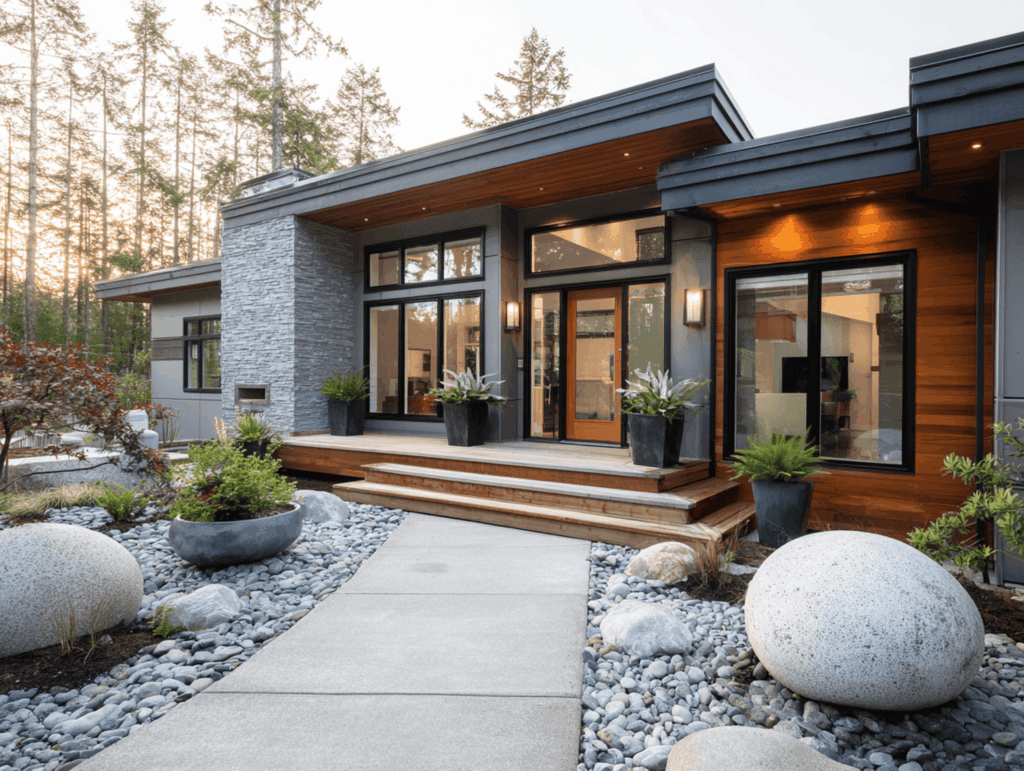
Aging in place works better when the home does not require constant difficult maintenance. Exterior design, landscaping, gutters, decks, lighting, and drainage all affect how easy the home is to care for over time.
Low maintenance should mean accessible, durable, and predictable. It should not mean ignored.
Low Maintenance Does Not Mean No Maintenance
Every home needs maintenance. In Nanaimo and Central Vancouver Island, moisture, shade, moss, wind, leaves, and coastal exposure can add to exterior upkeep.
A future-ready home should make maintenance visible and manageable. Gutters should be reachable, drainage should be clear, and landscaping should not trap moisture against walls or block airflow.
The aim is to reduce unnecessary upkeep and make required upkeep safer. That matters more as mobility changes.
Plan Exterior Access And Safer Upkeep
Exterior access should be part of the design. Think about safe paths around the home, lighting at service areas, reachable hose bibs, low-slip hardscape, gutter access, and planting beds that do not require constant climbing or heavy labour.
Decks, railings, stairs, retaining areas, and drainage features should also be easy to inspect. Hidden trouble spots create stress later.
Wet weather, shaded sites, and coastal exposure all shape long-term upkeep, which is why coastal durability for Vancouver Island homes should factor into exterior material, drainage, and detail choices.
Code, Standards, And What Is Optional In A Custom Home
Code, standards, and voluntary design goals are related, but they are not the same. A home can meet code and still miss the owner’s long-term livability goals.
That is why an aging-in-place brief should be discussed with the builder and designer early, not assumed from baseline requirements.
Code Sets Minimums, Your Design Sets The Lifestyle
The Province of BC has long noted that the BC Building Code provides accessibility requirements so people can move through and use buildings safely, and that adaptable dwellings help expand accessible housing options and reduce future retrofitting costs.
For a custom home, code compliance is the starting point. Your design brief decides whether the home also supports your preferred lifestyle, future mobility, comfort, and care needs.
Understanding BC Building Code basics for custom homes on Vancouver Island makes the line between minimum compliance and voluntary aging-in-place upgrades much clearer.
Detached Custom Homes Need Project-Specific Review
BC’s adaptable dwelling requirements apply to specific building types and configurations, including certain apartments and condominiums. The Province notes that at least one in five units must be adaptable in large condominium and apartment buildings and on the first floor of smaller apartments and condominiums, with listed exceptions.
That matters because detached custom homes often approach aging-in-place features as project-specific design choices rather than a simple checklist copied from multi-unit housing rules.
The safe approach is to separate three questions: what code requires, what the site can support, and what you want the home to do over time.
Nanaimo’s Local Context Supports Accessible Housing
The City of Nanaimo’s accessibility and inclusion materials encourage private homeowners, landlords, developers, and housing providers to build new or update existing spaces to meet adaptable and accessibility standards. The City also identifies support for seniors aging in place through accessible housing adaptation, in-law or secondary suites, shared or co-housing opportunities, and at-home care opportunities.
For homeowners, the local takeaway is practical. Accessible and adaptable housing is a recognized community need, but your custom home still needs a site-specific plan, budget, and permit path.
Aging-in-place features should be treated as part of the home’s core design brief, not a late-stage upgrade list.
Aging-In-Place Custom Home Checklist: 12 Features To Plan Early
Use this checklist before floor plans are finalized. These features are easiest to coordinate when the home’s layout, structure, plumbing, electrical, and grading are still flexible.
The point is not to install every possible feature today. The point is to protect future options where they matter most.
The 12 Checks
Here are 12 aging-in-place features to plan early in a Nanaimo custom home:
- Choose a lot with workable access, parking, slope, and daily convenience.
- Plan at least one step-free entrance.
- Include main-floor living: bedroom or flexible room, full bathroom, kitchen, laundry, and daily storage.
- Use wider doorways and clear paths where practical.
- Avoid unnecessary level changes and raised thresholds.
- Design at least one bathroom for future support.
- Add wall blocking for future grab bars, shower seats, and handrails.
- Choose reachable storage, controls, switches, and outlets.
- Plan stairs for comfort, visibility, and future mobility support.
- Coordinate lighting, contrast, and non-slip surfaces.
- Build in ventilation, comfort, and easy system controls.
- Reduce maintenance burden through durable materials and accessible exterior details.
These checks work best as design prompts. They help you decide what should be built now, what should be roughed in, and what should remain flexible for future needs.
Feature Planning Table
Use this table to sort aging-in-place ideas into build-now items and rough-in items. It keeps the conversation practical and helps avoid paying for features you do not need today while still protecting the option later.
| Feature | Build Now | Rough-In Now | Why It Matters Later |
| Step-Free Entry | Integrated entry from garage, front, or side door | Grading and porch structure | Easier access for mobility aids, strollers, and injuries |
| Main-Floor Full Bathroom | Shower, toilet, vanity, clear space | Plumbing route for future shower | Supports main-floor living |
| Grab Bar Blocking | Blocking behind shower and toilet walls | Add behind finished walls before drywall | Makes future supports easier |
| Wider Doorways | Wider doors in main routes | Frame key areas for future change | Improves movement and caregiving access |
| Curbless Shower | Full curbless design with proper drainage | Recessed structure and drain planning | Reduces trip risk |
| Elevator Or Chair Lift | Install now if needed | Stacked closets or structural planning | Supports future access between floors |
| Reachable Controls | Switches, outlets, thermostats placed thoughtfully | Conduit or smart-home rough-ins | Easier operation over time |
| Exterior Maintenance | Safer access and durable exterior choices | Drainage and access planning | Reduces future upkeep burden |
What To Build Now Versus Rough In For Later
Not every aging-in-place feature needs to be installed immediately. The smart approach is to build the items that improve daily life now and rough in the items that protect future options.
This is where new construction gives you a major advantage over renovation. You can make future change easier before the home is finished.
Features Worth Building Now
Build the features that are hard to retrofit or useful for everyone. That usually includes a step-free entry, main-floor full bathroom, comfortable stairs, good lighting, wider key doorways, safer shower planning, and well-placed laundry.
These features do not feel like compromises. They improve everyday comfort, make hosting easier, reduce friction during injuries or recovery, and support future living.
The main rule is simple: build the features that affect layout, structure, and daily movement. Those are the hardest to add cleanly later.
Features You Can Rough In For Later
Some features can be roughed in now and installed later. Good candidates include blocking for grab bars, power for future automation, a chair-lift-friendly stair layout, stacked closets for a future elevator, reinforced walls, and plumbing routes for future bathroom changes.
These rough-ins are often invisible after the home is finished, but they can save time and disruption later. They also allow the home to adapt without looking patched together.
Document these details during construction. Hidden items should be recorded clearly so future work does not depend on memory.
Features To Decide Based On Personal Needs
Some choices should be tailored to health, mobility, family support, and lifestyle. These may include a full elevator, roll-under vanity, accessible kitchen layout, caregiver suite, specialty bathroom equipment, or more advanced smart-home controls.
This is where personal planning matters. A couple planning for long-term independence may need different features than a family planning for multi-generational living or a homeowner recovering from a known medical condition.
The design should meet the people who will live in the home, not a generic checklist.
How We Help You Build A Future-Ready Nanaimo Custom Home
Aging-in-place features are easiest to add when the floor plan, structure, plumbing, electrical, grading, and finish details are coordinated before construction starts. The goal is a home that feels beautiful now and stays practical later.
Southpaw Homes supports that with a design-build process that turns long-term goals into clear scope. We use a fixed-price contract model, a detailed build schedule, and a client portal with daily logs and progress photos so key details, including blocking, rough-ins, bathroom layouts, and accessibility-minded circulation, are tracked before they disappear behind finished walls. As a BC Housing Licensed Residential Builder with Pacific Home Warranty coverage, we help clients plan custom homes that work for today and leave room for tomorrow. To start planning, connect with a custom home builder in Nanaimo.
Frequently Asked Questions
What Are The Best Aging-In-Place Features For A Nanaimo Custom Home?
The strongest features are step-free entry, main-floor living, a full main-floor bathroom, wider key doorways, safer shower design, wall blocking for future grab bars, good lighting, and lower-maintenance exterior planning. These choices are easiest to coordinate during design because they affect layout, framing, plumbing, electrical, grading, and finish selections.
Does Aging-In-Place Design Make A Home Look Institutional?
No. When aging-in-place features are planned early, they can look like normal high-quality design: a curbless shower, layered lighting, a covered step-free entry, and wider circulation can all feel clean, modern, and comfortable. The goal is to make access feel intentional, not added on later.
Should I Build A Main-Floor Bedroom?
Yes, when the lot and floor plan allow it. A main-floor bedroom or flexible room gives you future options for aging, recovery, guests, caregiving, or multi-generational living, and it does not need to be used as a bedroom right away. It can start as an office or den, then adapt later.
Is A Curbless Shower Worth It?
Often, yes. A curbless or low-threshold shower can reduce trip risk and improve long-term access, especially when paired with proper slope, drainage, waterproofing, and non-slip flooring. It should be planned early because it affects framing, waterproofing, drain location, and bathroom layout.
What Should I Rough In Now For Future Accessibility?
Consider blocking for future grab bars, stacked closets or space for a future elevator, chair-lift-friendly stairs, electrical rough-ins for automation, reinforced walls, and plumbing routes that make future bathroom changes easier. These details are easier to add before drywall and finishes are installed.
Do BC Building Code Adaptable Dwelling Rules Apply To Detached Custom Homes?
Not always. BC’s adaptable dwelling rules apply to specific building types and configurations, including certain apartments and condominiums. A detached Nanaimo custom home still needs project-specific review, but many adaptable design ideas are useful voluntary features for long-term living.
When Should I Talk To My Builder About Aging-In-Place Features?
Bring it up before floor plans are finalized. The best features affect layout, framing, plumbing, electrical, lighting, grading, and future rough-ins, so they are easiest to coordinate early. Waiting until construction is underway can make the same changes more expensive and less seamless.