
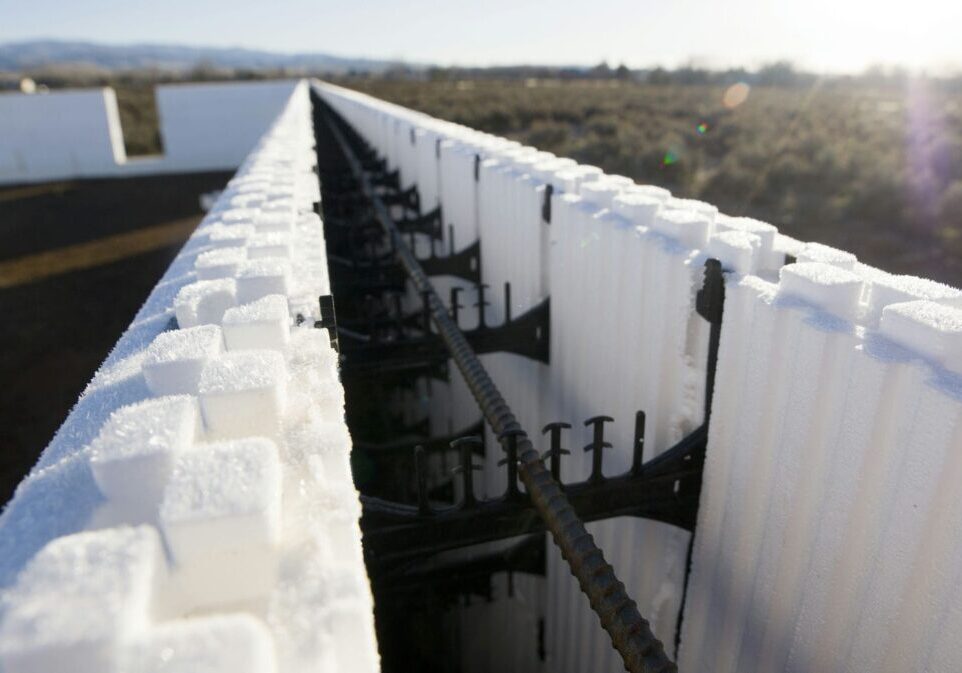
If your lower level is going to be finished, heated, and actually lived in, an ICF foundation is worth a serious look, because it builds insulation and a solid concrete wall into one system from day one. It is not the right call for every home, though. Whether it pays off really comes down to your site, your basement plans, and your budget, which is exactly the conversation worth having with a custom home builder in Nanaimo before any of those decisions get locked in.
At A Glance: When ICF Foundations Are Worth Considering
ICF foundations tend to make the most sense when the foundation wall is part of your living environment, not just a cold storage or utility area. If your basement will become a suite, office, gym, media room, family room, or walkout lower level, the added comfort and thermal continuity can make the upgrade easier to justify.
They are less compelling when the foundation is simple, the lower level will stay unconditioned, or the budget would create more value in site drainage, waterproofing, rock excavation, or other high-impact work. A premium wall system does not replace the basics: proper footing design, waterproofing, perimeter drainage, backfill planning, grading, stormwater routing, and service-penetration detailing still matter.
In practical terms, ICF may be worth considering when:
- The lower level will be finished, conditioned, or used daily.
- Basement comfort, air leakage control, and thermal continuity matter.
- Energy-performance planning is central to the custom home brief.
- The foundation design is simple enough to avoid excessive ICF complexity.
- The site review supports the chosen foundation strategy.
- Waterproofing, drainage, backfill, and penetrations are coordinated early.
- The budget supports the full wall assembly, not just the foundation line item.
What Is An ICF Foundation?
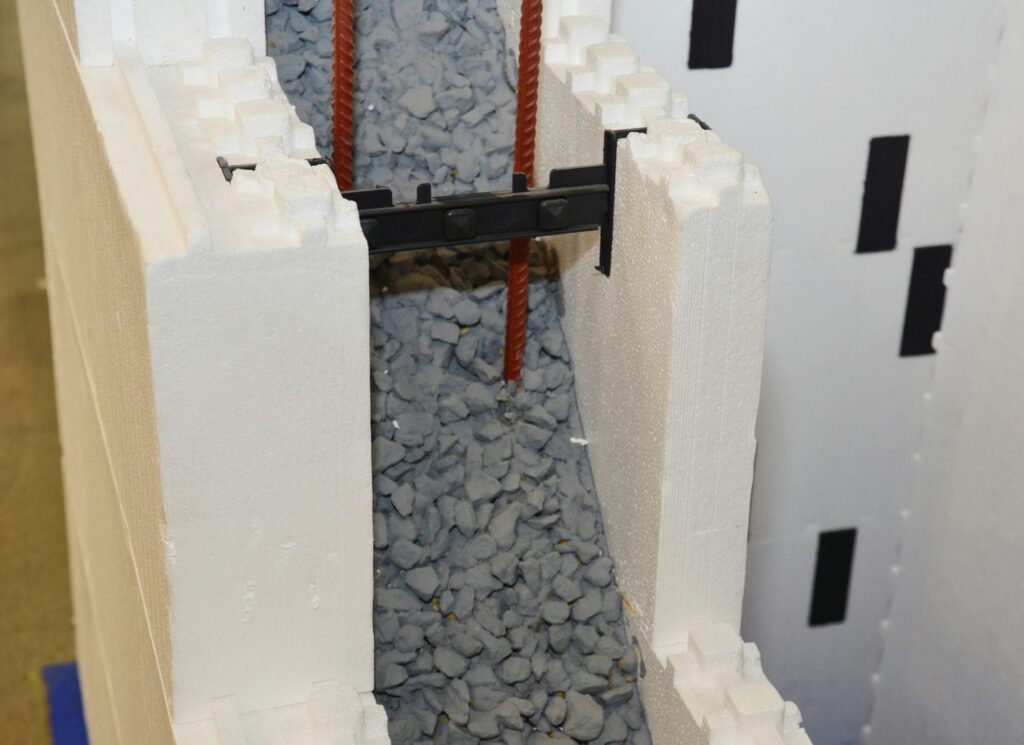
An ICF foundation uses interlocking foam forms that stay in place after concrete is poured, creating a reinforced concrete wall with continuous insulation on both sides. It is still a concrete foundation, but the formwork and insulation strategy are different from a conventional poured wall.
That difference affects more than material choice. It can change wall thickness, window and door openings, waterproofing, service penetrations, interior finish planning, and trade sequencing.
ICF Foundation Definition
ICF stands for insulated concrete form. In a foundation application, foam blocks or panels are assembled into the wall shape, reinforcement is installed inside, and concrete is poured into the cavity. Once the concrete cures, the foam stays in place and becomes part of the wall assembly.
CMHC’s guidance on insulated concrete form construction describes hollow expanded or extruded polystyrene foam forms held together by webs that also provide attachment points. Rebar is installed as required, concrete provides the structural strength, and the foam remains as continuous insulation on both sides of the concrete.
For a homeowner, the simple definition is this: ICF is a reinforced concrete foundation wall with insulation built into the forming system. That integrated approach is why it can be attractive for finished basements and performance-focused homes.
How It Differs From A Conventional Poured Concrete Foundation
A conventional poured concrete foundation usually uses temporary forms that are removed after the concrete cures. Insulation, framing, and finishes are then added separately, depending on the design and code path.
An ICF foundation combines the formwork and insulation in one system. The foam remains on both sides of the concrete core, and the wall is designed from the start as an insulated concrete assembly.
That difference matters during design. ICF walls are often thicker, openings need to be planned carefully, penetrations should be sleeved before the pour, and interior finish or foam-protection details should be understood before the basement plan is treated as “future work.”
Why Homeowners Usually Consider ICF
Most homeowners look at ICF for comfort first. A finished lower level can feel less like a cold basement when the foundation wall includes continuous insulation and reduced cold-wall effect.
Others consider ICF because of energy performance, sound reduction, durability, or the solid feel of a concrete core. CMHC notes that ICF walls provide continuous insulation on both sides of the concrete and reduce thermal bridging, which can support comfort and reduce cold surface concerns.
The value is strongest when the basement matters to daily life. If the lower level includes bedrooms, a suite, a recreation space, or a home office, comfort is not a small detail. It becomes part of the home’s livability.
The Main Benefits Of ICF Foundations
ICF foundations can support a warmer, quieter, and more performance-oriented lower level, but they are not magic. The benefits depend on good design, skilled installation, site drainage, waterproofing, mechanical planning, and code-compliant finishing.
The best way to evaluate ICF is to look at the full foundation system. Compare the wall assembly, not just the concrete pour.
Better Basement Comfort
Basement comfort is one of the clearest reasons to consider ICF. The continuous insulation helps reduce the cold-wall feeling that many homeowners associate with conventional basements, especially when the lower level is finished and heated.
A warmer wall surface can make bedrooms, offices, media rooms, and gyms more pleasant to use. That can make the basement feel like a true part of the home rather than secondary space.
However, ICF is only one part of comfort. Slab insulation, window quality, air sealing, heating and cooling, ventilation, moisture control, and flooring choices all affect how the lower level feels.
Energy Performance And Thermal Continuity
ICF foundations can support energy-performance planning because insulation is continuous on both sides of the concrete core. CMHC notes that ICF construction can reduce thermal bridging and improve effective thermal resistance compared with some other wall systems.
That said, ICF does not guarantee a high-performing home by itself. Whole-home energy performance depends on the complete design: windows, roof, above-grade walls, air sealing, mechanical systems, orientation, and energy modelling.
If energy performance is part of your custom home brief, treat ICF as one envelope decision inside the broader strategy. Planning around the Energy Step Code for new custom homes sets the performance targets your foundation choice has to work within.
Sound, Strength, And A More Solid Feel
ICF can also help a lower level feel more solid and quiet. Concrete has sound-blocking qualities, and CMHC notes that ICF construction can reduce sound transmission and support quiet indoor environments.
That can matter if your basement includes a suite, office, media room, gym, or multi-generational living space. The wall system is not the only sound-control detail, but it can contribute to a quieter result.
Floor systems, ducts, doors, interior partitions, mechanical noise, and layout still need attention. A quiet basement comes from coordinated design, not one material choice.
Construction-Season Advantages
ICF can sometimes support shoulder-season or colder-weather concrete work because the insulated forms help protect concrete during placement and curing. CMHC notes that insulated forms can help protect concrete from freezing during construction and may make adverse-weather pours easier for experienced contractors.
This can be helpful on Vancouver Island, where wet seasons and shifting weather windows can affect site work. However, it should not be treated as a schedule guarantee.
Actual timing still depends on excavation, inspections, site access, concrete availability, crew experience, weather, form complexity, and how cleanly the rest of the foundation work is sequenced.
When ICF Foundations Are Most Worth It
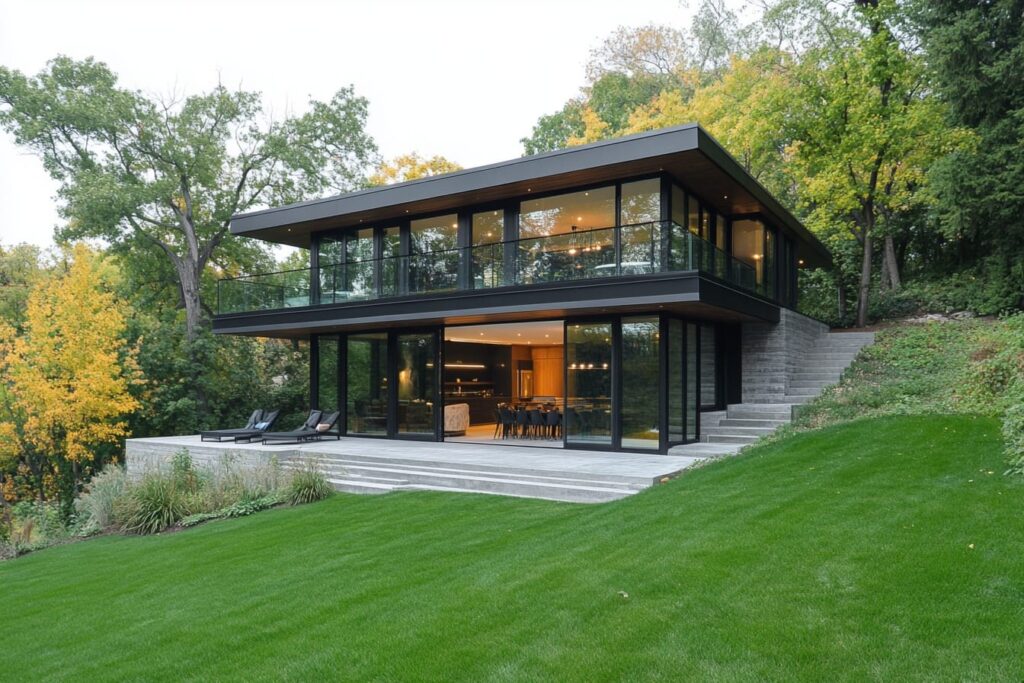
ICF has the strongest case when it supports how the home will actually be used. If the lower level is finished, conditioned, and central to the plan, the foundation wall matters more.
The decision should be made early. Once drawings, pricing, excavation, waterproofing, and mechanical routes are set, switching foundation systems gets harder.
Finished Basements And Walkout Lower Levels
ICF is often most valuable when the basement or lower level is designed as finished living space. Bedrooms, offices, suites, gyms, media rooms, family rooms, and walkout lower levels all benefit from comfort and insulation continuity.
If the basement is part of the main living program, it should not be treated as a low-priority space. The foundation wall becomes part of the comfort strategy, the energy strategy, and the long-term value of the home.
This is especially true for walkout designs where one side may be exposed and another side may be below grade. Those conditions make the foundation wall work harder.
Energy-Focused Custom Homes
ICF can fit well when the entire custom home is being designed around energy performance, comfort, and durability. The foundation is part of the thermal envelope, so it should be reviewed alongside above-grade walls, roof assemblies, windows, mechanical systems, and air sealing.
The Province of BC sets Energy and Zero Carbon Step Code requirements based on the building permit date and project location, and local governments can require higher steps through bylaw. That means your energy path should be confirmed for the specific jurisdiction and permit timeline.
ICF can support that work, but it is not a substitute for energy modelling. The model decides where ICF helps, where it may be neutral, and where another upgrade may deliver more value.
Sites Where Foundation Walls Do A Lot Of Work
ICF may be worth a closer look on sites with substantial foundation walls, walkout conditions, stepped grades, or lower levels that are partially buried and partially exposed. These are cases where the foundation wall has a larger impact on comfort, structure, and energy performance.
However, site conditions still lead the decision. Soil, slope, groundwater, rock, bearing, retaining needs, and drainage should be reviewed before the wall system is chosen.
On a complex site, the smartest foundation is not always the most premium wall product. It is the wall system that fits the engineering, drainage, budget, and home design.
When Conventional Poured Concrete May Be Enough
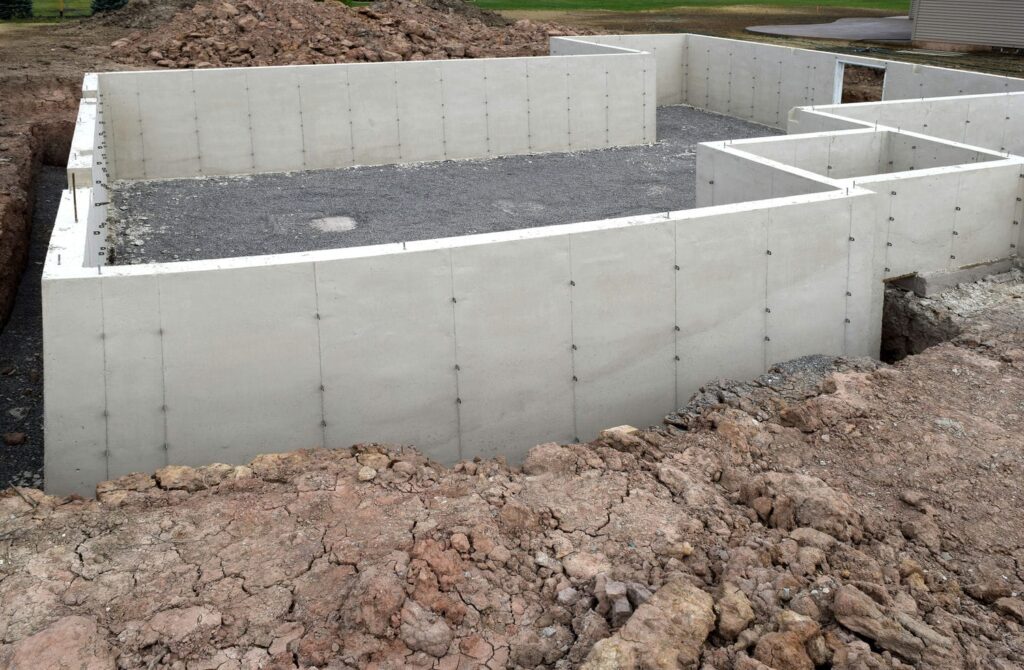
Conventional poured concrete is not the “cheap” or lesser option by default. It can be the right choice when it fits the site, budget, and design.
The real question is whether ICF adds enough value to justify its added coordination and cost.
Simple Foundations With Limited Finished Basement Space
Conventional poured concrete may be enough when the lower level is not finished living space, the foundation geometry is simple, and the project does not need the wall system to carry much of the comfort or energy strategy.
For example, a basic storage basement, utility area, crawlspace, or straightforward foundation may not justify the ICF premium. In those cases, a well-built poured foundation with proper insulation, waterproofing, drainage, and backfill can perform very well.
The key is not to compare ICF against a poorly detailed conventional foundation. Compare two complete, properly designed foundation assemblies.
When Budget Is Better Spent Elsewhere
If the site has drainage issues, poor soils, steep access, rock excavation risk, retaining walls, or major servicing costs, those issues may deserve budget priority before ICF. A premium foundation wall does not solve water moving toward the house.
This is a common Vancouver Island decision. Sometimes the best investment is not the wall product. It is better grading, stronger stormwater planning, more robust waterproofing, or early geotechnical review.
ICF is worth considering when the basics are already handled. It should not be used to distract from site water, soil, or drainage risks.
When The Design Is Too Complex For The Benefit
ICF can become harder to coordinate when the foundation has many jogs, angles, openings, window wells, grade changes, or walkout conditions that are not planned early. Complexity can add labour, reinforcement, concrete-placement challenges, and cost.
CMHC notes that large windows and complicated wall geometries can be challenging for ICF construction because extra reinforcement and careful concrete placement may be needed. It also notes that simpler wall geometries can help keep costs down.
This does not mean ICF only works on simple homes. It means complex ICF foundations need more design discipline and better trade coordination.
The Real Tradeoffs: Cost, Coordination, And Detailing
ICF is not just a product selection. It affects scope, sequencing, trades, waterproofing, openings, penetrations, interior protection, and pricing.
The decision should be made with the full foundation package in mind, not just the material name.
ICF Can Cost More Upfront
ICF often costs more upfront, but the premium depends on the design, wall height, reinforcement, openings, local labour familiarity, concrete placement, waterproofing, and what the conventional alternative includes.
CMHC cites older 2012 data suggesting ICF full-height homes could cost 2 to 5 percent more than wood-framed construction with standard cast-in-place basements, and 5 to 7 percent more for first-time ICF installers. Treat that as historic context, not a current Vancouver Island price quote.
For today’s planning, the better comparison is full assembly versus full assembly. ICF includes insulation, while conventional concrete may need separate insulation, framing, air sealing, and finishing.
Trade Coordination Matters More
ICF affects more trades than many homeowners expect. Electrical, plumbing, mechanical, waterproofing, framing, windows, doors, cladding, interior finishes, exterior finishes, and backfill all need to work with the wall system.
CMHC highlights that coordination between trades is essential so chases, penetrations, wiring, piping, and supports for finishes are planned properly. It also notes that thicker ICF wall profiles can require deeper jamb extensions around doors and windows.
This is where a design-build process helps. When the design team, builder, and trades understand the foundation strategy early, the details can be priced and sequenced before they become field changes.
Waterproofing And Rainwater Control Still Matter
ICF does not eliminate moisture risk. Below grade, you still need waterproofing or damp-proofing as required, perimeter drains, proper backfill, grading, stormwater routing, and careful service penetrations.
CMHC cautions that rainwater leakage remains a possible durability concern in ICF construction, and that window, door, penetration, intersection, and transition details must prevent water from getting past the drainage plane.
That point matters on Vancouver Island. A well-insulated foundation still needs a serious water-management plan.
Site Conditions That Should Shape The Foundation Choice

The foundation system should respond to the site first. Slope, fill, rock, groundwater, retaining needs, bearing, drainage, and access all influence whether ICF makes sense.
Choosing a foundation wall before understanding the site is backwards. The site should inform the wall system, not the other way around.
Soil, Bearing, And Slope
Soil conditions, bearing capacity, slope stability, groundwater, fill, and retaining needs can all shape the foundation design. ICF may work well, but the engineering and site recommendations should come first.
If the site is sloped, has fill, has groundwater concerns, or has foundation uncertainty, a geotechnical report in Nanaimo can help define the foundation and soil review before the wall system is chosen.
This prevents the foundation conversation from becoming a product debate. The better question is: what does the site need, and which foundation approach meets that need best?
Bedrock, Excavation, And Stepped Foundations
On many Vancouver Island lots, shallow rock or uneven rock can affect foundation design. ICF may still be an option, but excavation, footing layout, stepped walls, drainage, and concrete sequencing need to be coordinated.
Rock conditions can also change the value equation. If the budget is already carrying significant excavation or rock removal, the ICF decision should be reviewed inside the total foundation and site-work budget.
In these cases, early site review matters. You want the excavation plan, footing strategy, and wall system to work together before permits and pricing are finalized.
Drainage, Stormwater, And Service Penetrations
Foundation performance depends heavily on water management. Perimeter drains, storm routing, downspout discharge, grading, sump strategy where required, and service penetrations all need to be coordinated with the chosen foundation system.
ICF service penetrations should be planned before concrete placement where possible. Poorly planned penetrations create avoidable field work and potential waterproofing problems.
Stormwater and drainage planning, service routes, utility entry points, and trenching questions all belong on a site servicing checklist before foundation details are locked.
Code And Permit Considerations For ICF Foundations

ICF is a construction method, not an exemption from code. The foundation still needs proper structural design, footing design, reinforcement, waterproofing, energy compliance, and interior protection where required.
Homeowners do not need to become code experts, but they should understand where code-sensitive details can affect scope.
ICF Must Still Meet Current Code Requirements
The BC Building Code applies to new construction, alterations, repairs, and demolitions, and the BC Building Code 2024 came into effect on March 8, 2024 for projects with building permits applied for after that date.
For an ICF foundation, that means the wall system, reinforcement, insulation, fire protection, interior finishes, waterproofing, damp-proofing, and energy performance need project-specific review.
The practical takeaway: choose ICF early enough that the design team can document it correctly. It should not be a late substitution.
Foam Plastic Protection Is A Real Detail
The foam in an ICF assembly cannot always be left exposed where protection is required. This matters most when a basement is accessible, unfinished, or likely to be finished later.
In BC Building Code Appeal Board Decision 1905, the Board determined that exposed ICF foamed plastic in an accessible unfinished basement had to be protected from the interior space by materials described in the applicable code provision.
For homeowners, the point is simple: “unfinished” does not always mean “no finish required.” If the basement may be used now or later, foam protection, electrical, and interior details should be planned early.
Keep The Code Discussion In The Right Place
This page is not meant to be a building-code manual. It is meant to help you know what to ask before you choose ICF and before the foundation scope is priced.
Understanding the BC Building Code basics for custom homes keeps code expectations in proportion during new home planning, so your foundation choice does not turn into guesswork.
The best approach is practical: confirm the code path, involve the right professionals, and avoid late changes to hidden details.
Design Details That Make Or Break ICF Value
ICF value depends on the details. A simple, well-planned ICF foundation can support comfort and performance. A poorly coordinated one can create field changes, delays, and cost creep.
The most important design work happens before excavation and concrete.
Window Wells, Large Openings, And Walkouts
ICF works best when window wells, large basement windows, walkout doors, lintels, and reinforcement are planned early. Openings are not just holes in the wall. They affect structure, waterproofing, insulation continuity, interior finish, and cost.
Walkout lower levels can be a strong use case for ICF because the foundation wall often becomes part of the living space. However, the more architecturally active the wall becomes, the more coordination matters.
A good plan shows opening sizes, sill heights, drainage, flashing, waterproofing transitions, and interior finish strategy before pricing is finalized.
Mechanical, Plumbing, And Electrical Routes
Penetrations through ICF walls should be planned before the pour. That includes plumbing sleeves, electrical pathways, mechanical vents, utility entries, hose bibs, exterior taps, and any service penetrations through the foundation.
Poorly planned penetrations can create field drilling, waterproofing risk, and schedule friction. They can also affect finish quality inside the basement.
The best result comes when mechanical, plumbing, electrical, and foundation details are coordinated together. This is not a good place for “we’ll figure it out later.”
Interior Finish Strategy
If the basement will be finished, the finish strategy should be designed with ICF in mind. Wall finishes, electrical runs, trim, baseboards, storage, service access, and foam protection all need a clear plan.
If the basement is not being finished right away, the future condition still matters. Blocking, rough-ins, panel locations, protection, and access should be considered before the wall disappears behind backfill and later finishes.
This is where early documentation matters. Photos, drawings, and clear scope notes can save confusion years later.
Decision Matrix: ICF Vs. Conventional Foundation
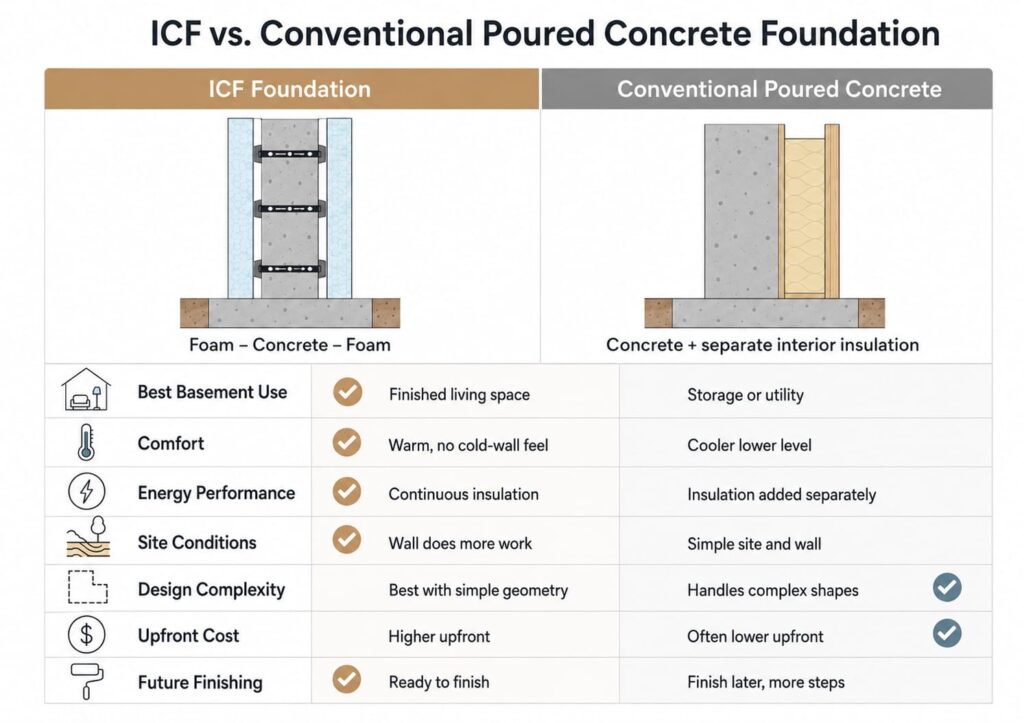
A decision matrix helps move the conversation from “ICF sounds better” to “ICF fits this project.” It also helps separate emotional upgrades from practical value.
Use the table below as a first-pass tool, then confirm the decision with design, site review, pricing, and energy modelling.
| Decision Factor | ICF Foundation May Be Worth It | Conventional Poured Concrete May Be Enough |
| Basement Use | Finished living space, suite, office, gym, or media room | Storage, utility space, or unconditioned area |
| Comfort Goals | Warm lower level and reduced cold-wall feel matter | Basement comfort is lower priority |
| Energy Strategy | Envelope performance and thermal continuity are central | Other upgrades deliver better value |
| Site Conditions | Foundation wall plays a major performance role | Simple site, simple wall, straightforward drainage |
| Design Complexity | Simple wall geometry and openings planned early | Many jogs, large openings, and complex geometry |
| Budget | Premium supports long-term value | Budget better spent on drainage, site work, or layout |
| Trade Experience | Team has ICF experience or a strong coordination plan | Local team is better suited to conventional forming |
| Future Finishing | Basement may be finished now or later | Basement will remain unfinished or minimal |
ICF Foundation Decision Checklist: 10 Questions Before You Choose
Before you decide on ICF, ask the questions that affect cost, comfort, and constructability. These questions will help your builder, designer, and consultants compare the full foundation package.
They also reduce the chance of a misleading estimate. Pricing ICF before the details are known can create false confidence.
The 10 Questions
- Will the lower level be finished or conditioned?
- Is basement comfort a high priority?
- Does the energy model benefit from a higher-performing foundation wall?
- Is the foundation geometry simple enough for ICF to stay efficient?
- Are window wells, walkouts, and large openings already planned?
- Has the geotechnical or foundation design direction been confirmed?
- Has drainage, waterproofing, and stormwater routing been planned?
- Are service penetrations and mechanical routes coordinated?
- Are interior finish and foam-protection requirements understood?
- Does the budget still make sense after comparing full wall assemblies, not just concrete cost?
A “yes” to several comfort, energy, and finished-basement questions strengthens the case for ICF. A “no” or “unknown” on site, drainage, or detailing questions means more feasibility work is needed first.
What To Decide Before Pricing
ICF should be priced after the foundation design, wall heights, openings, waterproofing approach, drainage strategy, service penetrations, and finish expectations are clear. Otherwise, the estimate may miss the very details that decide whether ICF is worth it.
This is especially important when comparing ICF to poured concrete. A fair comparison includes insulation, air sealing, finishes, waterproofing, drainage, labour, openings, and schedule impacts.
The goal is not to make ICF look cheaper or more expensive. The goal is to compare complete systems so the decision is honest.
How We Help You Decide If ICF Belongs In Your Custom Home
ICF foundations can add real value, but only when they fit the design, site, energy goals, drainage plan, budget, and construction sequence. The decision should be based on the full foundation assembly, not one product label.
Southpaw Homes evaluates that through a practical design-build process. We compare site conditions, energy goals, waterproofing, openings, service penetrations, trade sequencing, and cost before the scope is locked. Our fixed-price contract model, detailed build schedule, and client portal with daily logs and progress photos help keep foundation decisions visible before they disappear behind concrete, backfill, and finished walls. As a BC Housing Licensed Residential Builder with Pacific Home Warranty coverage, WorkSafeBC coverage, and $5M commercial liability insurance, we help clients choose foundation systems that fit the home and the site. Tell us about your lot and your lower-level goals, and we can walk you through our design-build custom home process and review ICF against conventional poured concrete for your site, design goals, drainage, energy performance, and budget.
Frequently Asked Questions
Are ICF Foundations Worth It For A Custom Home?
ICF foundations can be worth it when the basement or lower level will be finished, conditioned, or used as daily living space. They are less compelling when the lower level is unconditioned or when the budget would create more value in site drainage, waterproofing, or other upgrades. The decision should compare full foundation assemblies, not just the concrete wall, since ICF includes insulation while conventional poured concrete may need separate insulation, framing, air sealing, and finish details.
What Is An ICF Foundation?
An ICF foundation uses interlocking foam forms that stay in place after concrete is poured, leaving a reinforced concrete wall with continuous insulation on the inside and outside. CMHC describes it as foam forms filled with reinforced concrete, where the foam remains in place to provide continuous insulation on both sides of the concrete.
Do ICF Foundations Help With Energy Efficiency?
Yes, they can support energy efficiency because they provide continuous insulation and can reduce air leakage, but whole-home performance still depends on the full design, including windows, roof, wall assemblies, mechanical systems, airtightness, and energy modelling. ICF is one envelope decision and should be evaluated alongside the full energy strategy, not treated as a standalone solution.
Do ICF Foundations Still Need Waterproofing And Drainage?
Yes. ICF is not a substitute for waterproofing, perimeter drainage, stormwater planning, correct grading, and careful service-penetration detailing. Below-grade water management still matters, because a foundation wall can be well insulated and still perform poorly if drainage and waterproofing are weak.
Are ICF Foundations More Expensive Than Poured Concrete?
Often, yes, but the comparison should include the full wall assembly, not just the concrete wall, since ICF includes built-in insulation while conventional foundations may need separate insulation, air sealing, framing, and finish details. CMHC’s older cost data is useful as historic context, but current Vancouver Island pricing should be confirmed for the specific design, site, crew, and scope.
Can I Leave ICF Foam Exposed In An Unfinished Basement?
Not necessarily. Foam plastic protection is a code-sensitive detail: in a BC Building Code Appeal Board decision involving an accessible unfinished basement, exposed ICF foamed plastic had to be protected from the interior space by code-listed materials. If the basement will be accessible, used, or finished later, plan the foam-protection and interior-finish strategy early.
When Should I Decide On ICF?
Decide before foundation drawings, pricing, and permit details are finalized, because ICF affects wall thickness, openings, waterproofing, service penetrations, drainage, trades, finishes, and schedule. Late decisions create avoidable redesign and pricing friction, so the earlier the wall system is selected, the cleaner the coordination.