

Site servicing is everything that makes your lot buildable and livable: water, sanitary sewer or septic, stormwater management, power, communications, and legal driveway access. The surprise is rarely “do services exist.” The surprise is depth, grade, capacity, and who has to sign off before you can backfill and move on.
If you want this figured out before you spend real money on drawings, start with a custom home builder Nanaimo who treats servicing as a feasibility step, not a mid-build scramble.
We build across Nanaimo and central Vancouver Island, and we also work on nearby Gulf Islands where municipal services are not always available. On some island and rural lots, “servicing” can mean wells or cisterns, septic fields, and longer coordination chains for utilities. It’s manageable. You just need to plan it early.
What Site Servicing Means For A Custom Home Lot
Site servicing is the set of connections and on-site infrastructure that support a habitable home: water, sanitary sewer or septic, stormwater, power, communications, and legal access.
Think of it as the hidden foundation under your project plan. It decides where the house can sit, how high it needs to be, how the driveway will work, and how water gets on and off the property without creating problems.
The Difference Between “Services Are Nearby” And “Services Are Usable”
“Services are nearby” is a real estate phrase. “Services are usable” is a construction fact.
Nearby can mean a main in the road. Usable means you have a practical connection point, at a workable depth, that matches your building location and elevations. A sewer main that’s too shallow for gravity at your desired build spot can turn into a pump system, or force you to move the house.
Why Servicing Is A Pre-Design Problem, Not A Mid-Build Problem
Servicing decisions drive design. They influence finished floor elevation, driveway slope, foundation type, and drainage strategy.
If you lock design first and discover servicing constraints later, the fix is almost always more expensive. You either redesign the home to fit the site, or you engineer the site harder to fit the home.
The Site Servicing Checklist Start Here
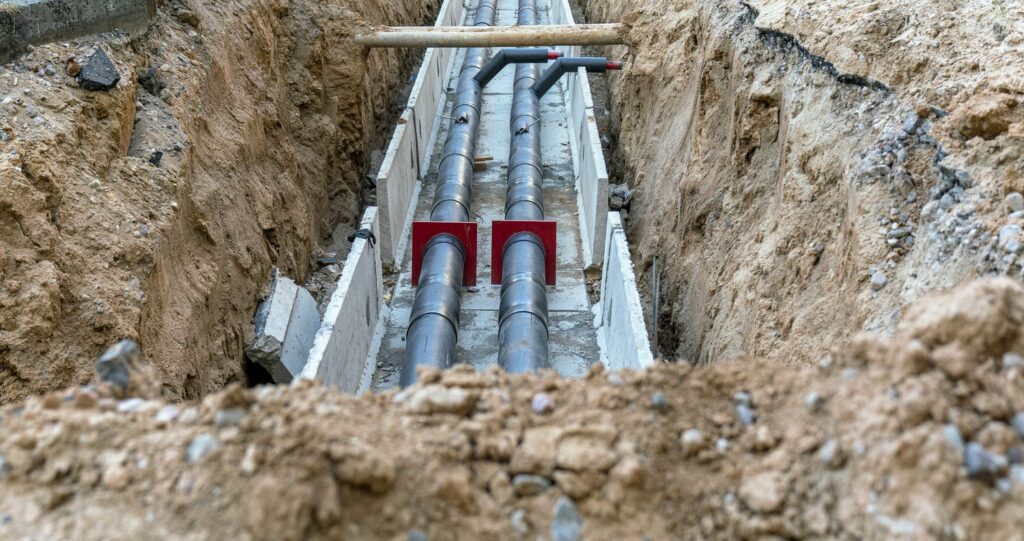
Before you obsess over floor plans, confirm the basics below. This is where you protect your budget and schedule.
Water Supply
First, identify the water source: municipal, community system, well, or cistern. Then confirm the connection location (or well location), depth, and where your mechanical room will handle pressure regulation, filtration, or storage.
In Nanaimo neighbourhoods with municipal water, the details are usually about connection points and requirements. On Gulf Islands and rural pockets, the questions shift to yield, storage volume, pump strategy, and treatment. It’s not a deal-breaker, but it changes the design and cost, so you want it confirmed early.
Sanitary Sewer Or Septic
If you have municipal sewer, confirm the connection point and depth. Depth matters because it decides whether gravity works, and it influences your foundation elevation and slab heights.
If you’re on septic, the servicing conversation becomes a land-use conversation. You need room for a septic field, acceptable soils, and setbacks that can affect house placement. Many “great lots” become difficult lots when septic placement clashes with slopes, trees you cannot remove, or the only buildable bench.
Stormwater Management
Stormwater is where a lot of budgets get quietly damaged. Not because it’s complicated, but because it’s often assumed.
Confirm whether storm ties to a municipal system, a ditch, or requires infiltration on site. Sloped lots, tight lots, and lots with challenging soils can trigger engineered solutions. The earlier you identify the constraint, the easier it is to design around it.
Power And Communications
Confirm overhead vs underground service, where the transformer is (or will be), and whether upgrades are required. Also confirm where communications will come in so you’re not retrofitting conduits after hardscaping is done.
On island builds, add one more layer: logistics. Ferry schedules, fewer specialty contractors, and longer lead times can affect when power and telecom can be completed. It’s not a reason to avoid an island build. It’s a reason to schedule with percision.
Driveway Access And Civil Works
Confirm legal access first. Then confirm practical access: grade, sight lines, turning radii, and whether emergency and construction vehicles can actually get to the build area.
Driveway grades also affect your build staging. If access is steep or narrow, you may need more planning for excavation, concrete deliveries, and material handling. That’s where servicing bleeds into schedule.
What To Confirm Before You Buy The Lot
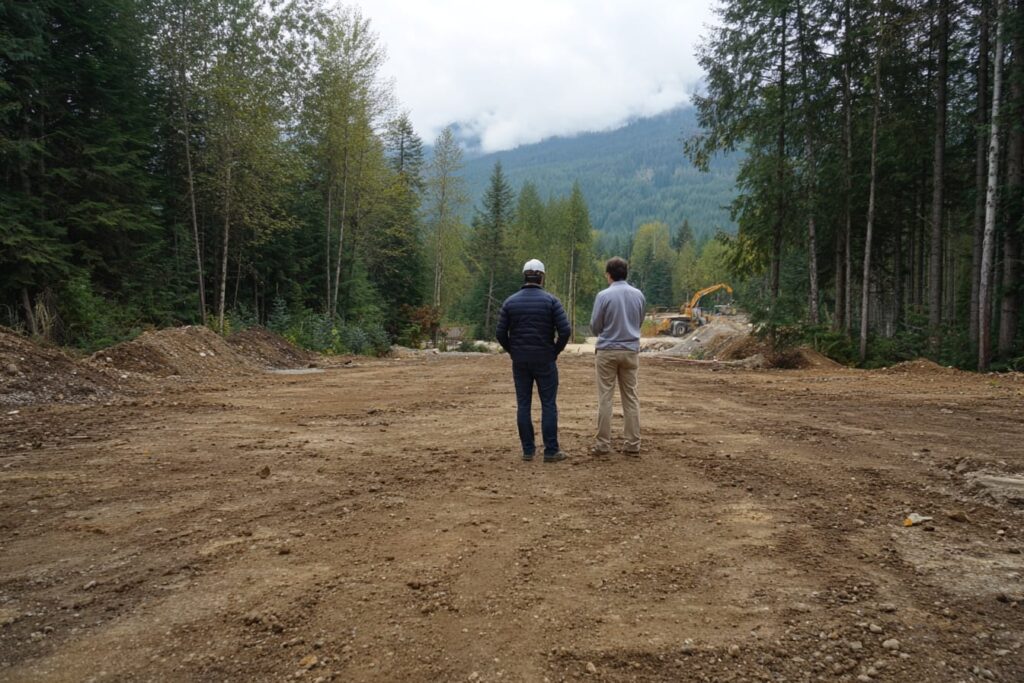
You don’t need to become a civil engineer. You do need to stop buying lots based on vibes.
Ask For Records Not Opinions
Ask for a survey. Ask for any as-builts, old permits, or servicing records the seller has. Ask for confirmation of water and sewer availability from the relevant authority. If records don’t exist, treat that uncertainty as a cost risk.
When someone says “services are at the road,” your next question is “where, how deep, and documented by who?” If nobody can answer, you price the lot like a question mark.
Walk The Lot With A Builder
A builder’s site walk catches practical issues fast: grade breaks, drainage paths, rock indicators, access and staging limits, and where services can run without fighting the site.
This is also where a custom home builder with local knowledge helps. The lot that looks easy on a map can be the lot with tricky drainage, shallow cover over rock, or a driveway that forces a different home placement than you expected.
Here’s The Catch
Even when services exist, the cheapest path is not always the usable path. Depth, grade, and inspection requirements can force a different routing, different elevations, or different systems. Servicing surprises are predictable when nobody checks early.
Utility Locates And Hidden Infrastructure (Don’t Skip This)

Digging without locates is one of the fastest ways to turn a normal job into a stopped job.
Use BC 1 Call Before Any Digging
BC 1 Call lets homeowners request free locate requests before they dig, and they make it clear you are not clear to excavate until notified members have responded.
Locates reduce the risk of hitting buried utilities, damaging services, and creating emergency repairs. They also help you avoid avoidable neighbour conflict, because “my contractor hit my neighbour’s line” is a real way projects go sideways.
What Locates Don’t Tell You
Locates are not an as-built survey of every private line on your property. They don’t guarantee depth, condition, or capacity.
So treat locates as a baseline safety step, not a full servicing investigation. You still need smart planning, and sometimes you still need targeted exploratory work to confirm what you’re building around.
Why This Matters For Budget And Schedule
A locate problem can shut down excavation, force redesign, and drag your schedule. It can also create work that doesn’t show up in your original budget.
If you want a predictable build, you treat locates and servicing verification as the earliest part of the schedule, not a footnote.
Permits Inspections And Timing
Servicing is not just physical work. In many jurisdictions, it’s also a permit and inspection sequence.
Service Connections Often Tie Into Permit Requirements
In Nanaimo, the City notes that a permit is required for installing plumbing fixtures or service connections that are not already part of a building permit, and they outline what’s required to apply.
This matters because servicing work often happens early, and it can affect whether you can proceed to the next phase. If your servicing plan is unclear, your permit and inspection timeline can become unclear too.
Underground Inspections Before Cover-Up
The City of Nanaimo’s Building Bylaw lists an inspection point before a building drain, water service/fireline, and sanitary or storm sewer are covered, and it also states that work must not be concealed until accepted in writing.
That one requirement changes how you schedule trenching and backfill. If you backfill before the right inspection, you can end up reopening work you just paid for.
Where This Fits In The Build Sequence
Servicing typically hits early, but it interacts with more than people expect: excavation, foundation elevations, plumbing rough-ins, and sometimes engineering sign-offs.
If you want a Nanaimo-specific view of sequencing, permits, and common paperwork bottlenecks, use our guide on City of Nanaimo permits for custom homes.
For broader inspection context on Vancouver Island, our BC Building Code basics for custom homes article helps you understand what gets checked, when, and why it affects schedule.
When Servicing Turns Into Engineering
Some lots are straightforward. Others demand engineering because the site won’t tolerate shortcuts.
Slopes Fill And Water Change Everything
Slope, fill, and groundwater change trenching, compaction, drainage, and stability. If you’re building on a bench, near a watercourse, or on a steep grade, servicing can become an engineered system, not just a trench and pipe.
In Nanaimo, the City has a specific handout for on-site servicing on active building permits and notes that it relies on civil engineer certification for on-site civil works, plus site reporting.
Retaining Pumping And Infiltration Systems
This is where costs can jump. If gravity sewer doesn’t work, you may need pumping. If storm can’t daylight safely, you may need engineered infiltration. If grades don’t hold, you may need retaining with proper drainage behind it.
The key is not to fear these systems. The key is to identify them early, so they’re designed, priced, and coordinated into the schedule instead of bolted on in panic.
The Smart Move
If slopes and soils are part of your lot’s story, don’t guess. Get the right investigations early and align servicing around them.
If you’re unsure whether your lot needs geotechnical input, start with our guide on geotechnical reports for Nanaimo custom homes, which explains when soil and slope conditions tend to trigger additional requirements.
How Servicing Choices Affect Comfort And Energy Performance
Servicing is not just “pipes and wires.” It also affects how your home feels to live in.
Mechanical Planning Starts With Site Reality
Where your services land influences your mechanical layout. Water storage and filtration need room. Septic routing can influence where you place utility spaces. Power capacity and panel location affect future EV charging and heat pump readiness.
On lots without municipal water, the mechanical room may carry more responsibility: pumps, pressure tanks, filtration, and storage. That can be designed cleanly, but it needs to be designed intentionally.
Step Code And Tighter Homes Need Better Coordination
Higher-performance homes tend to be tighter, more controlled, and more dependent on proper mechanical systems. That makes early coordination more important, not less.
If you want the big picture on performance requirements and testing, our Energy Step Code guideexplains what changes in design, documentation, and verification on modern custom builds.
Site Servicing Reference Table
Use this as a saveable checklist. It’s not a substitute for design or engineering, but it will catch the common blind spots.
| Servicing Item | What To Confirm | Who Typically Signs Off |
| Water | Source type, connection point, depth, meter rules | Municipality or water provider |
| Sanitary / Septic | Invert depth, gravity feasibility, setbacks | Municipality or health authority / engineer |
| Storm | Outfall option, infiltration feasibility, grades | Municipality / engineer |
| Power | Overhead/underground, transformer location, capacity | Utility provider |
| Access | Grade, sight lines, permit requirements | Municipality / MOTI |
De-Risk Your Lot Before You Draw The House
Servicing surprises are preventable when you confirm the fundamentals early and plan around the real site. That’s how you protect your budget, your schedule, and your long-term performance.
Southpaw Homes builds with a fixed-price contract model, a meticulously planned schedule, and a client portal with daily logs and progress photos. We’re also a BC Housing Licensed Residential Builder with WorkSafeBC coverage and $5M commercial liability insurance. If you want a build where the paperwork supports the work, start here with our design-build custom home services.
Frequently Asked Question
What Does Site Servicing Include For A Custom Home Lot?
Site servicing includes water supply, sanitary sewer or septic, stormwater management, power, communications, and driveway access, plus the on-site civil work needed to connect them safely and legally. It also includes the sequencing and inspections that determine when you can backfill, pour, and move to the next phase.
How Do I Know If My Lot Has Usable Municipal Services?
Don’t rely on “at the road.” Confirm connection points, depth, and condition through municipal records where possible, and verify on site. If gravity sewer is assumed, confirm invert depths early. That single detail can change your whole foundation plan.
What Is The Most Common Servicing Surprise In Nanaimo And Mid-Island?
Stormwater and grade. Many owners assume storm is simple until they discover constraints that force engineered solutions. On sloped lots, stormwater planning and retaining often get tied together, which is why early feasibility is so valuable.
What Changes On Gulf Islands Or Rural Lots?
Municipal water and sewer may not exist. You may be planning for wells or cisterns, septic systems, and longer utility coordination. That does not make the build “worse.” It makes servicing more central to the design, so you confirm it before you commit.
Do I Need BC 1 Call Before Digging On My Lot?
Yes. BC 1 Call explains how homeowners can request free locate requests, and that you are not clear to excavate until members notified have responded. Locates reduce the risk of hitting buried infrastructure and causing avoidable damage and delays.
Can Servicing Affect My Permit Or Inspection Timeline in Nanaimo?
Yes. Servicing work can require permits or be tied to inspections depending on scope and jurisdiction. In Nanaimo, the City outlines when a plumbing or services permit is required for service connections not already part of a building permit.
When Do I Need A Geotechnical Report For Servicing Work?
If slopes, fill, groundwater, or trench stability are concerns, geotechnical input can become necessary for safe, compliant servicing. If you’re unsure, treat it as a feasibility question and verify early, before design is locked.
Who Should Manage Site Servicing On A Custom Build?
Your builder should coordinate servicing as part of the construction plan because it affects schedule, inspections, elevations, and drainage strategy. The best outcomes happen when servicing is treated like a design input, not an afterthought.