
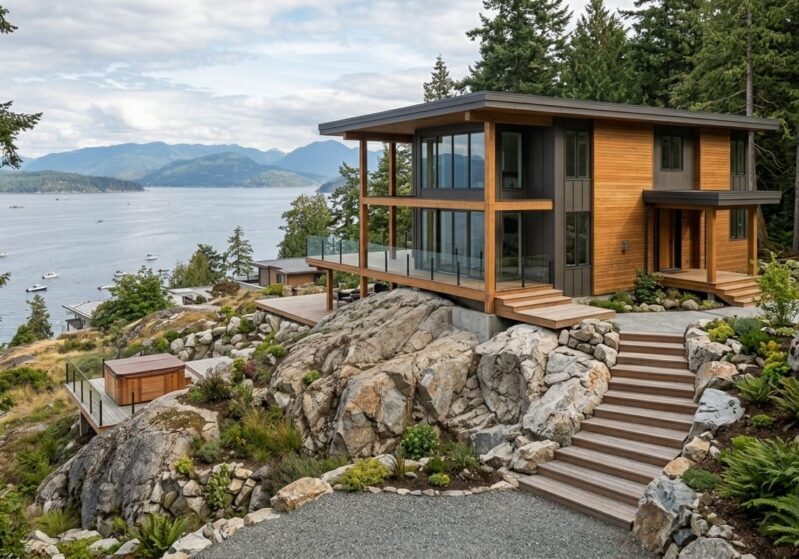
Yes, you can build a house on bedrock. In many cases, bedrock offers excellent bearing and long-term stability, but it can also add complexity to excavation, drainage, and utility trenching. If you’re evaluating a lot purchase or you have already hit rock during excavation, working with a Nanaimo custom home builder early can help you spot the biggest constraints before you invest in full drawings.
At A Glance
Building on bedrock is not rare in Nanaimo, but it is never one-size-fits-all. The same street can have shallow rock on one lot and deeper soils on the next, so it helps to treat bedrock as a planning input, not a problem on its own.
Here are the quick takeaways most homeowners need:
- Bedrock usually means strong bearing, but excavation can be harder and more expensive.
- A basement can be possible, but it depends on rock depth, access, and excavation approach.
- Drainage and waterproofing still matter, because water can travel along rock surfaces and seams.
- Utility trenching in rock can be a major cost and schedule driver.
- A geotechnical review is still valuable, even if rock is visible.
- Permits still apply, and rock conditions can influence what documentation is needed.
What “Bedrock” Means On A Home Site
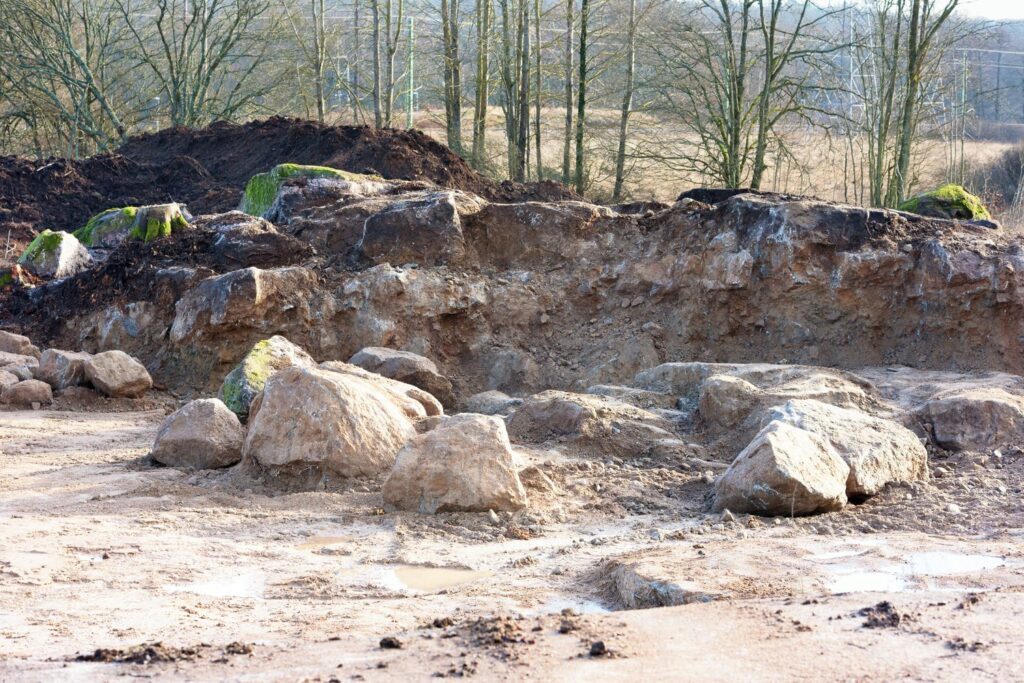
Bedrock vs. “Big Rocks”
On a home site, “bedrock” means a continuous rock formation under the soil, not just scattered boulders or a few large stones. You can have a lot with plenty of rocks in the soil, but still not be building on true bedrock.
That difference matters because bedrock changes how you excavate and how your foundation interfaces with the ground. A few large rocks can be removed or worked around. A bedrock shelf across your building footprint may require a different foundation concept, a different excavation plan, or both.
How Bedrock Is Confirmed In Practice
Homeowners often “confirm bedrock” by seeing rock in an excavation, but that is only part of the story. Bedrock depth can vary a lot across a single footprint, and what you see in one corner may not match what you find under the rest of the home.
In practice, bedrock is typically confirmed through a combination of site observations, test pits, drilling, and geotechnical investigation. Even if you can see bedrock, a geotechnical professional can help determine rock quality, fracture patterns, and how the rock surface will affect drainage and foundation design.
Why Nanaimo Home Sites Often Encounter Rock
Nanaimo and much of Vancouver Island includes areas where rock can be close to the surface, especially on sloped sites and in neighbourhoods with thin soils. That said, it’s risky to assume you will see the same conditions as a neighbour, even if you’re only a few doors away.
The smartest approach is to plan for uncertainty until the site tells you the truth. That means using early-stage checks to reduce surprises, then choosing a foundation and excavation approach that fits what you actually have, not what you hoped you would find.
Can You Build On Bedrock? Yes, But Here’s What Changes
The Real Advantage: Bearing And Long-Term Stability
The main benefit of building on competent bedrock is reliable bearing. When a foundation bears on solid rock, it can reduce the risk of settlement compared to variable soils, especially on sites where soil depth changes across the footprint.
However, strong bearing does not automatically mean a “perfect” foundation. Drainage, waterproofing, and structural detailing still matter. Many foundation issues come from water and movement over time, not from weak bearing alone.
The Real Tradeoff: Excavation And Constructability
The tradeoff with bedrock is constructability. Excavation can become slower, louder, and more specialized. If your design assumes a typical basement dig, bedrock can force changes to depth, layout, or method, especially if rock is uneven across the footprint.
Bedrock can also affect site logistics. Access for equipment, space for staging, and the ability to manage haul-off can all impact budget and schedule. On some lots, the best decision is not “can we remove the rock,” but “how do we design the home to reduce rock removal.”
Drainage And Water Still Matter On Bedrock
It’s easy to assume rock means “dry,” but water still moves around and through rock interfaces. Water can run along the surface of bedrock, collect in low spots, and travel through fractures or seams, especially during heavy rain.
That’s why drainage planning stays central on bedrock sites. A good plan manages surface water, protects the foundation interface, and directs water away from the home. It also reduces the risk of hydrostatic pressure and seepage, which can show up even when soil is thin.
How Bedrock Can Change The Build
| Build Area | What Often Changes On Bedrock | Why It Matters |
| Excavation | More specialized removal, slower progress, more hauling | Can drive cost and schedule uncertainty |
| Foundation | Stepped footings, rock leveling, anchoring details | Keeps structure stable and compliant |
| Drainage | More focus on directing water over rock surfaces | Reduces seepage and pressure at foundation |
| Utilities | Rock trenching, deeper planning for routes | Can be a major budget swing |
| Design | Adjusting footprint to reduce rock removal | Often the best cost-control lever |
How Builders Actually Build Foundations On Bedrock
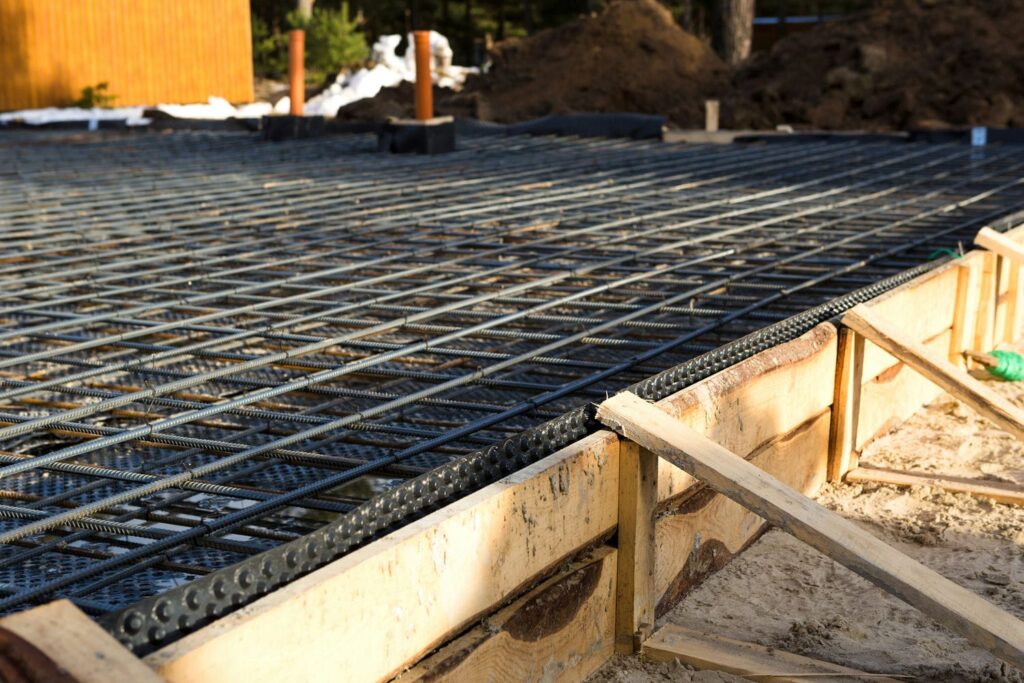
Common Foundation Approaches On Rock
Foundations on bedrock are typically designed to suit two things: the rock profile and the home’s desired layout. On some sites, a slab-on-grade may be the simplest path. On others, you may use stepped strip footings that follow the rock surface. Partial basements or crawlspaces can also make sense when rock depth varies across the footprint.
The right approach depends on how deep the rock is, how uneven it is, and what level changes you need to manage. A feasibility-first design approach is important here, because the “best” plan is often the one that reduces rock removal while still meeting your space and livability goals.
Key Details That Often Change
Bedrock sites often require more attention to the bearing surface. The rock surface may need to be leveled or prepared so footings sit properly, and the foundation layout may need to step to follow grade changes.
You may also see anchoring details into rock where required, depending on the engineering and site conditions. These details matter because they influence labour, coordination, and inspection readiness. A clean plan on paper needs to match what can actually be built on the ground.
Waterproofing And Drainage At The Rock Interface
Waterproofing and drainage details can become more important on bedrock, not less. Water can travel along rock, find seams, and collect where the rock forms a “bowl” near the foundation.
A solid approach usually combines surface water management, foundation waterproofing, and a drainage plan that moves water away from the home. The goal is simple: keep the foundation dry and reduce water pressure against walls, especially if you are building any part of the home below grade.
Rock Excavation Options: From Hammering To Blasting
When Mechanical Rock Removal Works
Mechanical rock removal can include rock hammering, splitting, and sawcutting, depending on rock type and access. For some projects, mechanical methods are the right choice because they can be controlled, staged, and matched to a tight site footprint.
Mechanical removal can still be slow, and it can be noisy, but it avoids the planning and constraints of explosives. It also allows you to remove only what you need, which can be a cost advantage when you design the home to reduce rock excavation.
When Blasting Becomes A Consideration
Blasting becomes a consideration when you need to remove a larger volume of hard rock efficiently, or when mechanical progress becomes impractical. It may also come up when you are committed to a deep basement and the rock profile makes removal difficult by other means.
For homeowners, the key point is that blasting is a specialized scope item. It affects planning, scheduling, and risk management. If blasting is on the table, it should be evaluated early, not discovered mid-excavation when you are already committed to a foundation layout.
If blasting is required, it needs qualified professionals, a clear plan, and the right controls for safety and compliance. WorkSafeBC’s blasting certification requirements outline the education, training, and credentials that qualified blasters must hold in BC.
Even if your project does not require blasting, it helps to treat rock excavation as a safety-sensitive part of the build. The safest projects are the ones where excavation decisions are made with clear site information and a plan that matches the conditions.
What A Bedrock-Specific Geotechnical Review Should Address
It’s Not Just “Is It Rock?”
A bedrock-focused geotechnical review is not simply a yes-or-no question. It can help confirm rock quality, depth variability, and how fractured the rock may be. Those details influence foundation design, excavation approach, and water management.
On some lots, the biggest issue is not bearing. It is water pathways through fractures, or the way rock depth changes across the footprint. Knowing that early lets you choose a layout and foundation strategy that is practical to build.
How This Reduces Surprise Costs
Bedrock can create surprise costs when you discover it late, or when you discover it is uneven and forces design changes. Early geotechnical input helps reduce that risk by aligning the design with the site before you lock in drawings and contracts.
It also helps you budget more honestly. When you understand likely excavation scope and foundation detailing early, you reduce the odds of major scope changes during construction.
Southpaw covers when a geotechnical report is required for a custom home in Nanaimo in a dedicated guide, including what the report typically covers and how it feeds into permitting and design.
Utilities And Servicing On Bedrock (Where Budgets Can Move)
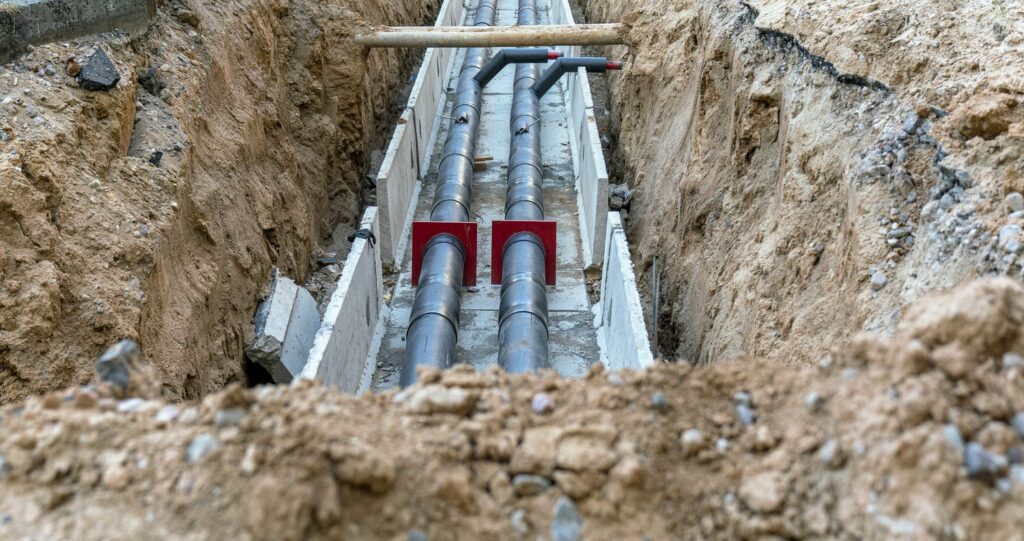
Why Servicing Can Get More Complex In Rock
Servicing often becomes the hidden budget swing on bedrock sites. Trenching for water, sanitary, and storm lines can be straightforward in soil, but rock can require specialized cutting, hammering, or rerouting. Depth requirements, bedding, and coordination can all add time.
The risk is that servicing is often planned too late. If you design the home without a clear idea of how utilities will route across a rocky lot, you can end up with expensive revisions or awkward site solutions.
What To Think About Early (Even Before Design)
Before you finalize design, think about where your connections are, how the lines will reach the home, and whether the route crosses areas likely to be rock-heavy. Also think about driveway grades and where you may need retaining or drainage structures to support access.
Early servicing planning also supports a better construction schedule. When you can coordinate excavation, foundation, and servicing as one plan, you reduce stops and starts that slow projects down.
Before committing to a design direction, use Southpaw’s site servicing checklist to confirm what to ask and what to verify about your lot’s connections, routes, and access.
Permits And Inspections In Nanaimo
Bedrock Doesn’t Remove Permit Requirements
Bedrock does not change the basic rule that you still need permits to build. What bedrock can change is the documentation and coordination you may need to support a safe excavation plan, a compliant foundation design, and appropriate water management.
If your project includes rock excavation that affects grading, retaining, or drainage, it’s worth treating permit readiness as part of feasibility. You want to know early what plans, reports, and inspections are likely to be part of your path.
What The City Commonly Cares About
At a high level, municipalities tend to care about safety, compliance, and protecting neighbouring properties. That can include setbacks, grading, drainage, access, and how excavation work is managed. If you are building on a sloped or tight lot, the City may also want to see clear retaining and drainage intentions.
This page does not replace Nanaimo’s requirements or professional advice. The goal is to help you understand why bedrock can influence what the City wants to see, and why early planning reduces delays.
Southpaw’s Nanaimo custom home permits guide covers the step-by-step view of what custom home projects typically need, when each submission is due, and how to sequence the work to avoid delays.
For the City’s baseline requirements, Nanaimo’s residential building permit page lists what is required and how to apply, which is a practical starting point before your first conversation with a designer or engineer.
Cost And Timeline Factors
The Cost Drivers That Show Up Most Often
On bedrock sites, cost tends to move with excavation and coordination. Common drivers include equipment time, specialized rock removal, hauling and disposal, foundation detailing, drainage and waterproofing scope, and utility trenching through rock.
Design choices also matter. A home footprint that chases a deep basement across uneven rock can be much more expensive than a layout that reduces rock removal. In many cases, the best cost control lever is not negotiating a unit rate. It is choosing a design that respects the site.
The Schedule Risks To Plan Around
Schedule risk often comes from uncertainty. If you do not know how deep the rock is, or how uneven it is across the footprint, you can end up revising the excavation plan and foundation approach midstream. That slows the project and can create inspection timing issues.
Specialized contractors can also affect timing. If you need a rock excavation specialist, sawcutting, or blasting, those schedules need to be coordinated early so you do not end up waiting with an open excavation.
Where A Feasibility-First Plan Pays Off
A feasibility-first plan pays off because it reduces scope changes. When you confirm rock conditions early, align foundation strategy early, and plan servicing routes early, you reduce the chances of redesign during construction.
This is the same mindset we use on challenging lots: clarify what is real, then design to fit the reality. It makes projects calmer, and it supports a more predictable schedule.
Is Bedrock A Good Thing For A House?
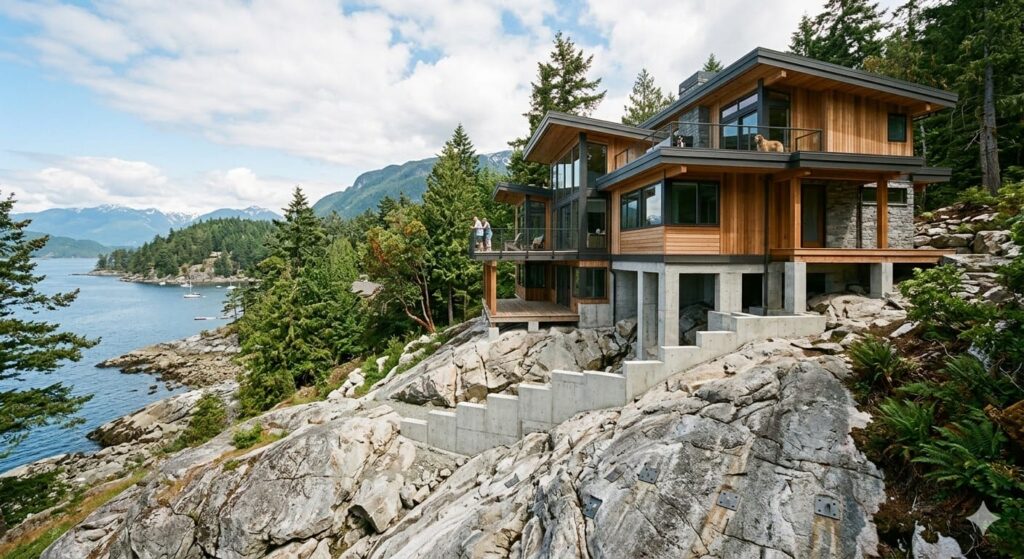
Where Bedrock Helps
Bedrock can be a strong foundation base. It can reduce settlement risk and provide reliable bearing, especially compared to variable soils. On some sites, it can also support simpler load paths and stable long-term performance.
Bedrock can also be a benefit on certain sloped lots because it can provide a more secure interface for foundation design, provided drainage and water management are handled properly.
Where Bedrock Creates Problems
Bedrock can create problems when it forces heavy excavation, limits basement options, or makes utility trenching expensive. It can also increase noise and disruption during site work, which matters in established neighbourhoods.
Bedrock can also complicate drainage if water moves along rock surfaces toward the foundation. This is why “rock equals dry” is a risky assumption, especially in coastal climates.
The “It Depends” Factors You Can Actually Check
The factors you can check early are practical: lot access, grade, desired foundation depth, the home’s footprint size, and where utilities must route. You can also confirm whether you truly need a full basement, or whether a different layout would meet your goals with less excavation.
Once you have those answers, your design team can propose a foundation strategy that fits the site, not the other way around. That is the difference between a workable bedrock build and an expensive surprise.
Bedrock Build Feasibility In 7 Checks
The 7 Checks
If you want a clean way to evaluate a bedrock lot in Nanaimo, use these seven checks. They are designed to help you make decisions before you spend heavily on design changes later.
- Confirm your build goals (basement vs slab, unit size, long-term use)
- Get a survey and confirm grades and footprint fit
- Scope a geotechnical review to confirm rock depth and variability
- Choose a likely excavation approach (mechanical removal vs blasting)
- Confirm a foundation concept (stepped footings, slab, partial basement)
- Plan drainage and waterproofing at the rock interface
- Confirm utility routes and what “permit-ready” will require
These checks are not complicated, but they are powerful. They help you find out early whether bedrock is a manageable condition or a design constraint that should change your plan.
What To Do If You’ve Already Hit Rock Mid-Excavation
If you have already hit rock during excavation, the best move is to pause and align on a plan before you remove more material than you need. Overexcavation can create unnecessary cost, and it can make foundation design harder if you create an uneven or oversized excavation.
This is where coordination matters. You want your excavation contractor, engineer, and builder working from the same assumptions. A short planning step here can prevent weeks of rework later, especially if the rock profile is uneven across the footprint.
Building Confidently On Challenging Nanaimo Lots
Bedrock is not a dealbreaker. It’s a condition that rewards planning. When you confirm what you have early and design around it, you can build a beautiful, durable home without turning the site work into a guessing game.
Southpaw Homes supports bedrock builds with a feasibility-first approach that reduces surprises. We use a fixed-price contract model, a detailed build schedule, and a client portal with daily logs and progress photos so you can track decisions as they happen. We are a BC Housing Licensed Residential Builder, and our custom homes are protected by Pacific Home Warranty’s 2-5-10 coverage. If you’re deciding whether a rocky Nanaimo lot is worth it, contact us and we’ll help you map a realistic path forward.
Frequently Asked Questions
Can You Build A House Directly On Bedrock?
Yes. Builders can design foundations to bear on bedrock, and it can provide strong, stable support when it’s competent rock. The key is matching the foundation approach to the rock profile and managing water properly. Rock depth can vary across the footprint and fractures can influence drainage and detailing, so site-specific verification remains important even when bedrock is visible.
Does Bedrock Mean My Foundation Will Never Settle Or Crack?
Bedrock can reduce settlement risk compared to variable soils, but it does not guarantee a crack-free foundation. Cracks can still occur from design choices, drainage issues, workmanship, or normal structural movement. The best way to reduce risk is to confirm conditions early, design appropriately, and build with consistent quality control.
Can You Build A Basement If You Hit Bedrock In Nanaimo?
Sometimes. A basement may be practical if the rock depth and rock profile allow it, and if excavation access and budget support the scope. On other lots, it may be more practical to reduce basement depth or switch to a slab or partial basement approach. A feasibility-first review can help you decide before committing to a layout that requires major rock removal.
Do You Need Blasting To Build On Bedrock?
Not always. Many projects can use mechanical rock removal methods like hammering, splitting, or sawcutting, depending on rock type and volume. Blasting becomes a consideration when removal needs are large, the rock is very hard, or mechanical methods are impractical.
Do I Still Need A Geotechnical Report If My Lot Is Bedrock?
Often, yes. A geotechnical review can confirm rock quality, depth variability, and water pathways, and it can help guide excavation and foundation decisions. That information is valuable even when rock is visible on site.
Does Bedrock Affect Drainage And Waterproofing?
Yes. Water can move along the bedrock surface and through fractures, which can increase the importance of drainage and waterproofing details at the foundation interface. Bedrock does not automatically mean “dry.” A good plan manages surface water first, then supports it with the right foundation waterproofing and drainage strategy.
Will Building On Bedrock Increase My Construction Cost?
It can. Rock excavation, disposal, specialized labour, and utility trenching are common cost drivers on bedrock lots. The size of the impact depends on rock depth, rock hardness, access, and how the home is designed. The best way to manage cost is early feasibility work so the design aligns with the site instead of fighting it.