
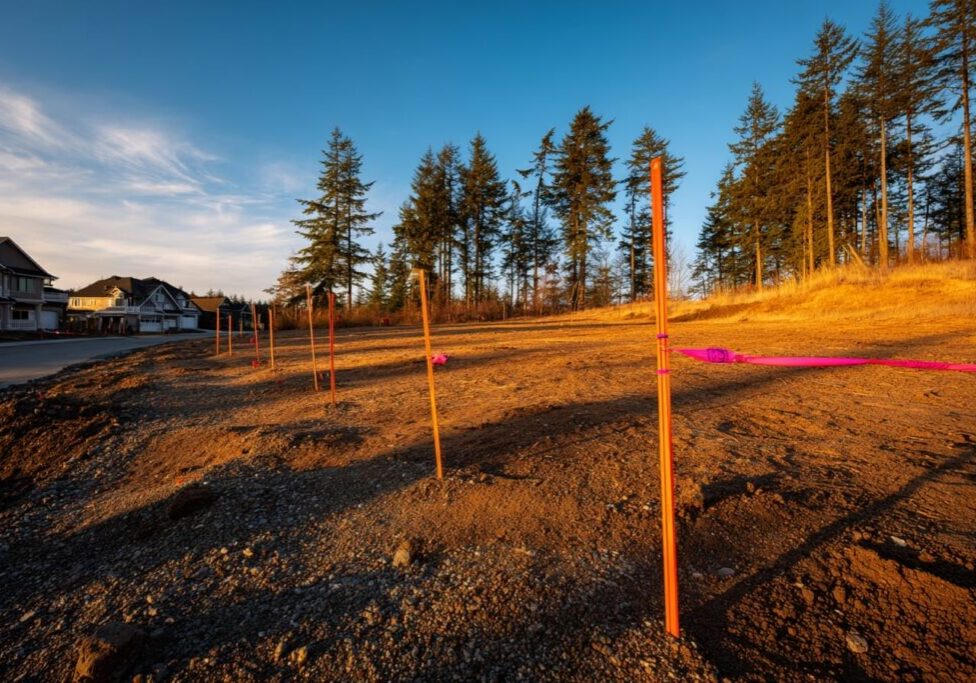
The right Nanaimo lot is the one that fits your home plan and your budget after you account for zoning limits, servicing realities, and site conditions like slope, drainage, and rock. If you want a second set of eyes before you remove subjects, talk to a custom home builder in Nanaimo who can flag red flags early and help you compare two lots without guesswork.
At A Glance: The Five Lot Checks That Save You The Most Money
If you only do five checks before you buy, do these. They catch most of the issues that turn a “good price” lot into an expensive build.
- Zoning and constraints: Can you build the size and style you want, where you want it on the lot?
- Servicing: Are water, sanitary, and storm connections straightforward, and is capacity realistic?
- Slope, rock, and soils: Will excavation and foundations be normal, or specialized?
- Title limitations: Are there easements, rights-of-way, or covenants that shrink your buildable area?
- Access and drainage: Can you build a safe driveway, manage water, and stage the job without chaos?
A quick definition that helps: a “buildable lot” is one where your concept home can be permitted, serviced, and supported by the site’s physical conditions without major redesign or unexpected civil work. When those four pieces align, the lot usually feels straightforward from day one.
Start With Your Build Plan, Not The Lot Listing
Choosing a lot is easier when you’re clear on what you’re building. A lot that is “perfect” for a one-storey home can be wrong for a two-storey with a walkout, a suite, or a wide garage.
Start by writing down what you want, then use that list to filter the lot, not the other way around. You will avoid the most common trap: buying a lot that forces you to compromise on the home you actually want.
Define Your Non-Negotiables
Before you compare lots, decide what you won’t compromise on. Common non-negotiables include a main-floor primary bedroom, a specific garage size, a suite, a home office that’s quiet, or a backyard with usable sun.
Those choices set the “shape” of your lot needs. A wide garage needs frontage. A suite needs a smart entry and parking plan. A walkout design needs grade change in the right direction, not just “a slope somewhere.”
Also think about future-proofing. Even if you are not building a suite today, a lot that supports it later can protect resale value and give you options for multi-generational living.
Set A Realistic Budget That Includes Site Costs
Most buyers budget for the house and forget the land. The reality is that site costs can be a major swing, and the lot’s price rarely tells you what excavation, retaining, drainage, and servicing will cost.
When you budget, separate the “house cost” from the “site cost.” That keeps you honest when you compare a flat serviced lot against a view lot that needs retaining, rock removal, and longer service runs.
If you’re shopping in Nanaimo, the lots that look cheapest on paper often carry the most hidden scope. Your goal is not to avoid every challenge. Your goal is to understand the challenges early so your budget matches the real build.
Confirm What You Are Allowed To Build

A lot can be physically easy to build on and still be the wrong lot if zoning or overlays limit what you can do. Confirm the rules first, then decide whether the lot still works for your plan.
This is also where you avoid time-wasting. If your plan doesn’t fit zoning basics, you either change the plan, change the lot, or accept a longer approvals path.
Check Zoning First, Then Overlays
Start with zoning because it sets the baseline: setbacks, height, lot coverage, and what uses are permitted. Then check overlays that can add rules or guidelines based on location, environmental sensitivity, or hazard considerations.
In Nanaimo, the fastest way to do that early check is NanaimoMap, because it pulls multiple layers into one place and lets you confirm zoning and see if anything else is flagged on the property.
A practical tip: do not rely on a listing’s description of zoning. Confirm it yourself, then ask your builder or designer to interpret what it means for your specific concept.
Don’t Forget Development Permit Areas And Neighbourhood Guidelines
Development Permit Areas can change what “straightforward” looks like. They can add guidelines and reviews tied to form and character, environmental protection, shoreline conditions, slope hazards, or other local considerations.
This does not mean you should avoid lots in these areas. It means you should know early so you can design for the guidelines instead of fighting them later. When you do that, you usually save time and revisions.
If a lot sits in a special area, treat it as a design input. It can influence house placement, how you handle drainage, and how much site disturbance is acceptable.
Think About Future Flexibility (Suite, Carriage House, Aging In Place)
Lot selection is the cheapest time to build future flexibility into your plan. A lot with the right access and layout can support a suite, a separate entrance, or a more accessible main-floor living arrangement later.
Even if you never build a suite, thinking about it forces good decisions. It makes you look at parking, driveway grade, and entry placement more carefully, which improves daily livability.
The “right lot” is rarely the lot that maxes out every option. It’s the lot that gives you one or two strong future options without forcing complexity today.
Servicing And Utilities: The Most Common “Hidden Scope”
Servicing is where budgets swing quietly. A lot can look simple until you discover the service connections are far away, at the wrong elevation, or tied to upgrades you did not expect.
Treat servicing as part of lot selection, not a later construction detail. The earlier you understand it, the fewer surprises you’ll face once excavation starts.
What “Serviced Lot” Actually Means In Nanaimo
When someone says a lot is “serviced,” it usually implies water, sanitary, and storm connections exist or are available. The problem is that “available” can still mean complicated if routes are long, trenching is difficult, or capacity and tie-in details are unclear.
A serviced lot can still carry scope. Connections can require coordination, permits, inspections, and sometimes upgrades. That is normal. Your job is to understand what “normal” looks like on that specific lot.
If you are comparing lots, ask the same servicing questions on both. Servicing differences are often the reason one lot builds cleanly while another bleeds schedule.
What To Verify Before You Buy
Before you remove subjects, confirm where the connection points are, how you would route services to the house, and whether the route crosses rock, steep grade, or a tight access corridor.
Also think about stormwater early. Storm solutions are not always obvious on sloped or compact lots, and they can influence where you place the home and how you plan hardscape.
A good approach is to assume nothing and verify what you can. If you cannot verify, budget conservatively and build in decision time before you commit.
Running through a site servicing checklist while you shop helps surface the hidden scope that often appears after you buy, when it’s too late to renegotiate.
Servicing is often the difference between a smooth build and months of avoidable friction, especially when two lots look similar on paper.
Site Conditions That Make Or Break A Lot
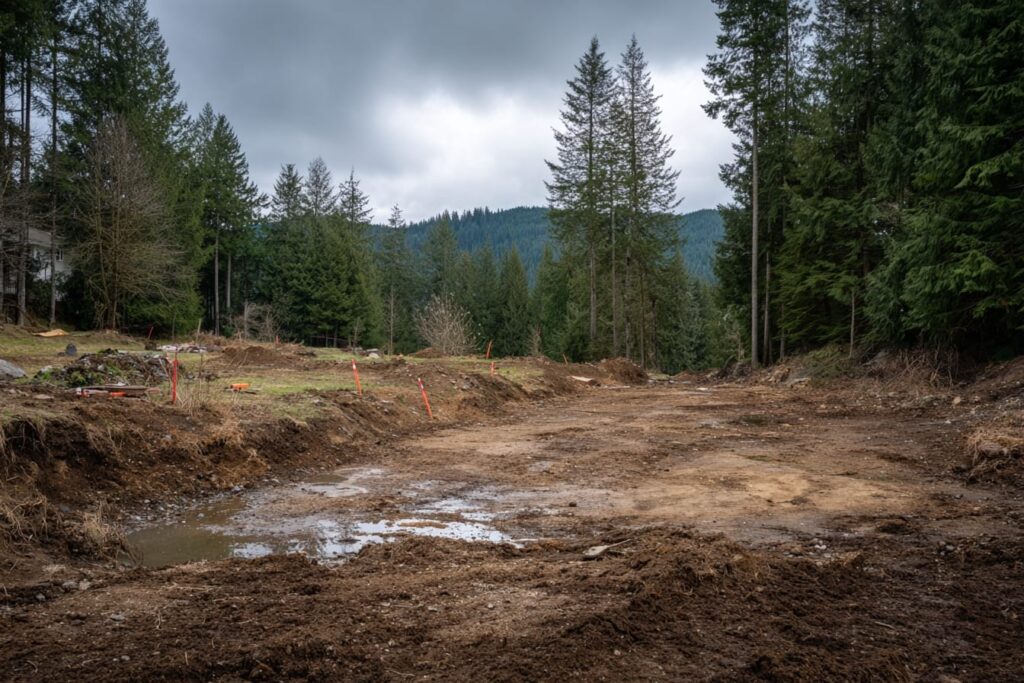
Site conditions can turn a great plan into a difficult build, or they can make a challenging lot surprisingly workable with the right design choices. The goal is not to fear site conditions. The goal is to understand them early.
Most “bad surprises” come from a mismatch between what the site demands and what the design assumes. When you align those early, the build tends to stay calm.
Slope And Buildability
Slope changes everything: excavation, foundation strategy, driveway grade, retaining, and drainage. On sloped lots, you need to know where the grade changes and whether that change works with your plan.
A steep lot is not automatically a dealbreaker. It can support great designs, including walkouts and view-oriented layouts. The tradeoff is usually more site coordination and a stronger need for early engineering thinking.
When you tour a lot, picture the driveway first. If access feels awkward, the build often becomes more complex than buyers expect.
Soil, Bedrock, And Excavation Risk
Soils and rock affect how predictable excavation will be. Soft soils can require more foundation planning. Shallow bedrock can provide strong bearing, but it can also make excavation and servicing trenching more expensive.
The risk is not just the presence of rock. It is uncertainty. If you do not know what is under the top layer, you can end up designing a basement that requires major rock removal, or routing services through rock when a different layout would have avoided it.
As you compare lots, look for clues: exposed rock, nearby builds that have had major excavation, and areas where drainage suggests water movement across hard surfaces.
If you suspect rock or you’ve seen bedrock on nearby sites, understanding what changes when you are building a house on bedrock in Nanaimo helps you plan for how that can affect foundations, drainage, and servicing.
Bedrock is a common Nanaimo issue, and it is manageable when you plan for it. The key is to align your design with what the site will actually allow, not what a listing implies.
Drainage And Water Management
Drainage is one of the least glamorous parts of lot selection, and one of the most important. Water will follow grade, and if the lot funnels water toward your foundation area, you will spend more time and money solving it later.
Watch the site during rain if you can. Look for ditches, low spots, and signs of surface flow. Even on dry days, vegetation patterns and erosion lines can tell you where water moves.
A lot with clean drainage routes is easier to build on and easier to live on. It also protects your long-term performance, especially around the foundation and driveway.
Trees, Clearing, And Site Access
Trees can be an asset, but they also represent scope. Clearing, stump removal, root management, and protection of retained trees all take planning. On compact lots, staging and access can get tight quickly.
Access matters beyond the driveway. You need space for excavation equipment, deliveries, and safe trade movement. If the lot is constrained, you may need a more disciplined build plan to keep the site organized.
When you evaluate a lot, ask yourself a simple question: where does everything go during construction. If you cannot see a clear answer, expect higher coordination costs.
Geotechnical Due Diligence: When It’s Worth Doing Early
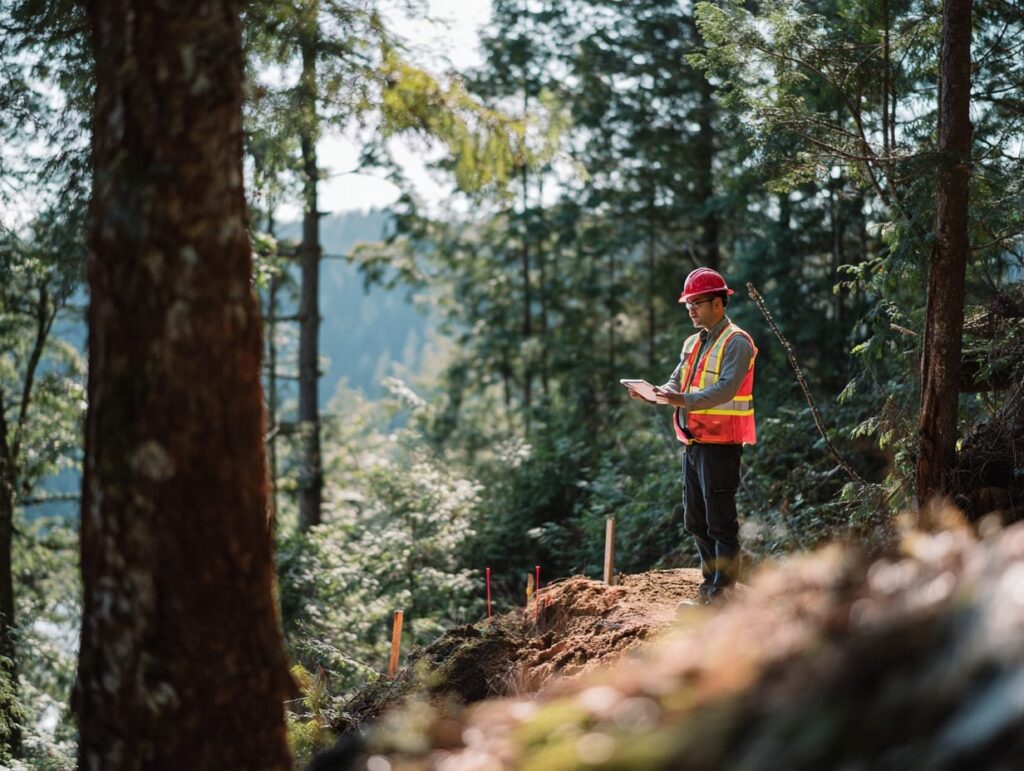
Geotechnical input is not just for “bad dirt.” It’s a way to reduce uncertainty on lots where slope, soil, rock, or water could change your foundation plan or your permit requirements.
You do not need to over-engineer early due diligence. You need enough information to avoid buying a lot that demands a different house than the one you want to build.
What Geotechnical Input Actually Tells You
A geotechnical report can help confirm bearing conditions, soil behaviour, slope stability considerations, groundwater observations, and foundation recommendations. It can also flag site risks that affect how you excavate and how you manage drainage.
For buyers, the value is clarity. When you understand what the site needs, you can budget more accurately and avoid designs that require major changes later.
Geotechnical input also supports smoother permitting on lots where the City expects confirmation that the land can be used safely.
When To Consider A Geotechnical Review Before Removing Conditions
A geotechnical review becomes more valuable when the lot has steep slopes, signs of seepage, known fill, nearby water features, or visible rock that could complicate excavation. It’s also worth considering when your plan includes a basement or major retaining.
This is not a rule. It’s a decision tool. If a lot has multiple risk signals, early geotechnical input can be cheaper than buying the wrong lot and discovering the cost later.
If you cannot do geotechnical work before purchase, at least treat the risk as real and budget for it. Do not assume the best-case scenario.
Knowing whether you need a geotechnical report for a custom home in Nanaimo depends on the lot’s slope, soil signals, and what the City expects for permitting.
That helps you decide what level of investigation makes sense for your lot and plan questions for your builder and design team before you commit.
Title, Easements, And Legal Constraints Most Buyers Miss
A lot can be physically perfect and still be constrained by legal limitations that reduce where and how you can build. These issues rarely show up in listing photos, and they can matter more than slope or rock.
Your goal is to identify anything that shrinks your buildable footprint or blocks access and servicing routes before you commit.
Easements, Rights-Of-Way, And Statutory Rights Of Way
Easements and rights-of-way can restrict where you place the house, driveway, or utilities. Some exist for shared access. Others protect underground utilities or drainage routes.
Treat these as “no-go zones” until proven otherwise. A small easement can remove the best part of a lot if it sits where you planned to build or where you need to run services.
If you see a potential conflict, do not guess. Ask for clarity early so your concept plan reflects the legal reality.
Restrictive Covenants And Building Schemes
Restrictive covenants and building schemes can set limits on height, rooflines, exterior materials, and sometimes layout choices. In some neighbourhoods, they exist to preserve a certain look and feel.
These restrictions can be manageable if you know them early. They become expensive when you discover them after design is underway and you need to revise elevations or roof forms.
If a lot sits in a newer subdivision, assume there may be building scheme rules and confirm them before you make design commitments.
Lot Boundaries And Survey Reality
Lot lines are not always obvious on the ground. Fences can be off. Neighbours may have landscaping that crosses boundaries. Encroachments happen more often than buyers expect.
A survey helps you confirm the real footprint you can build on, and it reduces conflict later. It’s also a practical tool when you are trying to place a house, garage, driveway, and outdoor space on a tight lot.
Even if you do not order a survey immediately, treat boundary clarity as part of due diligence. It protects you and keeps design grounded.
Neighbourhood Due Diligence: What’s Around The Lot Matters
Lot selection is not only about the lot. It’s also about the neighbourhood context: construction activity, road access, noise, and how the area is changing.
If you want your home to feel right for the next 10 years, confirm what is happening around the lot now, and what is likely to happen next.
Confirm What’s Being Built Nearby
Development activity can change traffic, noise, and even the feel of the street. It can also affect your build schedule if nearby construction impacts access and staging.
The City’s What’s Building portal lets you see nearby development activity and projects in motion before you commit to a lot.
This step is simple, and it prevents regret. If you learn that a major project is planned next door, you can decide whether you still want the lot before you commit.
Access, Parking, And Daily Livability
Think about daily life, not just construction. Street width, visitor parking, sightlines, and winter traction matter more than most buyers expect, especially on sloped roads.
Also consider how your design will work with the street. A steep driveway can affect garage placement. Limited street parking can influence where guests park and how deliveries happen.
If a lot feels tight for daily access, it will usually feel tight during construction too. That is a useful signal.
Permits And Timeline Reality Check For Lot Selection

Permitting does not happen in a vacuum. Lot conditions influence the approvals path. Some lots are straightforward. Others trigger more documentation and longer review.
If your timeline matters, treat permit complexity as part of lot selection. It’s better to learn early that a lot needs more work than to discover it when you are already committed.
The Permit Path Can Change Based On The Lot
Two lots in the same neighbourhood can have very different permit needs if one sits in a special overlay, has steep slopes, or requires unusual drainage and retaining solutions.
That’s why lot due diligence and permit readiness go together. When you understand the lot’s constraints, you can plan the right submission and avoid delays tied to missing documentation.
This is also where an experienced builder adds value. The right team can help you anticipate what will be asked for, instead of reacting after you submit.
Use Current Processing Times As A Rough Planning Tool
The City publishes building permit processing information that can help set expectations, though the real timeline depends on submission quality and project complexity.
If your project has financing deadlines or you need to align move-out dates, build flexibility into your schedule. The goal is a calm plan that can handle normal variability.
A complete, well-prepared submission is the best way to reduce avoidable delays. That starts with choosing a lot that does not force last-minute design pivots.
Understanding the City of Nanaimo permit process for custom homes helps you plan what you need, when you need it, and how lot conditions can change the path.
Zoning, servicing, and Development Permit Areas can all affect when you can actually break ground, so factor those into your due diligence questions early.
The Nanaimo Lot Scorecard
If you’re comparing more than one lot, a scorecard makes decisions easier. It turns gut feel into a repeatable process you can share with your partner, your builder, or your lender.
The point is not to make a perfect spreadsheet. The point is to compare lots using the same criteria so you can see which risks are real and which are manageable.
Score Each Lot On Seven Categories
Score each lot from 1 (high risk) to 5 (low risk) on these categories:
- Zoning fit
- Servicing and utility routing
- Slope, soil, and rock risk
- Drainage and water management
- Access and constructability
- Title constraints
- Neighbourhood and future change risk
Once you score two lots side-by-side, you’ll usually see the decision more clearly. A lot with one “hard” risk may still be better than a lot with four moderate risks that stack up.
Use the scorecard to drive better questions. It’s not about eliminating risk. It’s about understanding it early.
Lot Selection Quick Reference
Keep your due diligence focused on what actually affects cost, schedule, and design freedom.
| Lot Factor | What To Check | Why It Matters |
| Zoning | Setbacks, height, permitted uses | Confirms your plan can fit without major changes |
| Overlays | Development Permit Areas, hazard flags | Can add guidelines, documentation, and design constraints |
| Servicing | Connection points, routes, capacity | Often the biggest hidden scope driver |
| Slope | Driveway grade, retaining needs | Impacts excavation, foundations, and access |
| Rock/Soils | Signs of bedrock, fill, seepage | Affects excavation method and foundation strategy |
| Drainage | Surface flow paths, low spots | Protects long-term performance and reduces water problems |
| Title | Easements, covenants, rights-of-way | Can shrink your buildable footprint unexpectedly |
| Neighbourhood | Nearby permits, road conditions | Impacts livability and construction logistics |
Common Lot Red Flags (And What To Do Instead)
Some red flags are “walk away” issues. Others are simply “verify and budget” issues. The problem is that buyers often treat red flags like surprises instead of decision points.
Here are common red flags, and the smarter next step:
- “Services nearby” with no details: Ask for connection locations and routes, or assume higher servicing cost.
- Steep driveway potential with limited access: Consider a different garage placement, or pick a lot with better approach grade.
- Evidence of water movement across the build area: Budget for drainage solutions and confirm where water can be directed.
- Visible rock across the likely footprint: Re-check basement assumptions and plan for specialized excavation.
- Unclear title restrictions: Do not guess. Confirm easements and covenants before you design.
- Tight staging and access: Expect more coordination cost, or choose a lot that allows clean site logistics.
Most of the time, the right answer is not “avoid every challenge.” It’s “choose the challenges you’re willing to pay for.” That’s how you avoid regret.
If a lot triggers multiple red flags, it usually costs more in both money and stress. Use that as a sign to widen your search.
How We Help You Choose A Lot With Confidence
Most custom home surprises start with lot selection. When you do due diligence early, you protect your budget, your timeline, and your design freedom. You also reduce the chance that your first set of drawings becomes a revision cycle.
We help you choose lots with a feasibility-first approach. We look at zoning fit, servicing realism, and site constraints early, then align design and budget before you commit to a fixed number. We back that work with a fixed-price contract model, a detailed build schedule, and a client portal with daily logs and progress photos so you can see the plan unfold in real time. If you’re shopping for land, book a consult and we’ll help you pick a lot that supports a clean design-build custom home.
Frequently Asked Questions
What Is The First Thing I Should Check When Buying A Lot In Nanaimo?
Start with zoning and constraints, because they decide whether your concept home can fit in the first place. Once zoning works, move to servicing and site conditions, because that’s where hidden costs live. If you do those checks in order, you’ll avoid spending money on drawings for a lot that never matched your plan.
How Do I Know If A Lot Is Fully Serviced?
A “serviced lot” should have water, sanitary, and storm connections available, but you still need to confirm where the connections are and how you would route them to your home. “Nearby services” is not the same as an affordable, straightforward connection. When in doubt, treat servicing as a budget risk until you can verify details.
Should I Avoid Sloped Lots In Nanaimo?
Not always. Sloped lots can create great designs, especially for walkouts and views, but they usually require more planning for excavation, retaining, driveway grade, and drainage. The key is to confirm the slope works with your plan. A slope in the wrong direction can be harder than a steeper slope in the right direction.
Do I Need A Geotechnical Report Before I Buy A Lot?
Sometimes. It becomes more valuable on steep sites, lots with visible rock, signs of seepage, or areas with known fill. If you cannot do geotechnical work before purchase, budget conservatively and build in time for early investigation. A geotechnical report is a risk-reduction tool, not just a permit requirement.
What Title Issues Can Stop A Custom Home Build?
Easements, statutory rights-of-way, and restrictive covenants can limit where you can build, how you access the lot, and where utilities can run. These issues can effectively shrink your buildable footprint. Review title early and ask questions before you commit to design assumptions.
How Can I Check What’s Being Built Near My Lot?
Use City tools to see development activity around the address, then confirm what it means for traffic, access, and noise. It’s a fast step that can prevent big regret. If nearby construction is significant, factor it into your build schedule and living plans.
How Long Do Permits Take In Nanaimo?
It depends on the lot and the project. Simple lots with clean servicing and no special constraints tend to move faster than lots that require more documentation or special reviews. Use published processing times as a rough guide, then plan for variability and focus on a complete submission to reduce avoidable delays.