
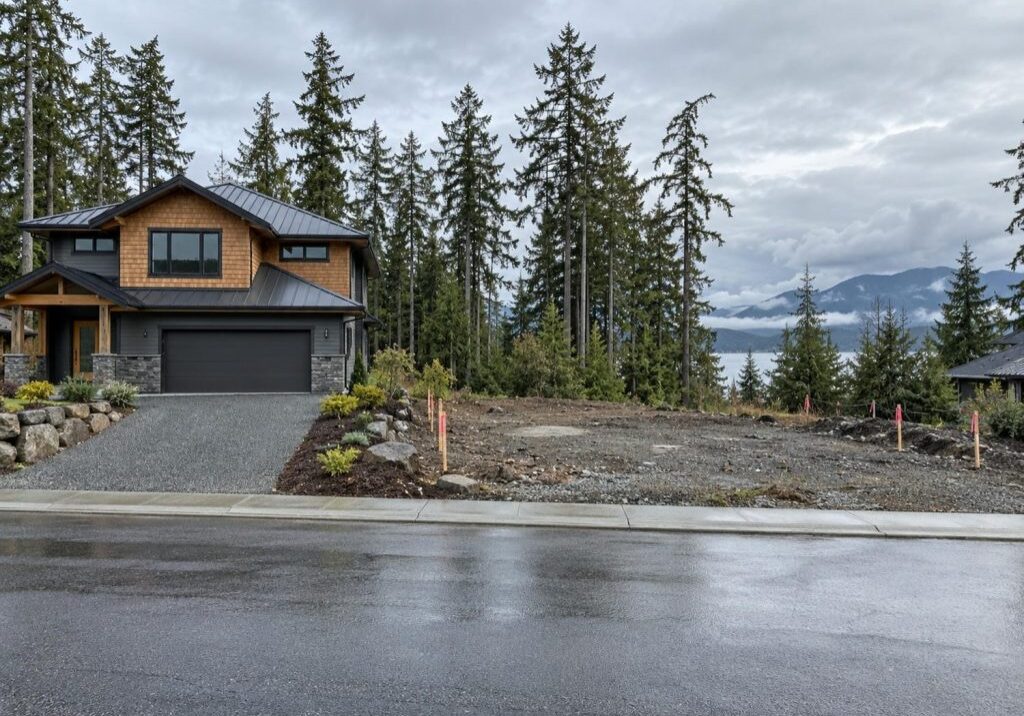
A custom build and a spec purchase are not two versions of the same product. They are two different transactions, and almost every real difference falls out of that. In one you buy an outcome, in the other you buy a process.
A spec home is built by a builder, on land the builder owns, to plans the builder chose, and then sold. A custom home is one you commission on land you own. With design-build custom homes, one team carries the design, the permits and the construction on a single contract, and you hold title to the land the whole way through.
The custom home vs spec home decision turns on four structural things: the tax base is not the same shape, the warranty clock starts at a different moment, the coverage cap is easy to work out on one path and not the other, and choice stops at a different point.
Two Transactions, Not Two Kinds of House
A spec home is a purchase of real property, so the instrument is a contract of purchase and sale. A custom home is a service you commission, so the instrument is a construction contract, sitting on a land purchase that happened earlier and separately. On the custom side, how fixed-price and cost-plus contracts differ decides who carries the budget risk once the work starts.
On the spec path the builder holds title while the house goes up and you take it at closing. On the custom path you hold title from day one, and that single fact drives the tax events, the payment shape and the warranty start date.
Buying a finished home in BC normally gives you three business days to change your mind at a cost of 0.25% of the price, though homes on leased land and anything sold at auction or under a court order sit outside that right. Signing a construction contract gives you no equivalent window, which is why the time to have one reviewed is before you sign.
Custom Home vs Spec Home, Side by Side
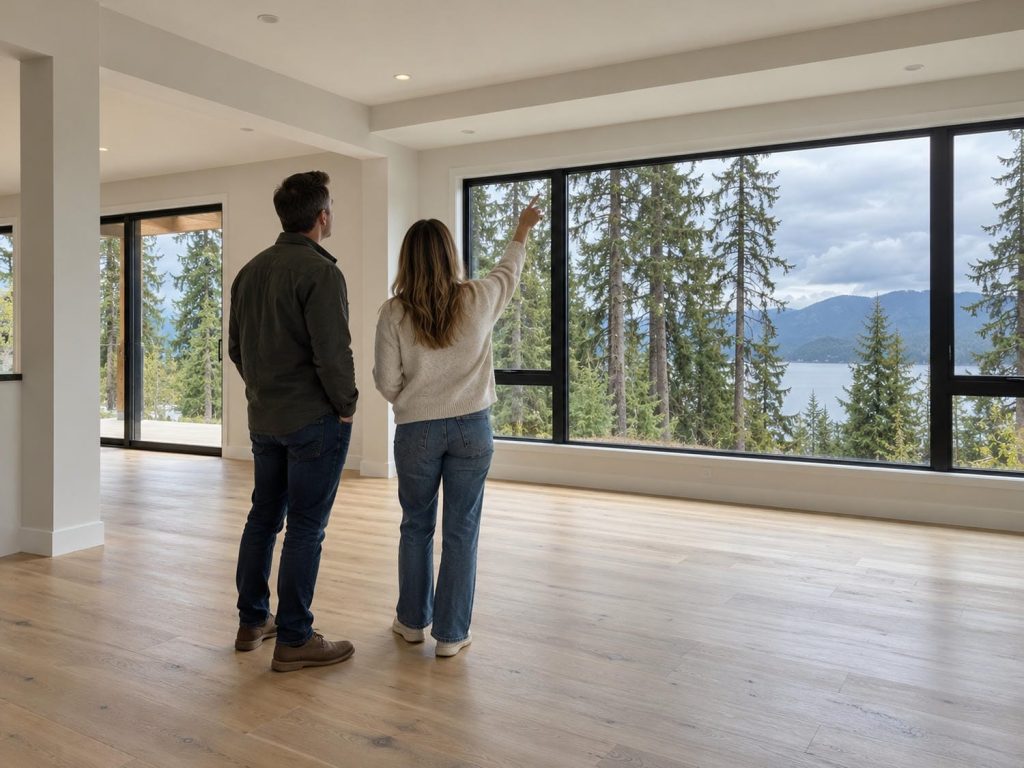
The two paths come as packages and cannot be mixed. You cannot buy a finished house and keep the custom path’s control of the layout, and you cannot commission a build and keep the spec path’s certainty about price and date.
The paths also reverse the moment of decision. On the spec path you decide at the end, standing in a house you can walk through, with the price in front of you. On the custom path you decide at the beginning, from drawings, before anything exists.
| What You Are Deciding | Spec Home | Custom Build |
| What you sign | A contract of purchase and sale for a finished house and lot | A construction contract, on land you already own |
| Who owns it during construction | The builder, until closing | You, from the first day |
| What property transfer tax is charged on | The land and the finished house, at registration | The lot, when you register the land |
| When the warranty clock starts | First occupancy or transfer of title, whichever comes first | Occupancy or the first occupancy permit, whichever comes first |
| How much you can still change | Finishes, once construction has started | Everything, until the drawings are approved |
| Backing out | Three business days, at 0.25% of the price, on most sales | No equivalent window, so review before signing |
| Move-in certainty | A date you can see | A schedule that starts after design and permits |
What Each Path Is Taxed On, and When
A spec home’s price covers the land and the builder’s margin on the whole asset. A custom quote is usually for the construction alone, so the only honest comparison puts the lot on both sides. The line-by-line version of what sits inside a custom home quote in BC also covers how the exemptions and rebates get claimed on a single build. The taxes themselves land on different things at different times.
Property Transfer Tax Is Charged on What You Register
Property transfer tax is charged on the fair market value of the land and the improvements on it on the day the property is registered at the land title office. A bare lot therefore registers at the value of the land, and a finished house registers at the value of the land plus the house. The rate is 1% on the first $200,000, 2% on the portion above $200,000 up to $2,000,000, and 3% on anything above $2,000,000, with a further 2% on residential value above $3,000,000.
On the custom path that tax is settled early, at the land closing, and on a much smaller base than the finished house will be worth when you move into it.
Does the Property Transfer Tax Exemption Reach a Build Like Yours?
A house you build on vacant land you own counts as a newly built home for the exemption, as long as nobody has occupied it since it was built.
If you are buying a finished home, the exemption is full at a fair market value of $1,100,000 or less, phases out over the next $50,000, disappears at $1,150,000, and carries parcel size and move-in conditions you have to meet and keep.
On the custom path the deadline decides it: the home has to be built and occupied as your principal residence by the first anniversary of the date you registered the land, with the refund claimed within eighteen months of that registration. The value tested is the land’s fair market value plus the cost of the home you build, cost rather than market value, and the registration date fixes which threshold applies. The house does not exist when you register, so the tax is paid on the lot and claimed back afterwards.
GST Arrives as One Invoice or as Many
Buying a new house from a builder is a taxable sale of the house and the lot together, so the GST lands once, at closing, inside the price. Commissioning a build works the other way: the builder charges GST on the labour and materials as the work is invoiced, which spreads the same tax across a year or more of construction and changes the cash flow rather than the rate.
Whether GST is charged on the lot itself depends on who is selling it and what it was used for. Most sales by an individual who held the land for their own use are exempt, and land sold as part of a business or carved out of a larger subdivision can be taxable, so have your lawyer confirm which you are buying before you remove conditions.
The First-Time Buyers’ Rebate Reaches a Custom Build
The first-time home buyers’ GST rebate is in force. It refunds the full federal tax to a maximum of $50,000 on a qualifying home valued up to $1 million, is reduced between $1 million and $1.5 million, and is gone at $1.5 million or more.
It is not only for people buying from a builder: the rules reach someone who engages another person to build the home, which is exactly a contract-built custom house.
On the spec path the agreement of purchase and sale has to be signed after 19 March 2025 and before 2031, and on the custom path construction has to begin on or after 20 March 2025 and before 2031, with both paths substantially complete before 2036. The rebate only reaches a genuine first-time buyer, and the test behind that phrase has conditions of its own, so check it before you count on the money.
Two Payment Shapes, Not Two Prices
On the spec path you arrange financing against a house that already exists, and you pay once, at closing. On the custom path the land comes first and the financing has to be settled before construction starts, because the lender is advancing against progress on your land rather than against a finished house.
As the owner of the project you also sit inside the provincial builders lien rules, which means retaining 10% of the value of the work in a holdback account and releasing it on a timetable after completion. A spec purchaser has none of that.
Development cost charges split the same way. On a custom build you pay the charge when the permit issues, and on a spec home it is already inside the price. Nanaimo is replacing its development cost charges and the new bylaw is set to be adopted in January 2027, so get the figure that applies to your lot from the city in writing before you set a budget.
Warranty: What a Licensed Build Carries, and Where the Paths Diverge
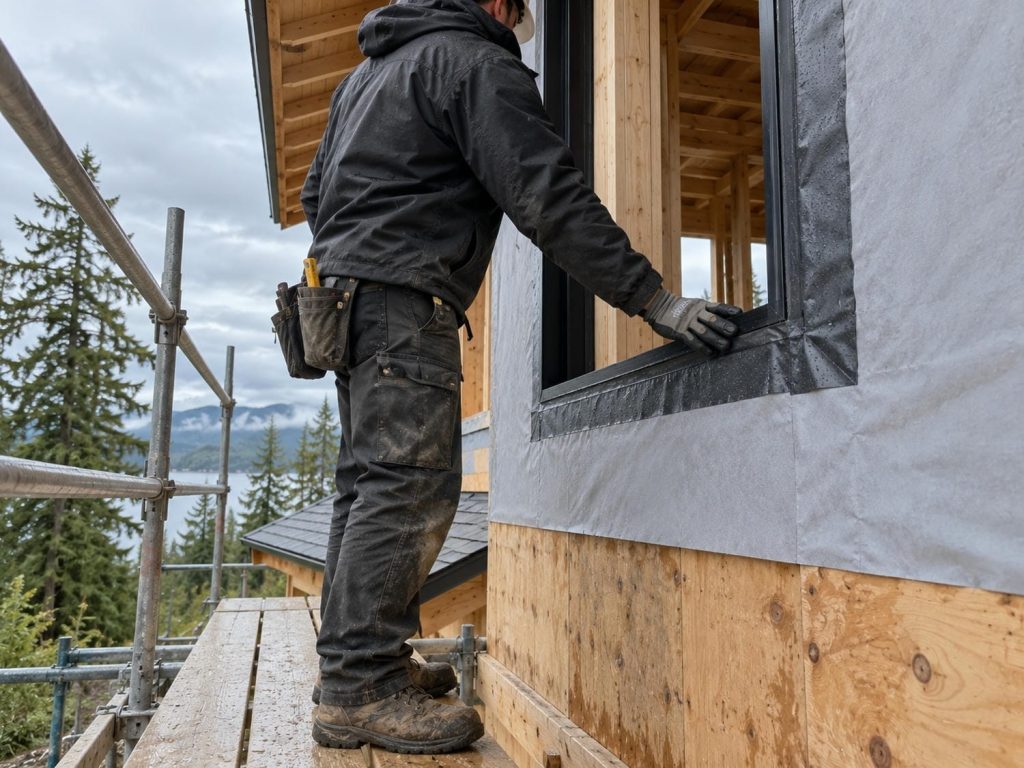
A home built by a licensed residential builder carries warranty insurance on either path, because the coverage is a condition of the building permit rather than a sales feature. What differs is when the clock starts, how much of the coverage you can work out in advance, and one separate path that people confuse with custom.
No Permit Issues Without Coverage or an Authorization
A local government cannot issue a building permit for a new home unless the applicant shows that the home is covered by home warranty insurance or is being built by an authorized owner builder, and that a licensed residential builder will build it.
Licensing sits underneath that. A builder has to hold the licence before starting a new project, and the licensing requirement still applies in areas where building permits are not required, which matters on rural Island lots and in the electoral areas.
Because a licensed builder’s new home must be insured, both the spec house and the house you commission sit in the insured system.
What the Insured Coverage Covers in the First Year
This is what a home covered by home warranty insurance carries, which on both of these paths means the house a licensed builder builds.
The first tier is called the two year materials and labour warranty, and on a detached house the general cover for any defect in materials and labour runs 12 months. The 24 month period inside that tier covers the electrical, plumbing, heating, ventilation and air conditioning delivery and distribution systems, defects in the exterior cladding, caulking, windows and doors that may lead to detachment or material damage to the home, and defects that make the home unfit to live in.
After that, five years covers defects in the building envelope, including unintended water penetration that could cause damage, and ten years covers structural defects and defects that make the home unfit to live in. Taken together, those three tiers are BC’s 2-5-10 new home warranty.
These periods are minimum standards, so some policies provide more. The only document that tells you what your home actually carries is the warranty certificate, so ask for a copy and read the first tier closely, because that is the tier with the most moving parts.
The Clock Starts at a Different Event
Insured coverage does not start at the same event on the two paths, and these start events belong to insured coverage only.
BC Housing, which administers the system, treats the two as separate categories and uses those words for them. For a custom detached home, coverage starts at occupancy or the first occupancy permit, whichever comes first. For a speculative detached home, it starts at first occupancy or transfer of title, whichever comes first.
So on a spec home bought months after it was finished, part of the first coverage period may already have run. Ask when the clock started before you write an offer.
One Path Can Work Out Its Cap, the Other Has to Ask
Insured coverage is capped as well as timed, and the cap turns on how you hold title.
For a home you buy in fee simple, the cap is the lesser of what the first owner paid for it and $200,000, so a spec buyer can work theirs out from the price on the contract.
If you are building on land you already own, there is no purchase price on your side of the deal for that measure to attach to. Ask your builder’s warranty provider in writing what figure your certificate will carry, and get the answer before you sign.
Owner Builder Homes Sit Under a Different Rule Entirely
One path sits outside the insurance system altogether. A home built under an owner builder authorization is built without home warranty insurance, and a separate rule in provincial law applies to homes that are not insured.
Under that rule, whoever built the house is personally bound to deliver a home free from defects in materials and labour for at least two years, free from defects in the building envelope for at least five years, and free from structural defects for at least ten years, each period running from the date an occupancy permit was first issued, or from first occupancy where no permit was issued.
An owner builder cannot sell or rent the home for a year after the occupancy permit, and a disclosure notice has to go to any buyer within the first ten years after occupancy.
What this path does is swap insurance for a personal promise from whoever built the house. That is why a nearly new private sale is not the same product as a home a licensed builder warranted.
Where Choice Stops, and What a Late Change Costs
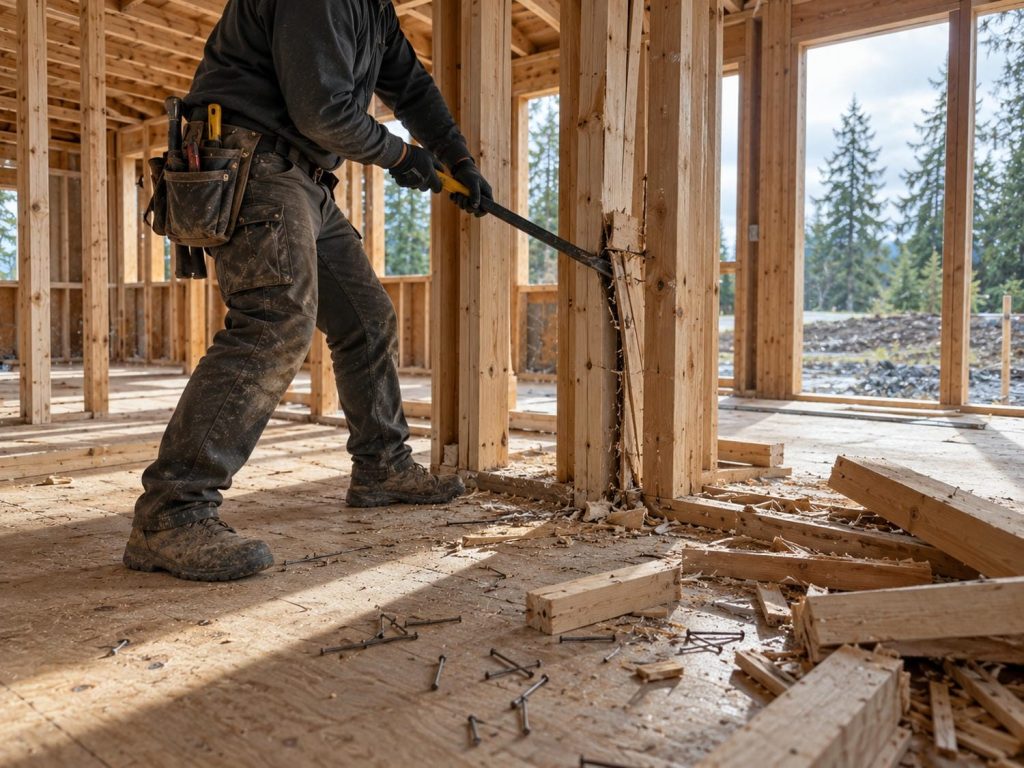
Choice on the custom path narrows at the moment the drawings are approved, then narrows again at each inspection stage. Choice on the spec path stops wherever the builder has already reached. A buyer touring a spec home at drywall is choosing finishes, because the layout, the window openings, the roof pitch and the mechanical routing are already built and already approved on a permit. Spec inventory is also built to the middle of the market by design, which is why a buyer with an unusual requirement often does not find it there.
After the Permit, a Change Becomes a Revision
Once a building permit has been issued, a change to the approved plans requires a revision application with revised drawings. Only the owner or an appointed agent can apply, a fee is payable, and inspections are suspended until the revision has been completed and the fee is paid.
In practice that means a change past a certain point stops being a decision and becomes demolition. You pay once to build the thing, then again to take it out and put the new thing in, and the schedule pays as well, because inspections stop until the revision has been completed and the fee is paid.
Both Paths Build to the Same Code and the Same Energy Step
A finished spec home is not more compliant than a house that has not been built yet. Both are built to the BC Building Code 2024, which has been in effect since March 2024.
In Nanaimo, Part 9 buildings, meaning houses and small buildings, have had to meet Step 3 of the Energy Step Code since 1 May 2023. New Part 9 buildings that fall within the scope of the Zero Carbon Step Code have had to meet the EL-4 zero carbon performance level since 1 July 2024. The 2024 code also sets a maximum design temperature of 26 degrees Celsius for at least one living space in a new home, which is a cooling requirement rather than a heating one.
The performance level is the same whichever path you take, and what the Energy Step Code asks of a new home is a question for your energy advisor, who owns the compliance paperwork at both ends of the build. Local requirements sit on top of the provincial minimum and differ by community, so ask your advisor what your municipality wants at each stage.
Which Path Fits Your Situation?
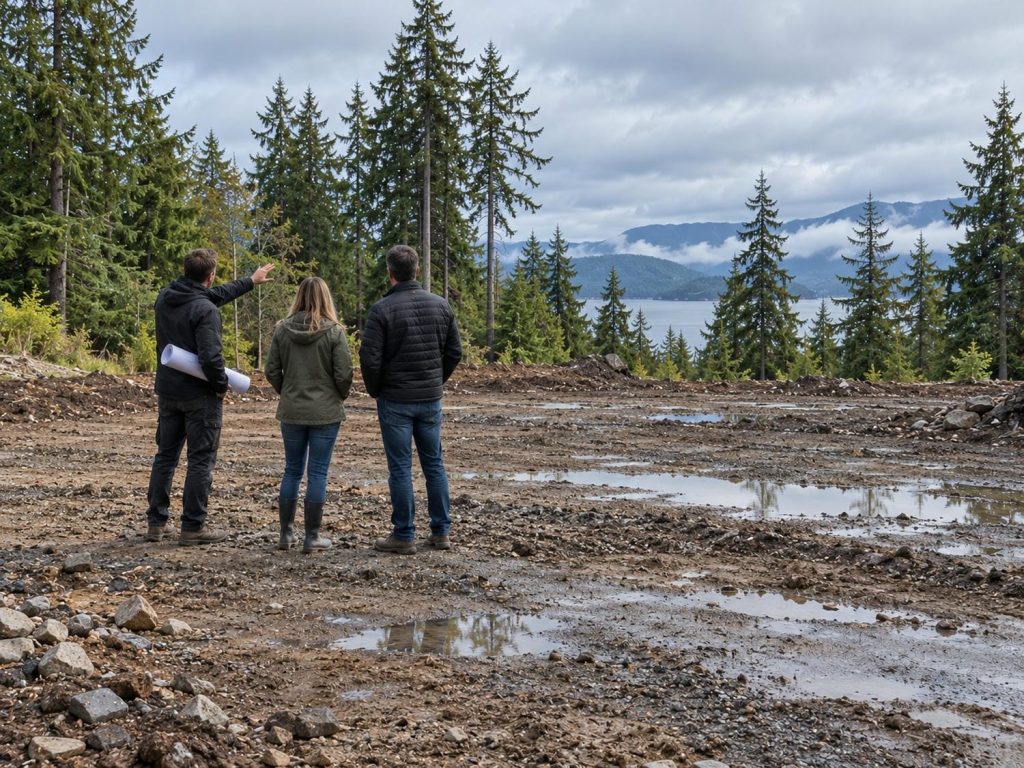
Five questions decide this, and none of them is which path is better. Do you have a hard move-in date? Does a lot you genuinely want exist? Is there a requirement the market does not supply? How many decisions can your household carry? And what does the cash flow look like, rather than the price?
When a Spec Home Is the Better Decision
A deadline is the strongest argument for buying something finished, and the single worst reason to commission a build. A finished house has also absorbed the lot’s surprises: the geotechnical answer, the servicing cost, the setback question and the slope were somebody else’s problem and are already in the price. It suits a household whose requirements sit inside what the market builds, and one that would rather make a handful of decisions than several hundred.
Whether a finished new home exists right now in the community you want, on a lot you would choose, changes from week to week, so that is a question for the market rather than something you can plan around.
If you may need to move again soon, note that BC’s home flipping tax applies at 20% of the net taxable income on a property sold within 365 days of buying it, then tapers over the following year until it no longer applies after 730 days.
When Commissioning Is the Better Decision
On Central Vancouver Island the lot usually decides. A buyer set on a particular view lot in Qualicum Beach, or a bedrock lot above Nanaimo, has effectively chosen a custom build already, because that house does not exist and will not.
The second trigger is a requirement the market does not supply: single-level living, a legal suite, a shop, wheelchair-width doorways, aging in place, or a specific performance target. The third is appetite, because a custom build is several hundred decisions, and some households find that the best part of the year.
Timing is the honest cost. The custom path adds design and permitting before construction starts, and the City of Nanaimo’s commitment is to process residential permit applications in three weeks under normal conditions, which the city itself describes as a guide only because permits vary in size and complexity.
Talk It Through Before You Commit
The choice comes down to money shape, a deadline and a lot, and it is easier to make with real numbers for a real lot in front of you.
Southpaw Homes is a custom home builder Nanaimo and Central Vancouver Island homeowners hire to design and build on their own land. We work on a fixed-price contract, so the number you sign is the number you pay, which is the honest answer to the worry that commissioning a home means an open-ended bill. You also get a client portal with daily logs and progress photos, because a house you cannot walk through every day should still be something you can see. If you are weighing a lot against a finished home, get in touch and we will work the numbers with you.
Frequently Asked Questions
Why Can’t I Compare a Spec Home’s Price With a Custom Home Quote?
Ask two questions about any number you are shown: what does this figure already include, and what will I still have to buy after it. Then work both options to the same finished point, land included, before you compare anything. A number that stops at the front door and a number that includes the lot are not the same number.
Which One Holds Its Value Better?
Resale comes down to the house, the street and the market on the day you sell, not to which path built it. So treat “custom homes always hold their value better” as a sales line wherever you meet it, in either direction. What a buyer pays years from now is set by the home and the market it sits in.
Do I Pay Property Transfer Tax Twice if I Build My Own Home?
You pay it once, on the lot, when the land is registered in your name, and nothing further is registered at completion because nothing changes hands. One consequence is worth knowing: a lot you bought years ago was taxed on what it was worth the day it was registered, and finishing a house on it does not reopen that bill.
Is a Spec Home the Same as a Presale?
No. A presale is an agreement to buy a home that has not been built yet, and a spec home is usually a purchase of a house that already exists or is nearly finished. The difference that matters when you sign is whether the thing you are buying is standing on the lot.
Should I Buy a Home the Owner Built Themselves?
You can, with your eyes open. Ask for the disclosure notice, check the occupancy permit date against the one year bar on selling before you make an offer, and understand that you would be relying on a promise from an individual rather than a claim against an insurer. So ask who you would actually be chasing in ten years.
I Already Own a Lot. Does That Change the Comparison?
Yes, and not mainly for tax reasons. The lot has already decided much of the house through its slope, its servicing, its zoning and its size, so your real choice is between building what this lot allows and selling it to buy something finished. Work out what the lot can carry before you price either option.