
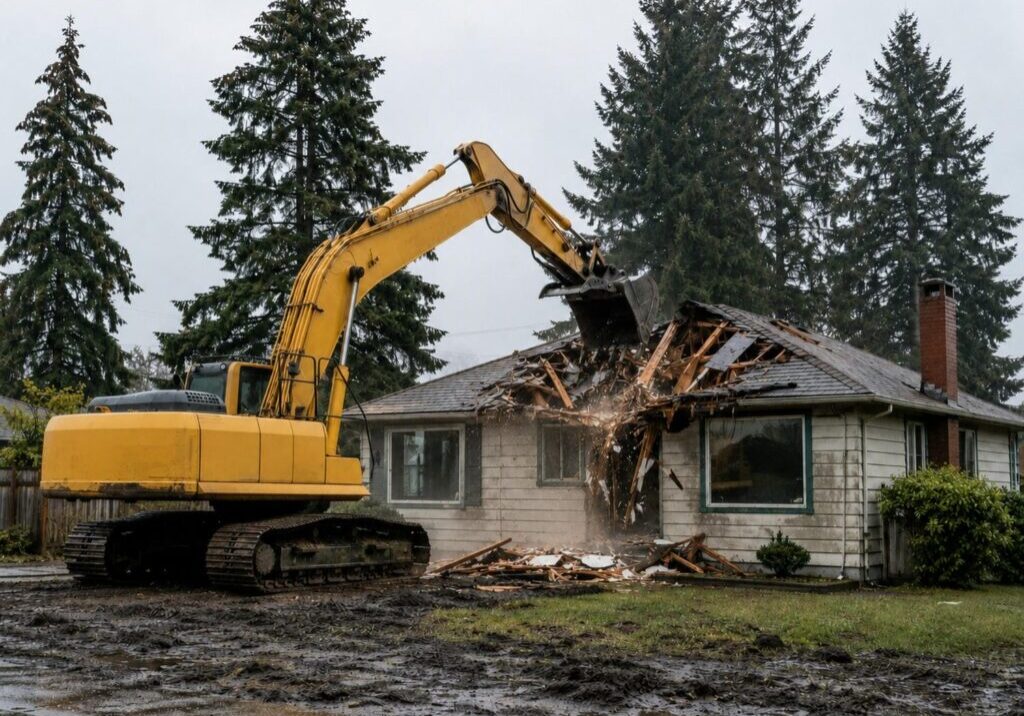
A teardown rebuild in Nanaimo means demolishing the older house on your lot and building a new custom home in its place, which is really two regulated jobs stacked back to back on one piece of land: a controlled, permitted demolition, and then a full new-home build. The land you are working with usually already has services in the ground, and that is the quiet advantage most people underrate. On an older house, the front end is where the surprises hide: a hazardous-materials survey, any abatement it triggers, and the utility disconnections all happen before a machine touches the structure. If you are weighing this against buying a raw lot, it pays to understand the full sequence before you commit money, and to work with a custom home builder Nanaimo homeowners can trust to run both jobs as one project rather than two.
The Two Jobs Behind a Teardown Rebuild
A teardown rebuild moves through a demolition phase and then a new-build phase, and the demolition phase has its own order that rarely changes:
- A qualified surveyor tests the house for asbestos and other hazardous materials.
- If hazardous materials are found, a qualified abatement contractor removes and disposes of them.
- Electricity, gas, water, and sewer are formally disconnected by the utilities, confirmed in writing.
- The City issues the demolition permit.
- The structure comes down.
- The material is hauled away, sorted, and diverted as far as the rules allow.
- The new-build permit track begins on a lot that is already serviced.
Because the lot already has water, sewer, hydro, and often a driveway in place, a well-run rebuild can beat the cost and schedule of building on a raw lot. That advantage is real, but it is conditional: it only holds if the existing services check out for the new home. The demolition is half the project, not a throwaway front end.
Before Anything Comes Down: Pre-Demolition Work
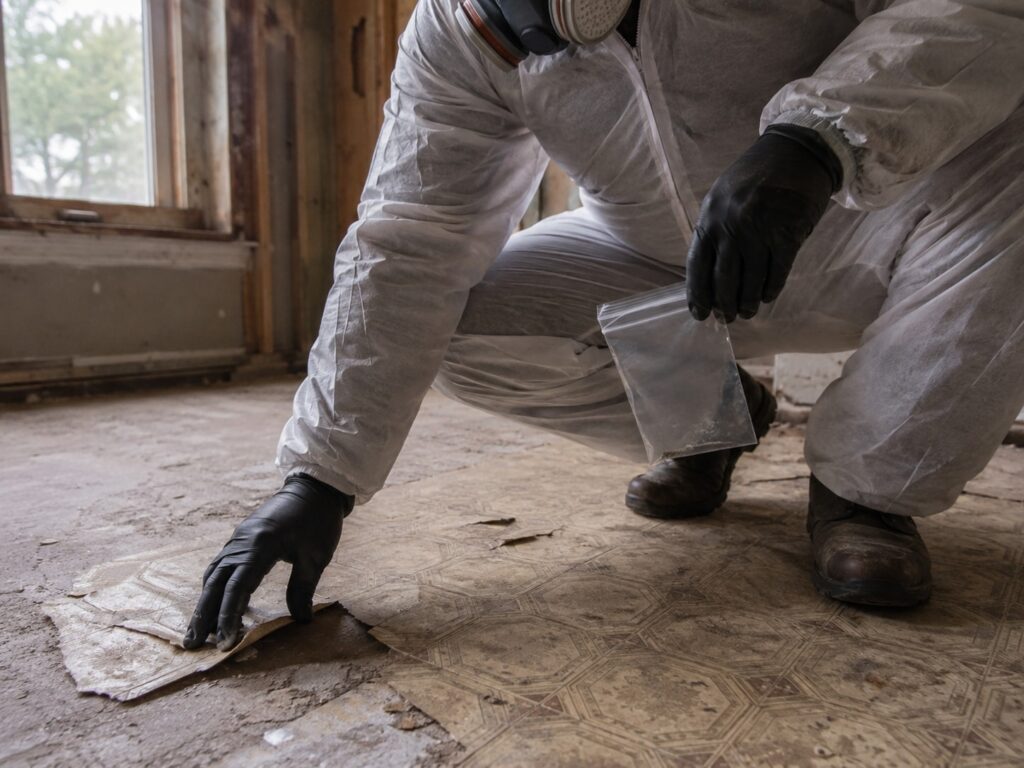
Some of the most important steps in a teardown happen while the house is still standing, and they carry the longest lead times of anything in the project. Treat these as the real schedule drivers, not as paperwork to chase down at the last minute. The two that matter most are testing for hazards and severing the utilities.
Testing for Asbestos and Other Hazards
A house has to be tested for asbestos before demolition begins, and the testing has to be done by a qualified surveyor rather than the demolition crew. If asbestos turns up, a qualified abatement contractor removes and disposes of it under controlled conditions before the structure comes down. This is why the age of the house is the single biggest driver of what a teardown costs and how long it takes. There are more than 700,000 homes in British Columbia built before 1990, and it is highly likely that parts of them contain materials made with asbestos, from vinyl flooring and drywall mud to insulation and ceiling texture. Older homes often carry lead as well. This is worker-safety law, and the survey is where the true scope of an old-house teardown first becomes visible.
Disconnecting the Utilities
Electricity, natural gas, and municipal water and sewer all have to be formally severed by the utility before anything comes down. This is a life-safety requirement, because a live gas or electrical service during demolition is an explosion and electrocution hazard. Two details are worth knowing early. Only the registered owner can ask BC Hydro to pull the service and meter, so the request has to come from whoever holds title. Gas removal is arranged through FortisBC and has to be booked ahead. Put both requests in well before your demolition date, because the services have to be off before demolition can begin, and scheduling them takes time.
The Nanaimo Demolition Permit

The demolition has its own permit, separate from the building permit for the new house, and the City will not issue it until a specific package is in hand. Knowing what triggers the permit and what the City wants keeps this step from surprising you mid-project. It is also where the reality sets in that knocking a house down is a documented, sequenced job.
When You Need One
A separate demolition permit is required to fully demolish a building or to remove a mobile or prefab home. Taking off a deck, a non-structural addition, or non-structural interior walls does not need one on its own. Because a teardown rebuild means the whole house comes down, it always needs a demolition permit. Applications go through the City of Nanaimo’s online eApply system, and if you are not the sole registered owner of the property, you will need an Appointment of Agent form so the City knows who is authorized to act.
What the City Requires Before Issuing It
The permit-ready package is more than a single form. Before it issues a demolition permit, the City of Nanaimo wants a completed hazardous materials and asbestos survey, a site plan, and proof that BC Hydro, FortisBC, City water, and City sewer have all been disconnected. It also wants an erosion and sediment control plan, dust control, tree-protection measures where they apply, and WorkSafeBC compliance documentation. There is a permit fee, and the City may hold a security deposit as well. Nanaimo sets those amounts on a current fee schedule that changes over time, so confirm the exact figures with the City when you apply rather than budgeting from a number you found elsewhere. Every line on that list is a small job of its own, which is why “just knock it down” is never the whole story, and several of them have to be finished before the permit is even in hand.
Hauling It Away: Demolition Waste and Disposal Costs
A demolished house is many tonnes of mixed material, and it cannot simply be dumped in one bin and forgotten. The Regional District of Nanaimo bans several demolition materials from general disposal, wood waste and gypsum among them, charges by weight and by category, and surcharges loads that arrive with too many recyclables mixed in. Construction and demolition material makes up roughly 5% of what reaches the regional landfill, and up to 95% of it can be diverted through sorting, recovery, and recycling. Asbestos is the most tightly controlled and most expensive stream of all: it is accepted only when properly bagged and only on prescribed days. Disposal is a real, sorted, priced line item, not an afterthought, and how the debris sorts out moves the number.
The Regional District of Nanaimo’s tipping fees, effective April 1, 2026, run as follows. Fees rise over time, so confirm live rates before you budget a specific load.
| Material stream | Flat rate (0 to 50 kg) | Rate at 51 kg and up | Notes |
| Municipal solid waste | $8 | $160 / tonne | General mixed waste |
| Controlled waste (incl. demolition material) | $8 | $280 / tonne | Most teardown debris lands here |
| Wood waste | $8 | $275 / tonne | Banned from general disposal, so sort it out |
| Gypsum (drywall) | $8 | $295 / tonne | Church Rd. facility only |
| Asbestos | $30 | $520 / tonne | Bagged only ($2 per bag on site), prescribed days |
Rebuilding on the Lot: The New Home Permit Track
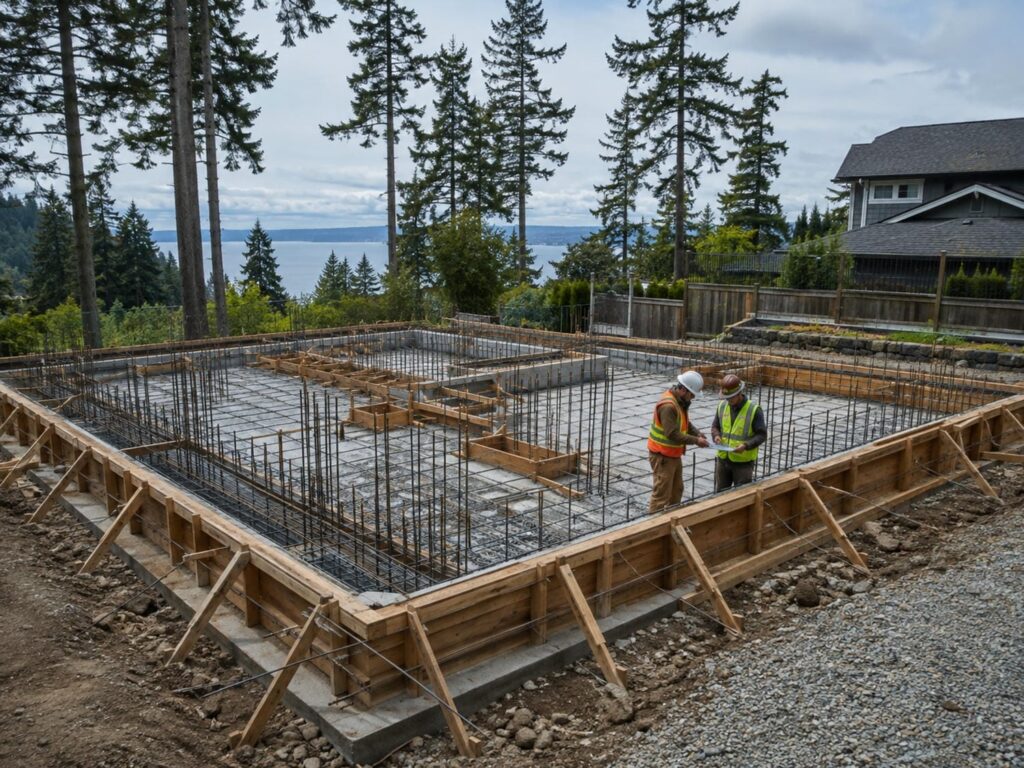
Once the site is clear, the new build starts largely from scratch, but with two important differences from a raw lot. The lot is already serviced, and the new house is designed to today’s rules rather than to whatever the old house was allowed. Those two facts, the paperwork and the head start, are what make a rebuild its own kind of project.
The Building Permit for the New Home
The new home needs its own building permit, and where the lot sits inside a development permit area, a development permit as well. Both tracks have their own steps worth reading in full: our guide to the City of Nanaimo permits a new build needs walks through the building-permit process end to end, and there is a separate step to be aware of when a development permit also applies to your parcel. The teardown-specific point is straightforward: you build to the current BC Building Code and BC Energy Step Code, not to the standards the old house was permitted under decades ago. A rebuild does not inherit the previous home’s rights.
Existing Services and Foundation: A Head Start, Not a Given
Here is the genuine advantage of a teardown lot: it usually already has a water service, a sewer or septic connection, a hydro service, sometimes gas, and a driveway. But “it is already serviced” is a starting position, not a guarantee, and the real work is confirming those services are actually adequate for the new home you intend to build. A larger house or a second suite can outrun a service sized for a small post-war bungalow. Before you count the savings, it is worth working through a proper site servicing checklist for your custom home lot so nothing is assumed. The old foundation raises the same kind of question. Reusing it is sometimes possible, but only after an engineer confirms it can carry the new home and meets today’s code. It is a case-by-case call, not a given, and more often the new design wants a new foundation.
What the Lot Can Become Now: Bill 44 and R5 Zoning
A teardown is the moment a lot’s latent capacity becomes buildable, and in Nanaimo that capacity changed recently. Under the Small-Scale Multi-Unit Housing rules the City adopted in 2024 to meet the Province’s Bill 44, many lots that once held a single house are now pre-zoned for three or four units. The question stops being “rebuild the house” and becomes “decide what this lot can now become.” This applies to many lots, not every lot, and some are exempt, so your own parcel is an open question until it is checked. For how the thresholds and exemptions actually work, read our piece on Bill 44 and Nanaimo’s R5 zoning, which walks through the unit thresholds and exemptions in full. Whether your specific lot can hold more than one home depends on how that parcel was zoned under Bill 44, so check your address before you plan the rebuild around it.
The Heritage Check You Do Before You Plan
There is one quick check worth doing before you build a teardown into your schedule, and it is a real step rather than a caveat. Being on Nanaimo’s Community Heritage Register does not by itself stop a demolition. However, Council can withhold a demolition, building, or development approval for a temporary protection period of up to 60 days, and a property that is legally designated, meaning a heritage covenant sits on its title, can be prohibited from demolition without the City’s approval. Check whether your house is listed or designated before you commit to dates, since a listing can add unbudgeted delay. The check takes minutes and is cheap insurance against a two-month surprise.
What Drives the Cost and Timeline of a Teardown Rebuild
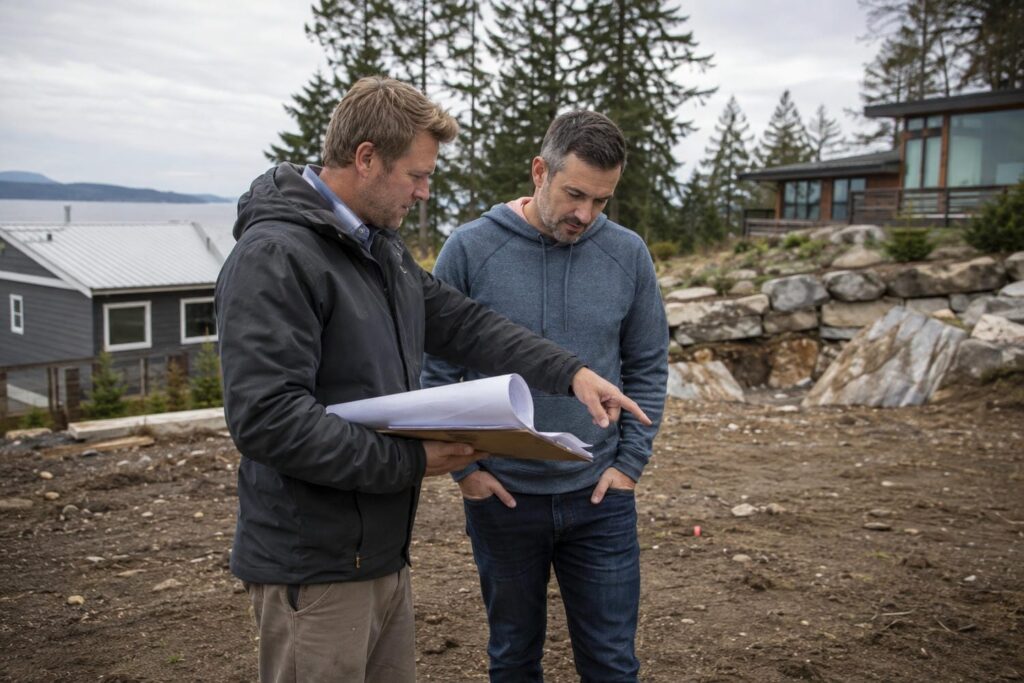
These are usually the first two questions a homeowner asks, and they deserve an honest answer. There is no single published price or timeline for a Nanaimo teardown, because both depend heavily on the site in front of you. That is not the same as saying a teardown is cheap or fast. The right way to answer, and the way a builder actually answers, is by naming the levers that move the number.
What Drives the Cost
The cost of a teardown is real and site-specific. It moves with the size of the house, the hazardous materials it contains, and how much of the debris can be recycled rather than dumped at the $280-per-tonne controlled-waste rate or the $520-per-tonne asbestos rate. “There is no set price” means there is no table price, not that there is no cost. We price it from the site itself: we weigh the age of the house, which drives the hazmat survey and any abatement, then the disposal streams the debris will sort into, then how much of the existing servicing genuinely carries over to the new home. An old, asbestos-laden house on a lot needing service upgrades is a very different number from a newer teardown on a well-serviced lot.
What Drives the Timeline
How long a teardown takes moves with the same kind of levers, so a single number pulled off the internet is unreliable. Three things set the schedule. First and longest is the hazmat survey and any abatement it triggers, which is the pole that holds up the whole tent on an older house. Second are the utility disconnection lead times, which is why we get those requests in early. Third is permit turnaround at the City. We sequence the survey and the disconnections first, precisely because they are the long-lead items, and everything downstream depends on them being done. The front end is where the schedule is won or lost, so get a timeline in writing against your actual site rather than a generic estimate.
Ready to Tear Down and Build Back Better?
A teardown rebuild asks you to coordinate a demolition crew, three separate utilities, an abatement contractor, and a home builder, and it goes smoothly when a single team runs all of it rather than leaving you to stitch it together. That is how Southpaw Homes approaches it. Our fixed-price contract model answers the cost uncertainty a teardown carries, so the number you agree to is the number you plan around. As a BC Housing Licensed Residential Builder carrying WorkSafeBC coverage, we hold the safety chain that a demolition and a hazmat abatement demand. And our meticulously planned build schedule, with a client portal showing daily logs and progress photos, is exactly the sequencing this process rewards. If you are ready to explore what a teardown could become on your lot, our design-build custom homes service is built for projects like this one, and you can get in touch with our Nanaimo team to talk through your specific site.
Frequently Asked Questions
Do You Need a Permit to Demolish a House in Nanaimo?
Yes. A full demolition needs its own demolition permit, separate from the building permit for the new home. Removing a deck or a non-structural interior wall does not trigger one, but taking the whole house down always does, and it comes with its own package of survey, disconnection proof, and site-control documents.
Do You Have to Test for Asbestos Before Tearing Down a House?
Yes. Testing by a qualified surveyor is required before demolition begins, and it is most likely to turn something up on homes built before 1990. If asbestos is found, a qualified abatement contractor has to remove and dispose of it before the structure comes down.
Who Disconnects the Power, Gas, and Water Before Demolition?
The utilities do it, on request, not the demolition crew. Only the registered owner can ask BC Hydro to pull the service and meter, and gas removal is arranged through FortisBC. Start these requests early, because the services all have to be off before demolition can begin and scheduling them takes time.
Can You Reuse the Old Foundation When You Rebuild?
Sometimes, but only after an engineer confirms it can carry the new home and meets current code. It is a case-by-case call rather than a given, and it depends on the foundation’s condition and on the loads your new design puts on it. More often than not, a new custom home wants a new foundation designed for it.
Is It Cheaper to Tear Down and Rebuild Than to Build on a Raw Lot?
It can be, because a teardown lot is usually already serviced with water, sewer, hydro, and a driveway, which is real cost and time saved. The saving is only real if those existing services are adequate for the new home, though, so the honest answer depends on confirming what is in the ground before you count on it.
Can You Build More Than One Home After Tearing Down?
Often yes. Under Bill 44, many Nanaimo lots that once held a single house are now pre-zoned for three or four units. It depends on the specific parcel and some lots are exempt, so check your address before you plan around it. A teardown is the natural moment to find out what your lot can now hold.
How Long Does a Teardown and Rebuild Take in Nanaimo?
There is no set number. Permit turnaround, whether asbestos has to be removed first, and utility scheduling all move it, so a single figure off the internet is not something to plan around. Get the schedule from your builder in writing, since the survey and disconnection lead times set the pace.